 Pin It
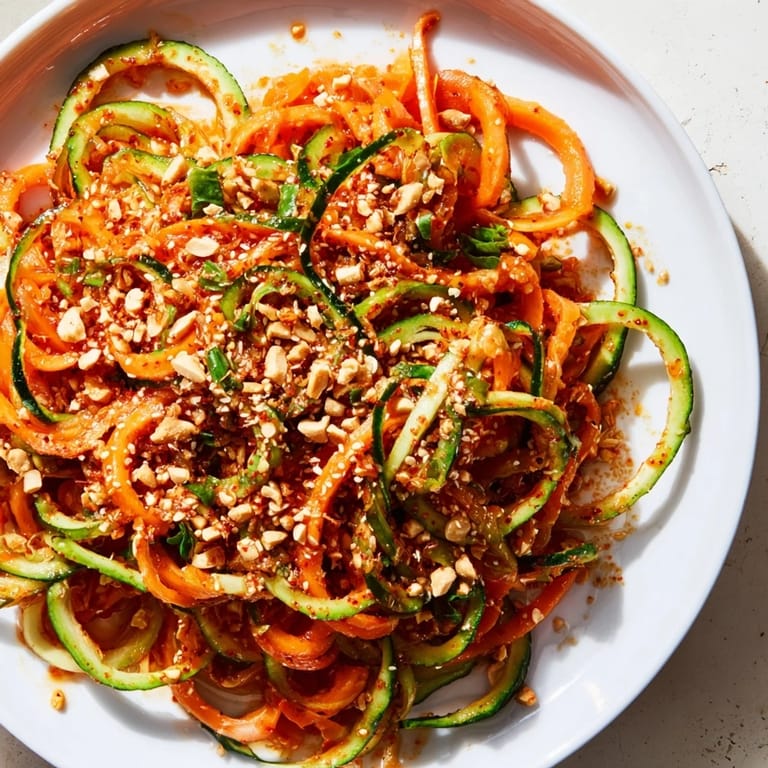
 I discovered this bowl on a sweltering afternoon when my kitchen felt too hot to turn on the stove. A friend had just brought over a spiralizer, practically forcing me to try it, and I had three oversized cucumbers sitting on my counter that needed rescuing. The first time I tossed those fresh spirals with a fiery chili sauce, something clicked—it was so cold, so alive, so exactly what my body wanted in that moment. Now whenever the heat builds and I'm craving something bold but light, this bowl is the first thing I make.
I remember bringing this to a potluck on a humid July evening and watching people come back for seconds, then thirds. Someone asked if it was complicated, genuinely shocked when I told them I'd spent less time on it than they spent waiting in line at the door. That's when I realized this recipe had power—not in difficulty, but in its ability to feel special without demanding much from you.
Ingredients
- Cucumbers (2 large, spiralized or julienned): Choose ones that are firm and not waterlogged; English or Persian varieties have fewer seeds and a more delicate flavor, but regular cucumbers work beautifully too.
- Carrot (1 medium, julienned, optional): Adds a gentle sweetness and a pop of color that makes the bowl feel complete, though you can skip it if you want pure cucumber simplicity.
- Scallions (2, thinly sliced): The allium bite keeps everything fresh and prevents the bowl from feeling one-dimensional.
- Fresh cilantro (1 tablespoon, chopped): This is the secret to making it taste like you know what you're doing—herbaceous and clean.
- Low-sodium soy sauce or tamari (2 tablespoons): Tamari is your friend if gluten matters; both bring umami without overpowering the vegetables.
- Rice vinegar (1 tablespoon): The acidity is crucial; it brightens everything and keeps the sauce balanced instead of cloying.
- Sesame oil (1 tablespoon): Toasted sesame oil has more character than the neutral kind—use it generously and you'll taste the difference.
- Chili crisp or chili oil (1 tablespoon, adjust to taste): This is where the personality lives; some like it almost aggressive, others prefer a whisper of heat.
- Maple syrup or honey (1 teaspoon): Just enough sweetness to balance the chili and vinegar, preventing the sauce from being one-note.
- Garlic (1 clove, finely minced): Raw garlic has bite; mince it small so it distributes evenly through the sauce.
- Fresh ginger (1 teaspoon, grated): Ginger adds warmth without making the dish heavy—it plays beautifully with the chili.
- Toasted sesame seeds (1 teaspoon): A small amount gives crunch and nutty flavor that makes people wonder what you did differently.
- Roasted peanuts or cashews (2 tablespoons, chopped, optional): Nuts add protein and a satisfying crunch that transforms this from side to standalone meal.
- Lime wedges (for serving): The acid hits differently on the plate than in the sauce—a squeeze at the end adds dimension.
Tired of Takeout? 🥡
Get 10 meals you can make faster than delivery arrives. Seriously.
One email. No spam. Unsubscribe anytime.
Instructions
- Prepare the cucumbers with intention:
- Spiralize or julienne your cucumbers, then pat them completely dry with paper towels—this step matters more than it sounds, because excess moisture will dilute your sauce and make everything soggy. You want the noodles to hold onto that chili oil, not wash it away.
- Gather your vegetables:
- In a large bowl, combine the cucumber noodles, carrot (if using), sliced scallions, and cilantro. Don't mix yet; just let them sit together like they're getting to know each other.
- Build the sauce with balance:
- In a small bowl, whisk together the soy sauce, rice vinegar, sesame oil, chili crisp, maple syrup, minced garlic, and grated ginger until you can see the flavors have merged into something unified. Taste it straight from the whisk—it should make you pause and smile, that moment when spice, salt, and sweetness find their harmony.
- Bring it all together:
- Pour the sauce over your vegetables and toss gently but thoroughly, making sure every strand gets coated. The sauce will be thin enough to coat everything but thick enough to cling, which means you've done it right.
- Final touches:
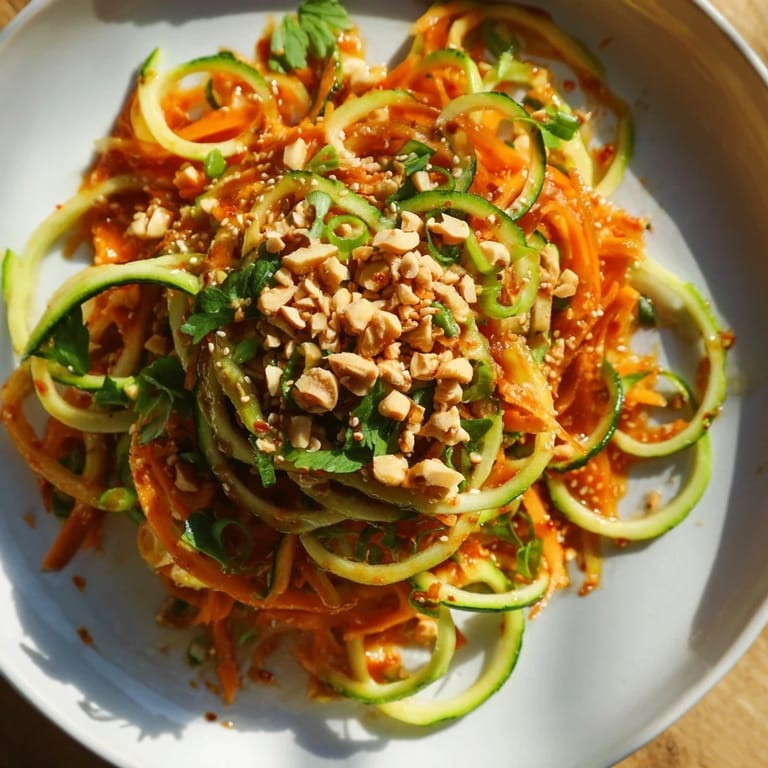
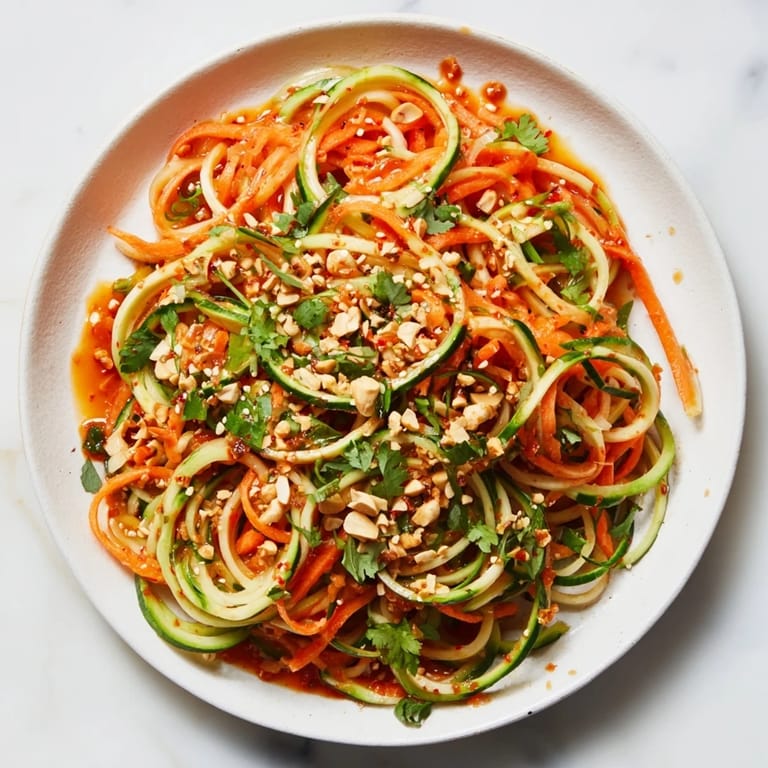
- Divide between serving bowls, scatter your nuts on top (if using), and add a sprinkle of extra sesame seeds and a squeeze of fresh lime juice. Serve immediately while everything is still crunch-cold.
 Pin It
 There was a moment during a conversation with my neighbor when she asked me why this simple bowl felt so comforting, and I realized it's because it asks nothing of you while giving everything—fresh, spicy, energizing, done. It became the thing I make when I want to eat well but don't want to perform in the kitchen.
The Magic of Chili Crisp
Chili crisp changed how I think about heat in food. Instead of burning your mouth on its way down, good chili crisp coats your mouth with texture and flavor, then the spice unfolds gradually. If you've been using hot sauce all this time, you're missing something—the oil carries the aromatics, the crispy bits give you something to chew, and it doesn't turn everything into soup. Start with less than you think you need; you can always add more, and once you're in a container of chili oil, there's no going back.
Customization Without Overthinking
The beauty of this bowl is that it's a suggestion, not a rule. I've made it with English cucumbers, with regular watery ones, with carrot and without, with peanuts and with sunflower seeds. I've added a fried egg on top on mornings when I needed protein, I've thrown in shredded rotisserie chicken on nights when I wanted substance. The sauce stays the same—that's your anchor—and everything else is negotiable. Some people add a drizzle of peanut butter to the sauce and it becomes something almost creamy; others add a raw egg yolk at the end and it becomes richer. Trust your instincts here.
Season to Your Comfort
Spice is personal and changes depending on your mood, your tolerance, and what else you're eating that day. The amount I use makes my eyes water slightly while I'm eating; if that's not your goal, cut the chili crisp in half and add lime instead for brightness. If you want it to hurt in the best way, double it. The maple syrup and ginger are your friends when things get too aggressive—they cool the fire just enough to keep it interesting instead of overwhelming.
- Taste the sauce before it touches the vegetables; adjust while you can still fix it.
- Fresh lime juice at the end does more than you'd expect—it reawakens flavors that felt flat.
- If you're making this for guests with different spice tolerances, dress individual bowls and let people add their own heat on top.
 Pin It
 This bowl taught me that the most satisfying meals sometimes ask for the least effort. There's something honest about food that tastes this good without pretense or complexity.
Recipe Questions & Answers
- → What type of cucumbers work best?
English or Persian cucumbers are ideal due to their mild flavor and fewer seeds, which keep the noodles crisp and refreshing.
- → Can I adjust the spice level?
Yes, modify the amount of chili crisp or add fresh sliced chilis to control heat according to your preference.
- → Are there alternative toppings to nuts?
Sunflower seeds can replace peanuts or cashews for a nut-free crunch while still adding texture.
- → How should I spiralize the cucumbers?
Use a spiralizer or a julienne peeler, then dry the noodles with a paper towel to remove excess moisture for the best texture.
- → Is this dish suitable for gluten-free diets?
Yes, use tamari instead of soy sauce and ensure chili oil or crisp is gluten-free to maintain gluten-free compliance.
- → Can I add protein to make it more filling?
Consider adding tofu, shredded chicken, or edamame to enhance protein content and turn it into a more substantial meal.