 Pin It
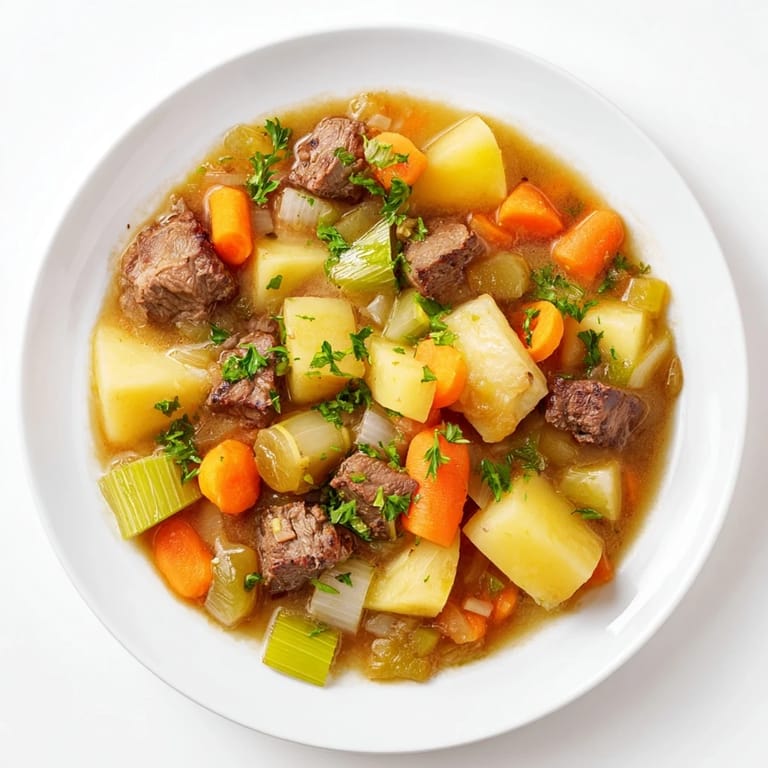
 Years ago, a Welsh friend brought a pot of cawl to a dinner party on a freezing January evening, and the moment I lifted the lid, the steam hit my face with such warmth and comfort that I forgot how cold it was outside. The lamb had been simmering so long it practically dissolved on my tongue, and the vegetables had absorbed every drop of that savory broth. I asked for the recipe that night, but she laughed and said it wasn't something you could rush—it was meant to simmer while you went about your day. That's when I understood cawl isn't just a stew; it's an invitation to slow down.
I made this for my family last winter when we were all snowed in, and something magical happened—everyone stopped scrolling on their phones and actually talked to each other while we ate. The stew had been bubbling away quietly in the background all afternoon, filling the kitchen with that indefinable smell of home, and by the time we sat down, people were already asking for seconds before they'd finished their first bowl.
Ingredients
- Lamb shoulder, 1 kg (2.2 lbs), cut into large chunks: Bone-in pieces are worth the hunt—they release gelatin that makes the broth silky and give you something to gnaw on, which is half the pleasure.
- Carrots, 2 large, peeled and sliced: They sweeten naturally as they cook down, so don't be shy with them.
- Parsnips, 2 medium, peeled and sliced: These add an earthy sweetness that lamb loves, and they soften into almost butter-like pieces.
- Potatoes, 2 medium, peeled and diced: They thicken the broth gently, so keep them chunky rather than fine.
- Swede (rutabaga), 1 small, peeled and diced: This is the Welsh secret—it adds a subtle, almost nutty warmth that most people can't quite identify but always adore.
- Leeks, 2, cleaned and sliced: Split them lengthwise first and rinse between the layers where dirt hides, then slice into half-moons.
- Onion, 1 medium, diced: This goes in early to build the base flavor without becoming mushy.
- Stock, 1.5 liters (6 cups) low-sodium chicken or lamb: Lamb stock is traditional and richer, but chicken works beautifully too and lets the other flavors shine.
- Bay leaves, 2: These quiet the broth just enough without announcing themselves.
- Fresh parsley, 1 small bunch, chopped: A handful stirred in at the end lifts everything, and more as garnish makes it look intentional.
- Salt and freshly ground black pepper: Season gradually as the stew cooks—the broth concentrates and can become salty if you're not careful.
Tired of Takeout? 🥡
Get 10 meals you can make faster than delivery arrives. Seriously.
One email. No spam. Unsubscribe anytime.
Instructions
- Sear the lamb and start the broth:
- Drop the lamb chunks into your pot and cover them with stock, then crank the heat high until it's rolling to a boil. You'll see foam and scum rise to the surface—skim it off with a spoon because that's where the impurities live, and you want a clear, clean broth. This takes maybe 5 minutes but changes everything.
- Build your base:
- Toss in the bay leaves, turn the heat down so it's barely bubbling, and cover the pot. Let it go undisturbed for a full hour while the lamb surrenders to the heat. You can walk away, do other things, or just sit and watch it.
- Add the vegetables (except the fresh leeks):
- After an hour, add the carrots, parsnips, potatoes, swede, onion, and most of the leeks, holding back a small handful. Sprinkle in some salt and pepper now, stirring gently so everything mingles with the broth.
- Simmer until everything is tender:
- Keep the lid on and let it bubble gently for 45 minutes more, until you can press a piece of lamb between your fingers and it falls apart. The vegetables should be soft but not mushy—they should still have a bit of definition.
- Finish with fresh leeks and parsley:
- Add those reserved leeks and the chopped parsley, which will brighten everything instantly. Simmer for just 10 more minutes so the leeks stay slightly tender and the parsley keeps its color and fresh bite.
- Taste and adjust:
- Fish out the bay leaves and taste carefully—cawl should taste like comfort, not salt. Add more seasoning if needed, but remember it's meant to be subtle.
 Pin It
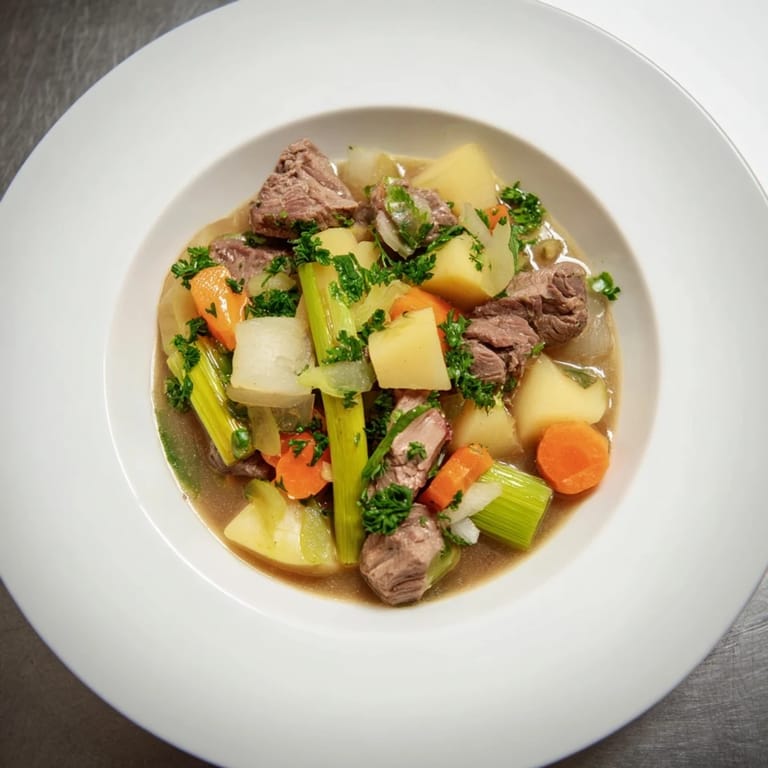
 I've learned that cawl is best shared, not eaten alone. There's something about ladling this into bowls for people you care about that feels almost ceremonial, and watching someone taste it for the first time and close their eyes in that way—that's when you know you've made something that matters.
Why Cawl Is Worth Making
This isn't a weeknight stew you bang together in an hour; it's a weekend project that rewards patience with flavors that are mellow and deep. The beauty is that it doesn't demand your constant attention—you're just managing temperature and time, letting the heat do the heavy lifting. Once you've made it once, you'll start seeing cawl-making as a form of quiet meditation, a way to fill your home with something nourishing while you go about your day.
Serving and Pairing Ideas
Cawl is traditionally served in bowls with crusty bread on the side, something you can tear and dunk or use to soak up the broth at the bottom. Welsh cheese like Caerphilly adds a sharp, salty contrast that lifts the richness of the lamb, and honestly, that combination feels complete and right. Some people serve the broth and meat in one bowl and the vegetables in another, which looks more elegant and lets you eat with intention.
Storage and Making Ahead
Cawl improves overnight when the flavors have time to become friends rather than just acquaintances, so don't hesitate to make it a day ahead and reheat it gently on the stove. Leftovers keep beautifully in the fridge for up to four days and freeze well too—though honestly, it rarely lasts that long in my house. When you reheat it, taste first before adding more seasoning, because the flavors will have intensified and balanced themselves in the time they've spent together.
- Store in airtight containers and cool completely before refrigerating to avoid condensation making things watery.
- Freeze in portions so you can defrost only what you need without waste.
- The best part of making cawl is that it's forgiving and wants to be shared, so don't stress over perfection.
 Pin It
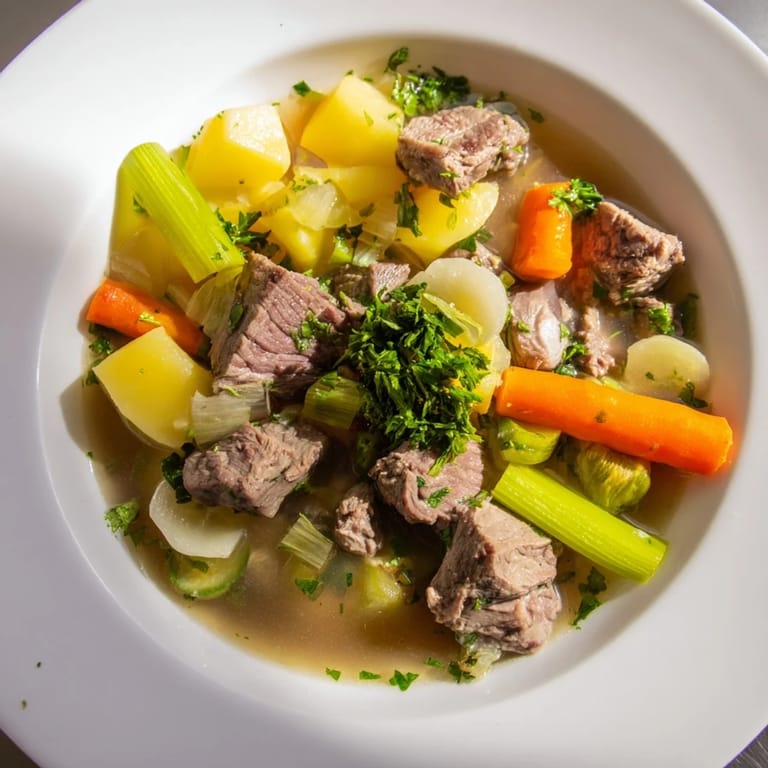
 Cawl taught me that the best recipes aren't always complicated—they're just honest, made with good ingredients and respect for time. Make this on a day when you want your kitchen to feel like a hug.
Recipe Questions & Answers
- → What cut of meat works best for Welsh Cawl?
Lamb shoulder with bone-in is preferred for rich flavor and tender texture, but lean lamb or beef can be used as alternatives.
- → Can this stew be made gluten-free?
Yes, the stew itself contains no gluten. Avoid serving with bread or cheese that contains gluten to keep it gluten-free.
- → How long should the stew simmer for optimal flavor?
Simmer the lamb for 1 hour before adding vegetables, then cook another 45 minutes, and finish with herbs for 10 minutes.
- → What vegetables are traditional in this dish?
Carrots, parsnips, potatoes, swede, leeks, and onions provide the classic root vegetable medley characteristic of this stew.
- → Is it better to prepare the stew ahead of time?
Yes, allowing the stew to rest overnight deepens the flavors and improves the overall taste and texture.
- → What are good accompaniments for serving?
Crusty bread or traditional Welsh cheeses like Caerphilly complement the stew’s hearty nature perfectly.