 Pin It
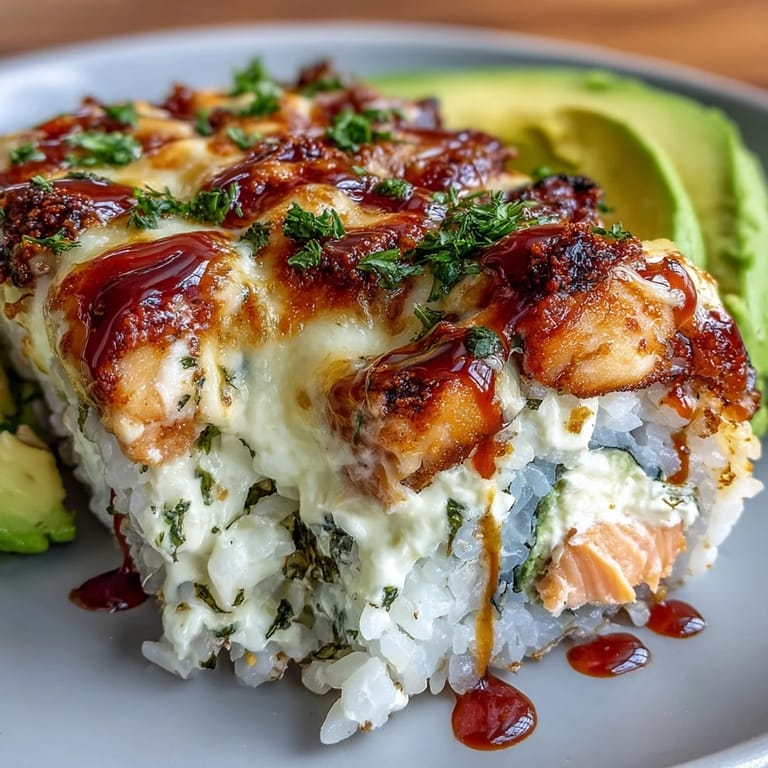
 My neighbor texted me at 9 PM asking what smelled so good, and I realized the oven vent was doing all the talking. I'd just pulled out my first sushi bake, bubbly and golden, after weeks of scrolling past it on my feed and finally caving. The whole dish came together faster than ordering takeout, and by the time I plated it with those little seaweed snacks, I understood why everyone was obsessed. It's messy, it's fun, and it tastes like the best spicy salmon roll you've ever had, but you get to eat it with a spoon.
I made this for a potluck where I knew absolutely no one, and by the end of the night, three people had asked for the recipe. One guy scraped the dish clean with a seaweed snack and said it was better than the place he orders from every Friday. There's something about the creamy, spicy salmon meeting that sweet vinegared rice that makes people lean in for seconds before they've finished their firsts.
Ingredients
- Sushi rice: The foundation that holds everything together, short grain rice gets sticky and sweet when seasoned, creating that authentic sushi texture.
- Rice vinegar: This is what gives the rice its signature tang, don't skip the sugar and salt mixture or the rice will taste flat.
- Salmon fillet: Fresh, skinless salmon bakes up tender and flakes beautifully, becoming the star of your spicy mixture.
- Kewpie mayonnaise: Richer and slightly sweeter than regular mayo, it makes the salmon impossibly creamy, though any good mayo works in a pinch.
- Sriracha sauce: Brings the heat and that distinct garlicky kick, start with less if you're cautious, you can always add more.
- Soy sauce: Adds umami depth and saltiness that balances the creamy, spicy elements.
- Toasted sesame oil: A few drops fill the whole dish with nutty, toasted aroma.
- Nori sheet: Crumbled between the rice and salmon, it adds that essential seaweed flavor without making it soggy.
- Mozzarella cheese: Untraditional but magical, it melts into gooey pockets and adds a comforting richness.
- Avocado: Cool, creamy slices on top cut through the heat and add a fresh contrast.
Tired of Takeout? 🥡
Get 10 meals you can make faster than delivery arrives. Seriously.
One email. No spam. Unsubscribe anytime.
Instructions
- Prep the Rice:
- Rinse your sushi rice until the water runs clear, this removes excess starch and prevents gummy rice. Cook it in a rice cooker or on the stove, then fold in the warm vinegar mixture gently so the grains stay intact and glossy.
- Bake the Salmon:
- Brush the fillet with a little oil and bake until it flakes easily with a fork, about 12 to 15 minutes. Let it cool just enough to handle, then flake it into chunky pieces, keeping some texture.
- Make the Spicy Mixture:
- Combine the flaked salmon with mayo, sriracha, soy sauce, sesame oil, and green onions in a bowl. Mix until everything is coated and creamy, tasting as you go to adjust the heat.
- Assemble the Bake:
- Press the seasoned rice into the bottom of your greased baking dish, creating an even layer. Sprinkle crumbled nori on top, then spread the spicy salmon mixture over everything, and finish with mozzarella if you're using it.
- Bake and Garnish:
- Slide it into a hot oven until the cheese melts and bubbles, about 10 to 12 minutes. Let it rest for a few minutes, then top with sesame seeds, avocado, and drizzles of sriracha and mayo before serving warm.
 Pin It
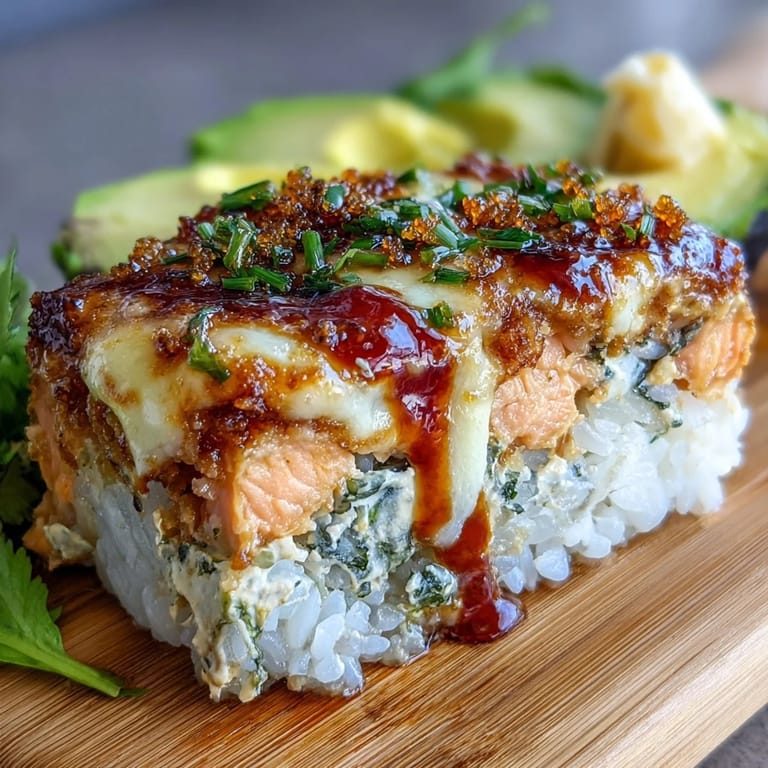
 The first time I served this, my friend who swears she hates mayonnaise had three helpings and didn't realize until I told her. She just kept saying it tasted like the inside of a really good spicy roll, which is exactly the point. It's become my go to whenever I want something that feels special but doesn't require me to stand at the counter rolling individual pieces.
Choosing Your Salmon
I've used both wild and farmed salmon, and honestly, farmed works beautifully here because it's fattier and stays moist during baking. If you're using wild, check it a minute or two early since it can dry out faster. Frozen salmon works too, just thaw it completely and pat it very dry before baking or you'll end up with a watery mixture.
Adjusting the Heat
Start with two tablespoons of sriracha and taste before adding more, especially if you're serving kids or anyone heat sensitive. I learned this after watching my brother turn red and chug a glass of milk, now I put extra sriracha on the side and let people customize. You can also swap in gochujang for a deeper, slightly sweet heat that's less sharp.
Serving and Storing
This is best served warm, straight from the oven, but leftovers reheat surprisingly well in the microwave or a low oven. I like to scoop it onto those crispy seaweed snacks for crunch, but it's just as good eaten straight from the dish with a fork. If you're meal prepping, assemble everything except the avocado and final drizzle, then bake fresh when you're ready.
- Store leftovers in an airtight container in the fridge for up to two days.
- Reheat gently to avoid drying out the rice.
- Add fresh toppings after reheating for the best texture and flavor.
 Pin It
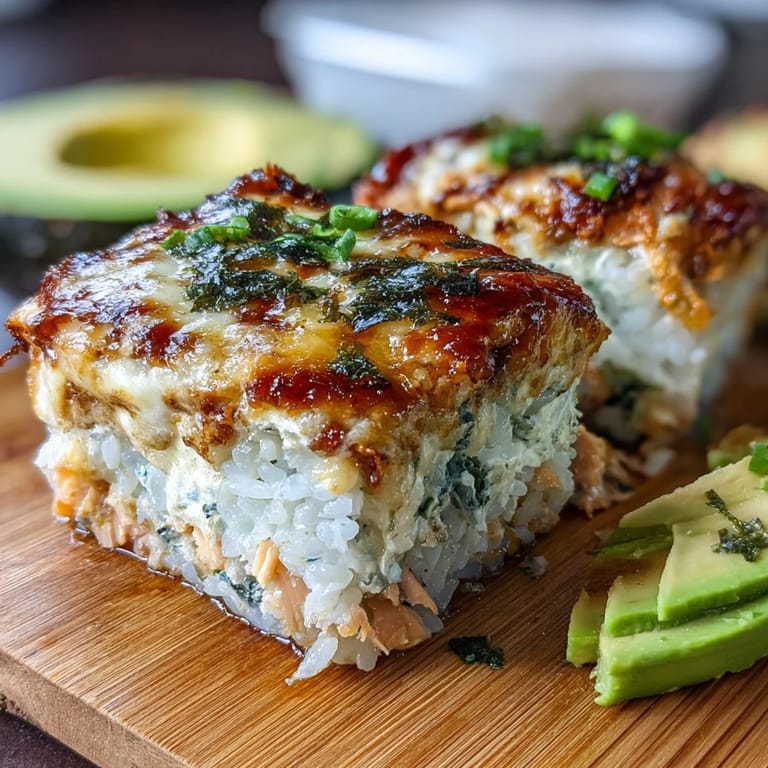
 Every time I make this, someone asks if it's hard, and I love telling them it's basically rice, fish, and a good stir. It's the kind of recipe that makes you look like you tried way harder than you did, and tastes like a celebration even on a random Tuesday.
Recipe Questions & Answers
- → Can I make this ahead of time?
Prepare the seasoned rice and salmon mixture up to 24 hours in advance. Store separately in the refrigerator. Assemble and bake when ready to serve for best results.
- → What can I substitute for Kewpie mayonnaise?
Regular mayonnaise works well as a substitute. For a closer match to Kewpie's richness, add a teaspoon of rice vinegar or dash of MSG to regular mayo.
- → Is this dish served hot or cold?
This bake is best served warm, right after baking. The flavors meld beautifully when the cheese is melted and the salmon mixture is heated through. Leftovers can be reheated gently.
- → Can I use other fish instead of salmon?
Cooked crab, imitation crab, or even cooked shrimp work excellently as alternatives. Adjust cooking time accordingly since salmon requires baking while pre-cooked seafood just needs heating through.
- → How do I store leftovers?
Store in an airtight container in the refrigerator for up to 2 days. Reheat in the oven at 175°C (350°F) for 10-15 minutes. The rice may dry slightly, so add a splash of water before reheating.
- → Can I make this gluten-free?
Use gluten-free soy sauce or tamari in place of regular soy sauce. Verify that your sriracha and other condiments are certified gluten-free. The remaining ingredients are naturally gluten-free.