 Pin It
 The kitchen air was thick with steam and the smell of toasted flour when I finally understood what my neighbor meant by "the color of chocolate." I had been standing over that roux for what felt like forever, wooden spoon in hand, terrified I'd ruin it. She leaned over my shoulder and nodded once, and I knew I'd gotten it right. That bowl of étouffée I made that night tasted like patience and victory mixed together.
I first made this for a group of friends during a cold February evening when nothing else felt right. The pot simmered on the stove while we told stories and refilled wine glasses. By the time I ladled it over rice, the room had gone quiet except for the sound of spoons scraping bowls. One friend looked up and said it tasted like something her grandmother would make, and I took that as the highest compliment I'd ever received.
Ingredients
- Vegetable oil and all purpose flour: These two create the roux, the soul of étouffée, and you need the neutral heat tolerance of vegetable oil to coax the flour into that deep, nutty darkness without burning.
- Onion, green bell pepper, and celery: The holy trinity of Cajun cooking, this trio adds sweetness, earthiness, and a slight bitterness that balances the richness of the roux.
- Garlic: Always add it after the vegetables soften so it perfumes the dish without turning bitter or scorched.
- Shrimp or crawfish: Shrimp is easier to find year round, but if you can get fresh crawfish, the sweetness and texture will transport you straight to a backyard boil in Louisiana.
- Seafood stock: This brings a briny depth that chicken stock can't quite match, though chicken stock works in a pinch if that's what you have.
- Worcestershire sauce: Just a tablespoon adds umami and a subtle tang that rounds out the spice and sweetness.
- Cajun seasoning and cayenne pepper: These bring the heat and the signature warmth, but start conservatively because you can always add more at the end.
- Bay leaf: It quietly works in the background, adding an herbal note that ties everything together.
- White rice: Fluffy and plain, it's the perfect canvas for soaking up all that dark, silky sauce.
- Green onions and parsley: Fresh, bright, and grassy, they cut through the richness right when you need it most.
Tired of Takeout? 🥡
Get 10 meals you can make faster than delivery arrives. Seriously.
One email. No spam. Unsubscribe anytime.
Instructions
- Start the Roux:
- Heat the vegetable oil in your heaviest pot over medium heat, then whisk in the flour until smooth. This is where your patience begins.
- Cook the Roux to Chocolate:
- Stir constantly for 15 to 20 minutes, watching it shift from blonde to peanut butter to a deep, rich brown that smells toasted and nutty. If you see black flecks, start over.
- Add the Holy Trinity:
- Toss in the onion, bell pepper, and celery, stirring them into the roux until they soften and release their sweetness, about 5 to 7 minutes. The vegetables will slow the cooking and give you a moment to breathe.
- Stir in the Garlic:
- Add the minced garlic and let it sizzle for just a minute until the kitchen smells like a dream. Don't let it brown.
- Gradually Add the Stock:
- Pour in the seafood stock slowly, whisking to dissolve the roux and vegetables into a smooth, glossy base. It should start to look like a sauce now.
- Add the Shrimp and Seasonings:
- Stir in the shrimp, Worcestershire sauce, Cajun seasoning, cayenne, bay leaf, salt, and pepper. Everything comes together here, and the pot will smell impossibly good.
- Simmer Until Thickened:
- Bring it to a gentle simmer, then lower the heat and let it cook uncovered for 20 to 30 minutes, stirring occasionally. The sauce will thicken and the shrimp will turn pink and tender.
- Taste and Adjust:
- Remove the bay leaf, then taste and add more salt, pepper, or cayenne if needed. This is your moment to make it yours.
- Serve Over Rice:
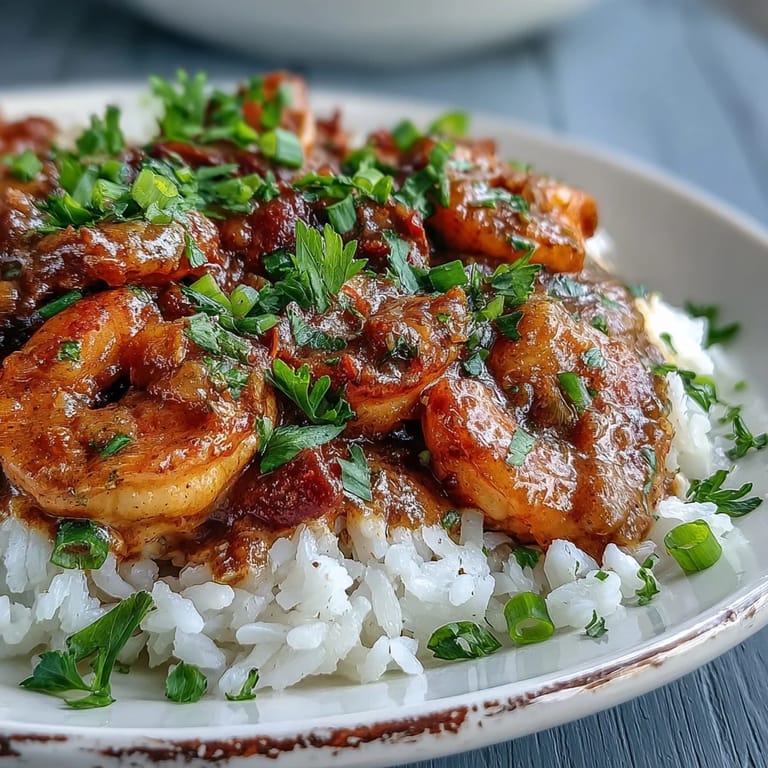
- Spoon the étouffée generously over hot white rice and scatter green onions and parsley on top. Serve it while it's still steaming.
 Pin It
 One Sunday afternoon, my cousin came over unannounced and caught me scraping the last bit of étouffée from the pot with a piece of bread. She laughed and said that's how you know it's good, when you can't bear to waste a drop. We sat on the back porch with our bowls and didn't talk much, just ate and watched the light change. That's when I realized this dish doesn't need an occasion; it creates one.
Making It Your Own
If shrimp isn't your thing or you want to stretch the recipe further, swap in chunks of chicken thighs, sliced andouille sausage, or even thick slices of portobello mushrooms for a vegetarian take. I once made it with leftover rotisserie chicken when I was too tired to peel shrimp, and it turned out so comforting I almost preferred it. The key is to add these proteins at the same point you'd add the shrimp, giving them time to absorb the sauce and become part of the dish rather than just sitting on top.
Storing and Reheating
Étouffée keeps beautifully in the fridge for up to three days, and I've learned to store the rice separately so it doesn't soak up all the sauce. When you reheat it, do it gently on the stove with a splash of stock or water to loosen it back up, stirring occasionally. The flavors deepen overnight, so that second day bowl might just be the best one. I've even frozen it successfully for up to two months, though the shrimp texture can soften a bit, so I prefer freezing versions made with chicken or sausage.
Serving Suggestions
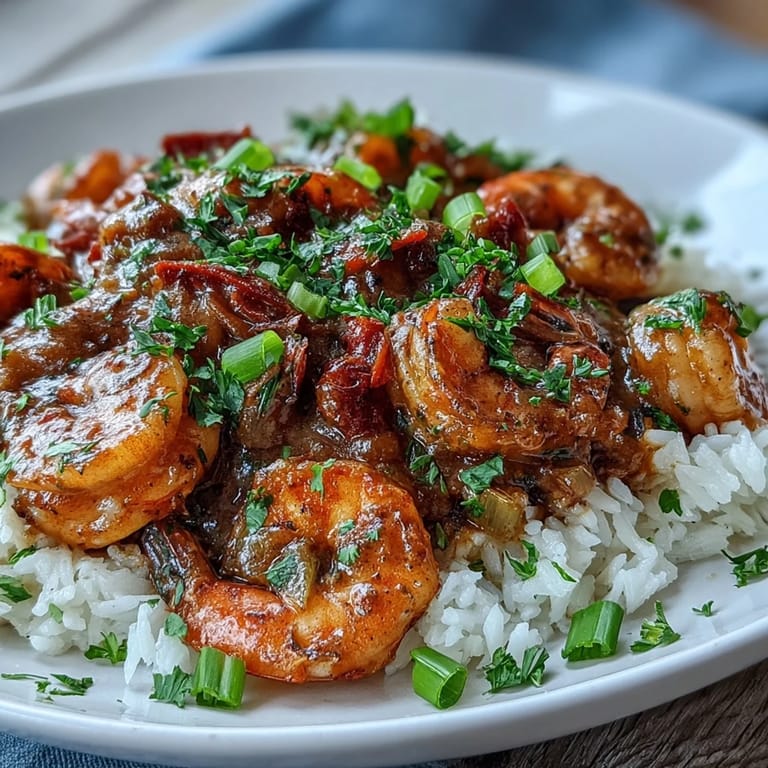
A crusty baguette or warm French bread is perfect for soaking up every last bit of sauce, and I always put a basket on the table even when I think we won't need it. A simple green salad with a sharp vinaigrette or a side of buttery cornbread balances the richness without competing for attention. If you're feeling festive, a cold beer or a crisp white wine cuts through the spice and makes the whole meal feel like a celebration.
- Serve with hot sauce on the side for guests who like extra heat.
- Offer lemon wedges for a bright, acidic pop that livens up each bite.
- Don't forget the napkins, because this is the kind of meal that gets messy in the best possible way.
 Pin It
 This dish has a way of slowing everything down, from the careful stirring of the roux to the quiet moment when you finally sit down to eat. I hope it does the same for you.
Recipe Questions & Answers
- → What makes an authentic étouffée?
Authentic étouffée starts with a dark roux cooked to chocolate color, the holy trinity of vegetables, and shellfish simmered in a rich, thickened sauce. The dark roux provides the signature depth and nutty flavor essential to this Louisiana classic.
- → Can I substitute the shrimp?
Absolutely. Crawfish is traditional, but chicken, andouille sausage, or mushrooms work beautifully for variations. Each protein brings its own character while maintaining the dish's soulful essence.
- → How dark should the roux be?
For étouffée, aim for a dark brown roux the color of chocolate or peanut butter. This takes 15-20 minutes of constant stirring. The darker the roux, the deeper the flavor—just don't let it burn.
- → Is étouffée spicy?
Traditional étouffée offers gentle heat from Cajun seasoning and cayenne. It's flavorful without being overpowering. Adjust spice levels to your preference by reducing or increasing the cayenne pepper.
- → Why does étouffée taste better the next day?
Like many stews, étouffée benefits from sitting overnight. The flavors meld and deepen as the roux continues to marry with the seafood and spices. Store it in the refrigerator and reheat gently for even better results.
- → What's the difference between étouffée and gumbo?
Both start with a roux and the holy trinity, but gumbo typically has more liquid and okra or file powder as thickeners. Étouffée is thicker with a higher roux-to-liquid ratio, creating a velvety sauce that coats the back of a spoon.