 Pin It
 One weeknight, my friend texted asking if I could whip up something Thai-inspired while she was stuck in traffic. I had linguine, chicken breast, and a jar of peanut sauce sitting in my pantry. Within thirty minutes, we were slurping noodles that tasted like we'd ordered takeout. That's when I realized how quickly a fusion dish could feel both restaurant-quality and effortlessly homemade.
I made this for my mom one evening when she came home exhausted from work. She took one bite and her whole face softened. We sat at the counter, sharing the bowl under bad kitchen lighting, and she kept saying, this doesn't taste like something I'd make. It tasted like something you actually care about. That's the thing about good food, sometimes it's just the right thing at the right moment.
Ingredients
- Linguine or spaghetti (340g): The delicate strands hold onto the peanut sauce beautifully, better than thicker pastas that can feel heavy.
- Chicken breast (450g), thinly sliced: Thin slices cook fast and absorb the flavors while staying tender, no drying out if you keep the heat honest.
- Vegetable oil (1 tbsp): Use something neutral so the chicken browns without fighting against strong flavors.
- Salt and black pepper: Season the chicken generously before it hits the pan, this is where half your flavor comes from.
- Thai peanut sauce (1 cup): Your shortcut to depth, pick one with some character that mentions coconut or chilies on the label.
- Soy sauce (2 tbsp): This adds the savory backbone the sauce needs to feel sophisticated rather than one-dimensional.
- Lime juice (2 tbsp): Squeeze it fresh, the acidity wakes everything up and balances the richness.
- Fresh ginger (1 tsp grated): Don't skip this, it brings warmth and cuts through the sauce with quiet confidence.
- Garlic (2 cloves minced): Raw garlic stirred in at the end keeps its bite and prevents that burned, bitter taste.
- Fresh cilantro (1/4 cup chopped): This is optional only in name, it transforms the dish from good to memorable.
- Fresh mint (2 tbsp, optional): When you add mint, you're telling your guests this came from someone who actually thinks about balance.
- Green onions (2 sliced): Split the garnish between cooking and serving so you get that fresh, sharp contrast.
- Roasted peanuts (1/4 cup chopped): They add texture and anchor all those bright flavors so nothing feels empty.
- Lime wedges: Let people squeeze their own, it gives them control and makes every bite feel personalized.
Tired of Takeout? 🥡
Get 10 meals you can make faster than delivery arrives. Seriously.
One email. No spam. Unsubscribe anytime.
Instructions
- Boil the pasta:
- Salt your water generously so it tastes almost like the sea. Cook the pasta until it has a slight resistance when you bite it, that al dente moment makes all the difference between soft and satisfying.
- Sear the chicken:
- Get the oil shimmering before the chicken goes in, listen for that confident sizzle. The golden crust that forms in those first few minutes is where the real flavor lives, so resist the urge to move it around too much.
- Build the sauce:
- Let the sauce warm gently so it doesn't split or separate. The simmer should be barely a whisper, not an aggressive boil.
- Marry it together:
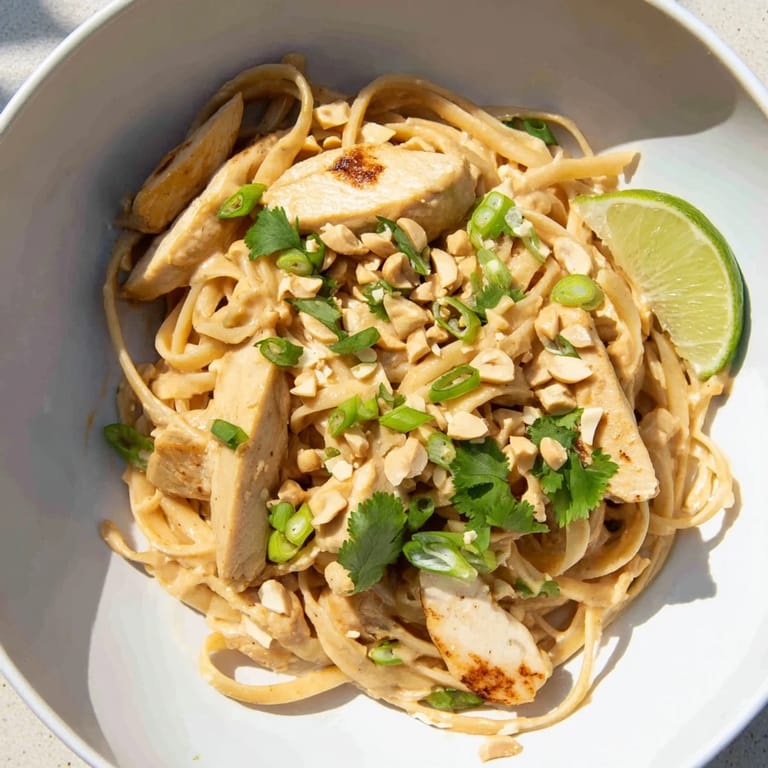
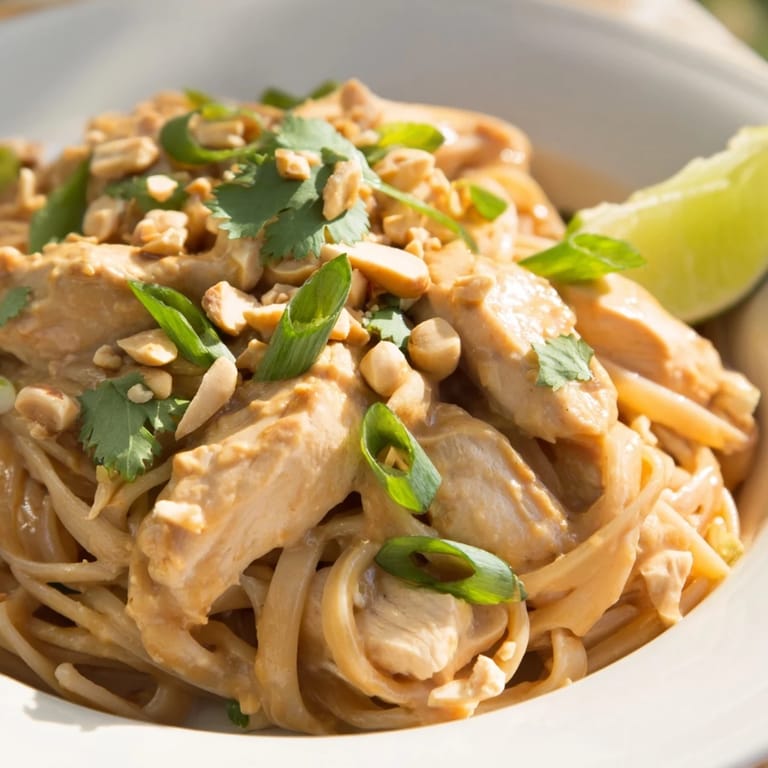
- Toss the pasta and chicken in that sauce like you're coating them in liquid gold. Every strand should glisten, and that's when you know you've hit the right texture.
- Finish with freshness:
- Remove from heat before adding the herbs, the residual warmth is enough to soften them slightly without cooking away their brightness.
- Plate and serve:
- Don't be shy with the toppings, peanuts and green onions and extra cilantro make each bowl look intentional and inviting.
 Pin It
 I once made this for a dinner party and watched my friend who hates cilantro pick it out piece by piece, then ask for the recipe anyway. That's when I understood that a dish doesn't have to be perfect for everyone to mean something.
The Speed Factor
This recipe thrives on efficiency. Because you're using ready-made peanut sauce, you're not spending time building layers of flavor from scratch. Instead, you're layering textural contrasts and fresh elements on top of something already complex. It's the kind of dish that feels impressive because it comes together so quickly, not despite it. Start the pasta water the moment you walk into the kitchen, slice your chicken while the water heats, and by the time you're halfway through, everything is moving in harmony.
Customizing Your Heat Level
The beauty of this recipe is that it doesn't force heat on you. If you like things spicy, a dash of sriracha swirled into the sauce builds warmth that lingers. Red chili flakes give you control because you can adjust them to taste, toasting them first in the pan deepens their flavor without making them feel aggressive. I've learned that people remember heat differently than they remember depth, so I always warn people before making it spicy, then let them decide what level they want.
Variations That Actually Work
Tofu loves this sauce just as much as chicken does, you just need to crisp it properly before adding it so it doesn't dissolve into the pan. Rice noodles work beautifully for gluten-free versions and they have a different character entirely, slightly chewier and more delicate. I've even tossed in snap peas and baby bok choy when I wanted vegetables, adding them to the sauce in the last moment so they stay bright and crunchy instead of wilting into submission.
- Coconut milk can replace half the peanut sauce if you want it richer and less intense.
- Swap mint and cilantro ratios depending on what you have or what you're craving that day.
- A spoonful of fish sauce whispered into the sauce transforms it from fusion into something with real Thai backbone, but only if you like that umami depth.
 Pin It
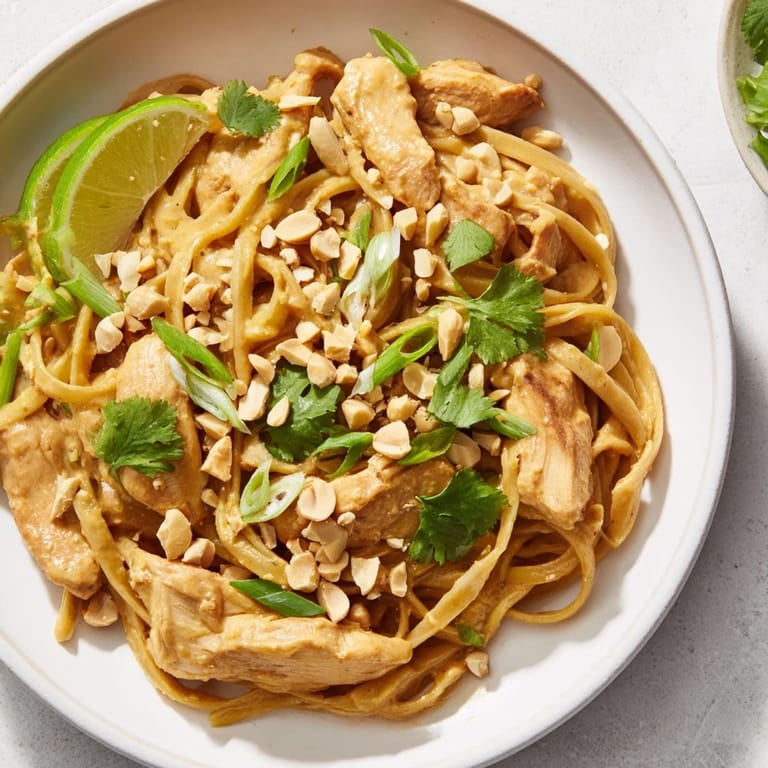
 This dish has taught me that fusion cooking isn't about confusion or throwing things together carelessly. It's about understanding what each ingredient brings and letting them speak without overwhelming each other. Make it once and you'll understand why it became my answer to weeknight hunger.
Recipe Questions & Answers
- → What type of pasta works best?
Linguine or spaghetti work well as they hold the sauce nicely and have a smooth texture complementing the chicken.
- → Can I use a different protein?
Yes, tofu is a great substitute for a vegetarian version, absorbing the peanut sauce flavors beautifully.
- → How can I add heat to the dish?
Adding sriracha or red chili flakes to the sauce will bring a pleasant spicy kick without overpowering other flavors.
- → Is it possible to make this gluten-free?
Switching regular pasta for rice noodles and checking gluten-free peanut sauce ensures a gluten-free meal.
- → What sides pair well with this dish?
A crisp Riesling wine or iced Thai tea pairs excellently, balancing the richness and enhancing the overall flavor experience.