 Pin It
 I discovered shirataki noodles completely by accident at a farmers market, standing there puzzled by these translucent, oddly textured packages while a vendor enthusiastically explained they were basically guilt-free pasta. My first bowl felt like a small victory—something that tasted genuinely good without derailing my goals. Now, this ginger sauce version has become my go-to weeknight dinner, the kind of meal where everything comes together in your bowl with a satisfying sizzle.
I made this for my friend who swore she'd never eat shirataki noodles, convinced they'd taste like rubber bands. Watching her come back for seconds while actually complimenting the texture was one of those quiet kitchen moments that stuck with me. Now she asks for the recipe whenever we plan dinner together.
Ingredients
- Shirataki noodles (400 g): These deserve a proper rinse and a quick boil to remove any odor and improve texture—trust me on this step.
- Bok choy (1 cup, sliced): This cooks down faster than you'd expect, so slice it and wait to add it near the end.
- Red bell pepper (1/2, thinly sliced): The sweetness balances the ginger beautifully; don't skip it.
- Snow peas (1/2 cup, trimmed): These stay crisp and add a delicate crunch that keeps the bowl interesting.
- Carrot (1 medium, julienned): Thin cuts mean it'll cook through while staying tender, not mushy.
- Green onions (2, thinly sliced): Scatter half into the pan and save the rest for finishing—the fresh bite at the end matters.
- Tamari or gluten-free soy sauce (2 tbsp): This is the backbone of your sauce, so use something you actually enjoy.
- Rice vinegar (1 tbsp): The acidity lifts everything; don't replace it with regular vinegar.
- Toasted sesame oil (1 tbsp): A little goes a long way—the nutty aroma is non-negotiable.
- Fresh ginger (1 tbsp, finely grated): Microplane it if you have one; the texture makes a real difference in the sauce.
- Garlic clove (1, minced): Fresh garlic only—powder won't give you that punch.
- Maple syrup (1 tsp, optional): Just enough to round out the flavors without making it sweet.
- Chili flakes (1/2 tsp, optional): Add this if you want heat, or leave it out for something gentler.
- Toasted sesame seeds (1 tbsp): Buy them already toasted or toast them yourself for maximum flavor.
- Fresh cilantro or basil (optional): Cilantro is traditional, but basil adds an unexpected freshness.
Tired of Takeout? 🥡
Get 10 meals you can make faster than delivery arrives. Seriously.
One email. No spam. Unsubscribe anytime.
Instructions
- Rescue the noodles from their package:
- Drain and rinse your shirataki noodles under cold water, then drop them into a pot of boiling water for exactly 2 minutes. Drain again and pat them dry with paper towels—this step transforms them from slightly rubbery to genuinely pleasant.
- Mix your magic sauce:
- In a small bowl, whisk together tamari, rice vinegar, sesame oil, ginger, garlic, maple syrup, and chili flakes. Taste it as you go; this is your moment to adjust the balance before it hits the heat.
- Get your wok hot and moving:
- Heat a large skillet or wok over medium-high heat until you feel the warmth radiating from it. Add carrot, bell pepper, and snow peas, and stir constantly for 2 to 3 minutes until they're just starting to soften but still have snap.
- Welcome the greens:
- Toss in bok choy and half your green onions, keeping the heat high and your wooden spoon moving. After another minute or two, you'll notice the bok choy wilting slightly while everything else stays vibrant.
- Bring it all together:
- Add your drained noodles and pour the ginger sauce over everything, then toss like you mean it for 2 to 3 minutes. The pan will smell incredible, and you'll know it's ready when the noodles are heated through and glossy.
- Finish with intention:
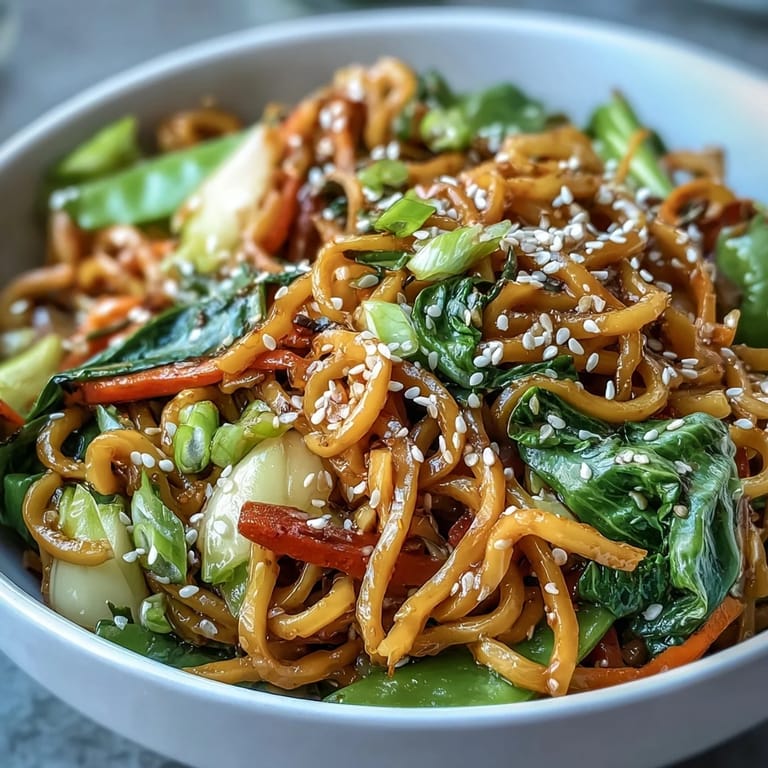
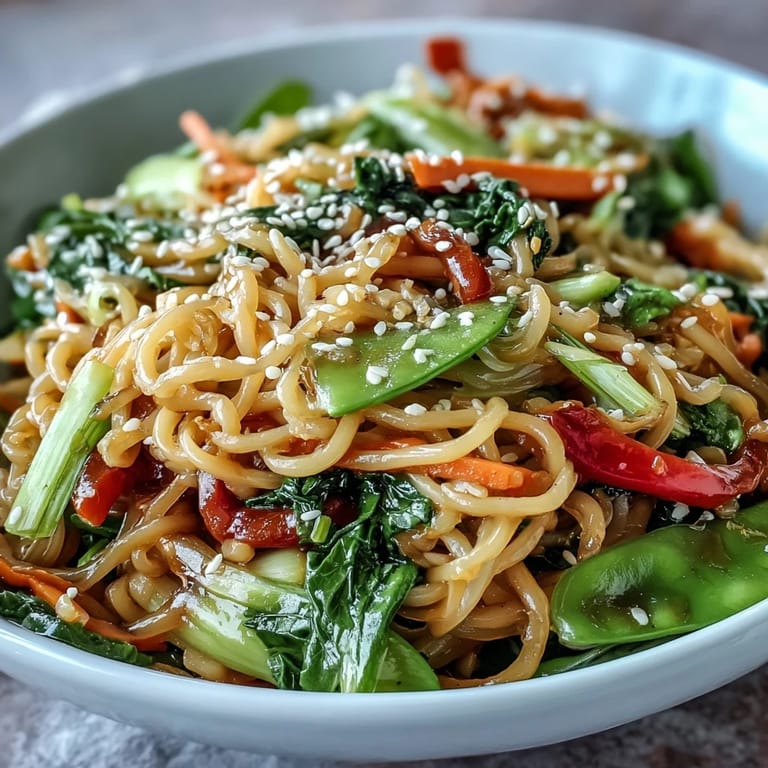
- Divide between bowls and scatter sesame seeds and fresh herbs on top. The toasted sesame seeds add texture, and the herbs bring a final note of freshness.
 Pin It
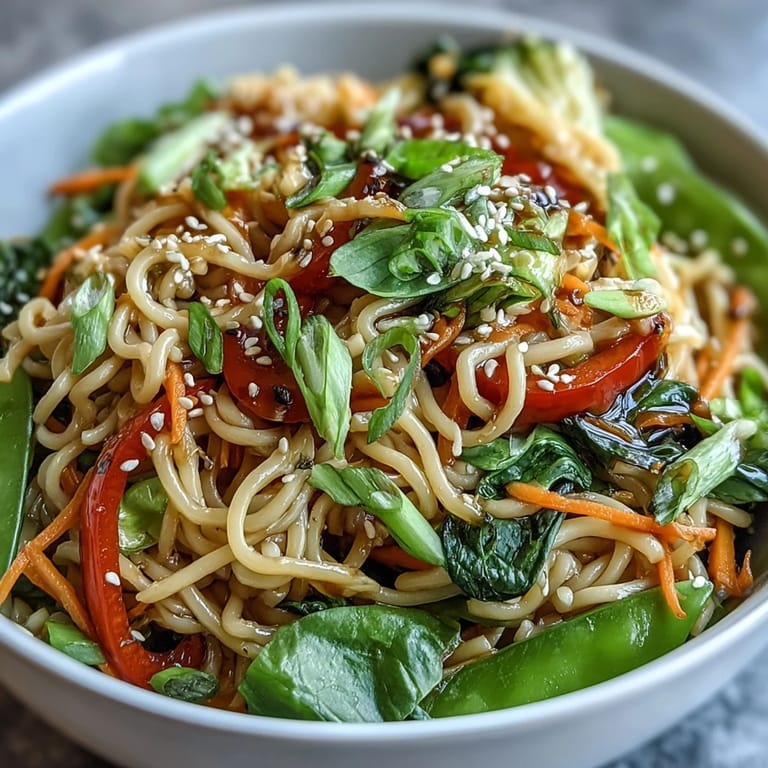
 There's something almost meditative about tossing a bowl of noodles and vegetables together, watching the sauce coat everything evenly. It's the kind of meal that reminds you eating well doesn't have to be complicated or boring.
Flavor Balance Matters
The magic in this bowl lives in the sauce—ginger brings the warmth, sesame adds richness, and vinegar cuts through it all with a bright note. I learned early on that rushing the sauce or skipping ingredients changes the whole experience. Spend an extra minute whisking it together and tasting before it meets the hot pan; that's where the real cooking happens.
Make It Your Own
I've made this bowl with broccoli instead of bok choy, added shiitake mushrooms for earthiness, and even thrown in some steamed edamame when I needed extra protein. The framework stays solid, but the vegetables are flexible—use what's in your crisper drawer or what you're craving that day. A squeeze of lime juice at the end brightens everything, and if you want protein, grilled tofu or shrimp transforms this into something even more substantial.
Storage and Timing Tips
This bowl tastes best served immediately while the noodles are warm and vegetables still have their snap, but leftovers keep well in the fridge for a couple of days. If you're prepping ahead, cook everything separately and combine just before eating—the sauce can sit happily in a container, and you can warm the noodles and vegetables quickly when you're ready. This is one of those recipes that teaches you the difference between meal prep and actual cooking; sometimes a little last-minute assembly is worth the effort.
- Make your sauce the night before and let the flavors deepen in the fridge.
- Prep your vegetables in advance, but keep them separate until cooking time.
- Reheat gently in a skillet rather than the microwave to restore some of that fresh texture.
 Pin It
 This shirataki noodle bowl has quietly become one of those recipes I make when I want to feel good without overthinking it. Every bowl is a little different, but always satisfying.
Recipe Questions & Answers
- → What do shirataki noodles taste like?
Shirataki noodles have a neutral, slightly gelatinous texture that absorbs flavors beautifully from sauces and seasonings. They're made from konjac yam and contain almost no calories.
- → How do I prepare shirataki noodles properly?
Drain and rinse the noodles thoroughly under cold water, then boil for 2 minutes to remove any natural aroma. Pat them dry with paper towels before cooking to help them absorb the sauce better.
- → Can I use different vegetables?
Absolutely. Broccoli florets, sliced mushrooms, snap peas, or shredded cabbage all work wonderfully. Just adjust cooking times so vegetables stay crisp-tender.
- → How long does the ginger sauce keep?
The sauce can be made ahead and stored in an airtight container in the refrigerator for up to one week. Whisk well before using as ingredients may separate slightly.
- → Is this dish spicy?
The chili flakes add mild heat, but you can adjust the amount to taste or omit them entirely for a completely mild version. Maple syrup adds a subtle sweetness that balances flavors.
- → What protein additions work well?
Grilled tofu, crispy tempeh, edamame, or cooked shrimp pair perfectly. For vegan options, try pan-fried chickpeas or baked marinated tofu.