 Pin It
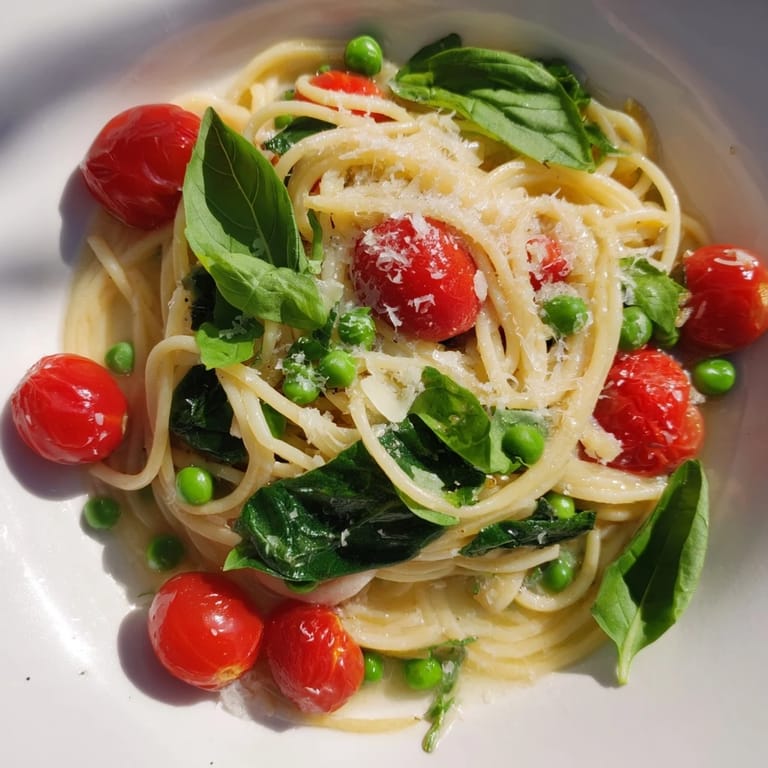
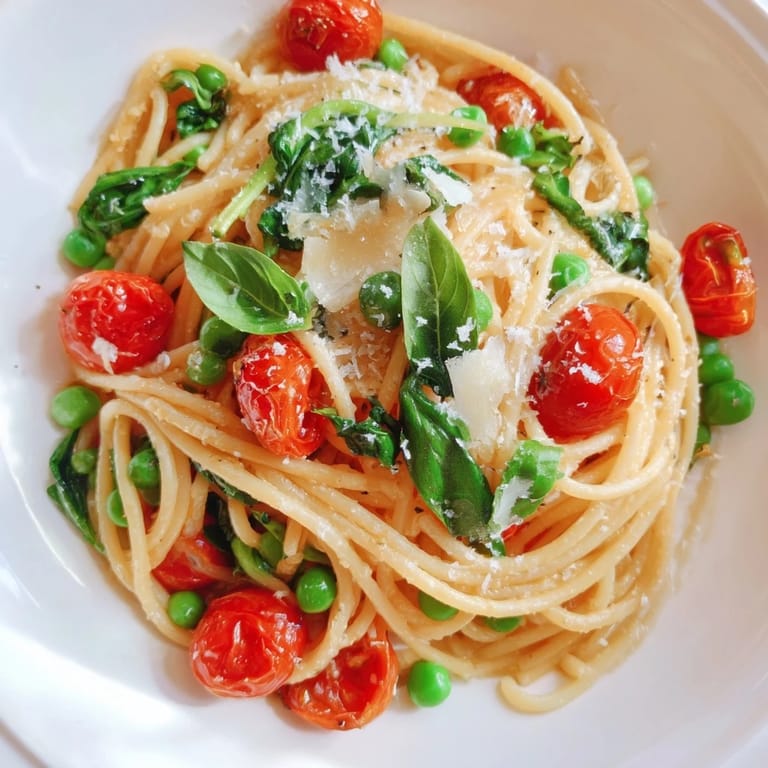
 Last Tuesday, I stared at a mountain of farmers market finds and zero energy for a sink full of dishes. That's when I threw everything into one pot and crossed my fingers. The kitchen filled with this incredible garlic and tomato aroma, and somehow the spaghetti cooked right in the broth, creating this silky sauce I never planned for.
My sister called mid-simmer last weekend, and I had to put her on speakerphone while stirring because this method requires just enough attention that you cant walk away. She came over twenty minutes later with wine, and we ate straight from the pot standing up. Sometimes those impromptu dinners become the ones you actually remember.
Ingredients
- 350 g (12 oz) dried spaghetti: Break in half if your pot is on the smaller side, it will cook more evenly
- 150 g (1 cup) frozen or fresh peas: Frozen work beautifully here and add the sweetest pop of color
- 100 g (3.5 oz) baby spinach: It wilts down into nothing but adds this gorgeous fresh green flavor
- 200 g (7 oz) cherry tomatoes, halved: They burst while cooking and create these little pockets of sweetness
- 2 cloves garlic, thinly sliced: Thin slices mellow out as they cook instead of leaving harsh raw spots
- 1 small red onion, thinly sliced: Red onion brings a mild sweetness that regular onions just do not have
- 1 L (4 cups) vegetable broth: This becomes your cooking liquid and sauce all in one
- 2 tbsp olive oil: Start with this to sauté your aromatics, everything else cooks in the broth
- 1/2 tsp salt: The broth already has salt so taste before adding more at the end
- 1/4 tsp black pepper: Freshly cracked makes such a difference here
- 1/4 tsp red pepper flakes (optional): Just a background warmth, not a spicy heat
- Zest of 1 lemon: This brightens everything right at the end like magic
- 30 g (1/4 cup) grated Parmesan cheese: Or a vegetarian alternative if that matters to you
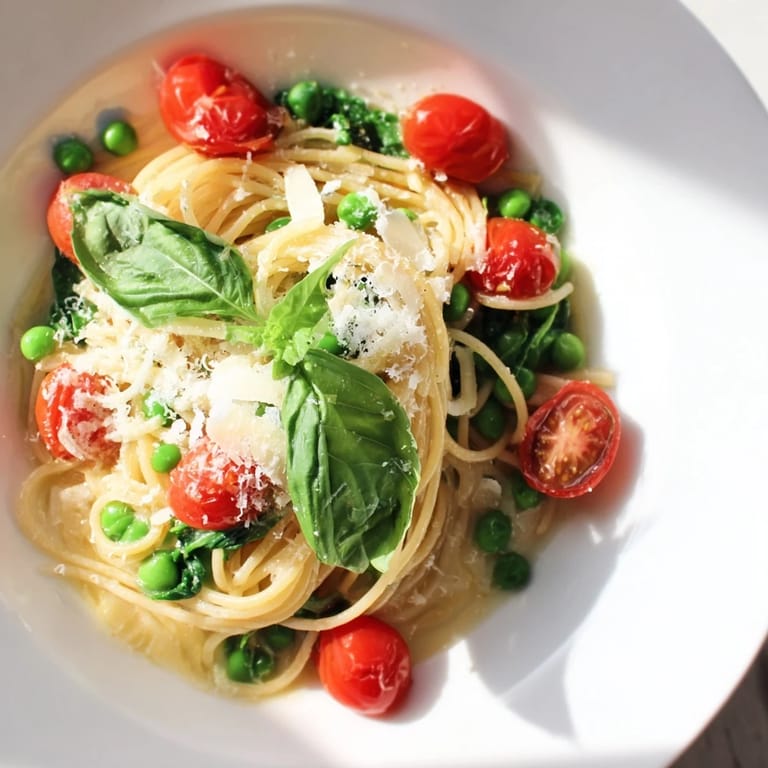
- Fresh basil leaves: Tear them by hand for the most natural look and flavor
Tired of Takeout? 🥡
Get 10 meals you can make faster than delivery arrives. Seriously.
One email. No spam. Unsubscribe anytime.
Instructions
- Start your base:
- Heat olive oil in a large pot over medium heat, add sliced garlic and red onion, cook 2 to 3 minutes until you can smell the garlic and onion is soft
- Add everything else:
- Drop in the spaghetti, peas, spinach, halved tomatoes, then pour in the broth and bring it all to a boil
- Season and stir:
- Add salt, pepper, and red pepper flakes, then give it a good stir and keep stirring occasionally so the pasta does not stick
- Let it work:
- Cook uncovered 10 to 12 minutes until pasta is al dente and most liquid has absorbed, then stir in the lemon zest
- Finish and serve:
- Remove from heat, divide among plates and top with Parmesan and fresh basil
 Pin It
 This recipe saved me during finals week when I somehow had zero time but still wanted something that felt like real food. My roommate asked for the recipe, and now she makes it more than I do. That is how you know a one-pot wonder has made it into the regular rotation.
Making It Your Own
The beauty here is that you can swap in whatever vegetables look good at the market. Asparagus in early spring, zucchini in summer, or even chopped kale in fall all work beautifully with this method. The broth adapts to whatever you throw in.
Wine Pairing Magic
A crisp Sauvignon Blanc cuts through the starch and plays nice with the vegetables. Something bright and acidic keeps the whole meal feeling light even though pasta is involved. If you do not drink, an icy sparkling water with lemon works just as well.
Leftover Logic
This pasta actually reheats surprisingly well because the flavors keep developing overnight. Add a splash of water or broth when warming it up, since that perfect sauce consistency tightens up in the fridge.
- Store in an airtight container for up to three days
- The pasta will continue absorbing liquid, so you might need to loosen it
- Fresh basil is best added right before serving leftovers
 Pin It
 Sometimes the simplest meals end up being the ones that stick with you, mostly because they do not ask for more than you have to give.
Recipe Questions & Answers
- → Can I use fresh vegetables instead of frozen peas?
Yes, absolutely! Fresh peas work beautifully in this dish. Use the same quantity and add them at the same time as the frozen peas. Fresh vegetables may cook slightly faster, so keep an eye on the pasta to avoid overcooking.
- → How do I prevent the pasta from sticking to the bottom?
Stir occasionally throughout the cooking process, especially in the first few minutes after adding the broth. This helps distribute the pasta evenly and prevents it from clumping or sticking to the pot.
- → What can I use instead of Parmesan cheese?
For a dairy-free option, use vegan cheese or nutritional yeast. For a vegetarian alternative, look for rennet-free Parmesan. You can also try pecorino Romano or aged cheddar for different flavor profiles.
- → How do I make this gluten-free?
Simply swap the regular spaghetti for gluten-free pasta. Most gluten-free pastas cook in similar timeframes, but check the package instructions. Rice-based or chickpea-based pastas work particularly well with this dish.
- → Can I add protein to make it heartier?
Definitely! A drained can of chickpeas adds wonderful texture and plant-based protein. You can also add white beans, lentils, or tofu. Stir in protein additions in step 2 alongside the other vegetables.
- → What wine pairs best with this dish?
A crisp Sauvignon Blanc complements the fresh vegetables and bright lemon zest beautifully. If you prefer lighter options, Pinot Grigio or a dry Vermentino also pair wonderfully with this spring-forward pasta.