 Pin It
 There's a particular Tuesday evening I won't forget—one of those nights when my fridge was half empty and my energy was lower, but friends were coming over in an hour. I remembered a wok gathering dust in the back of my cabinet and some tofu that needed rescuing. What emerged was this sesame ginger stir-fry, a dish that proved how the simplest ingredients could taste like you'd been cooking all day. The kitchen filled with that incredible sesame-ginger fragrance, and suddenly I wasn't tired anymore.
I made this for my cousin who'd just gone vegetarian, and I watched her face light up when she realized how satisfying and flavorful real plant-based cooking could be. She asked for the recipe before dessert, which honestly felt like the highest compliment. That's when I knew this dish had staying power.
Ingredients
- Firm tofu: Press it well before cooking—this is where most people slip up, but dry tofu browns beautifully and soaks up every drop of that incredible sauce.
- Cornstarch: Just a light coating creates that crispy exterior while keeping the inside tender, like a crispy-chewy contrast that actually matters.
- Vegetable oil: Use something neutral that can handle the heat—sesame oil burns easily, so save that for the sauce.
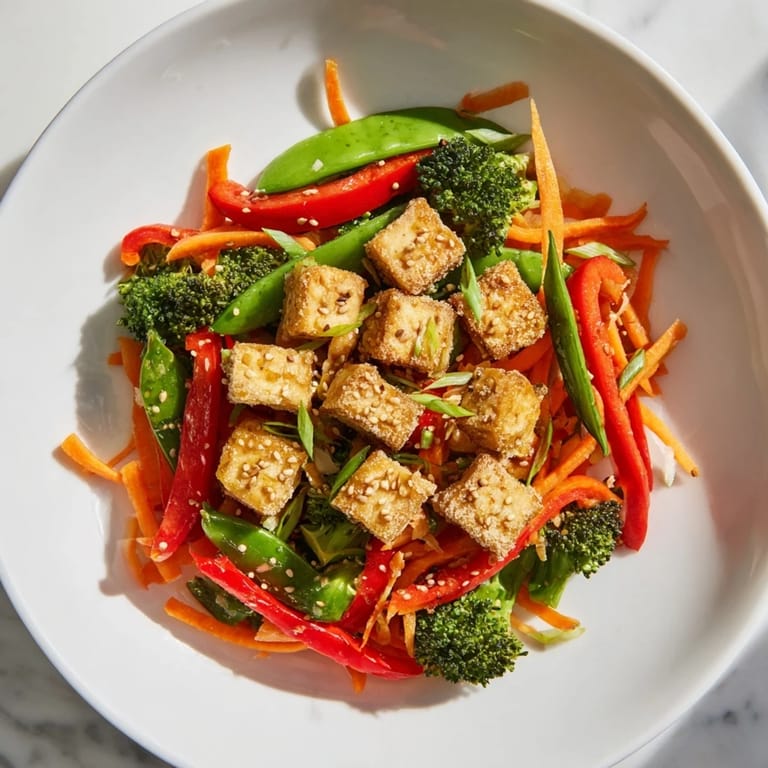
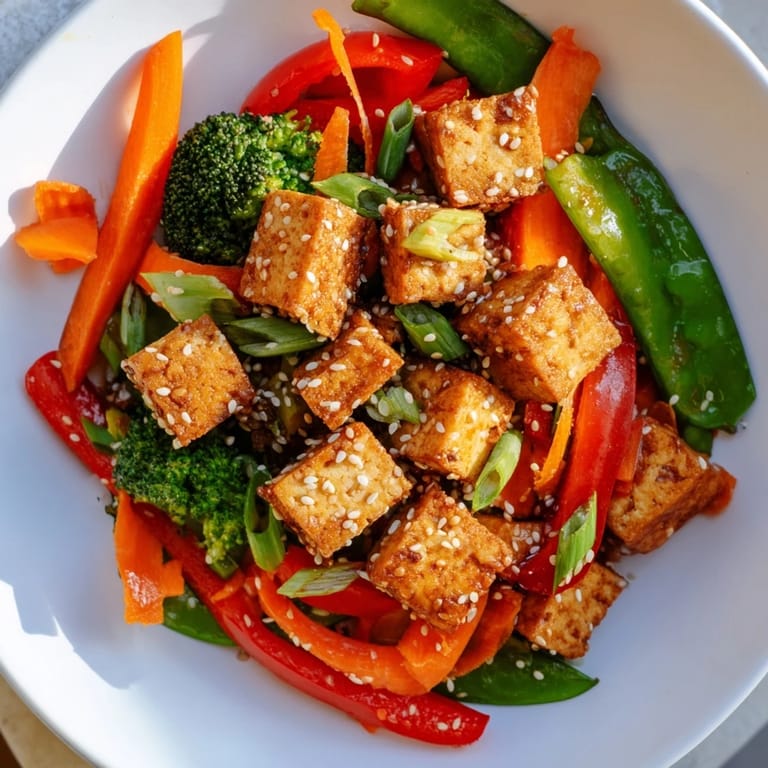
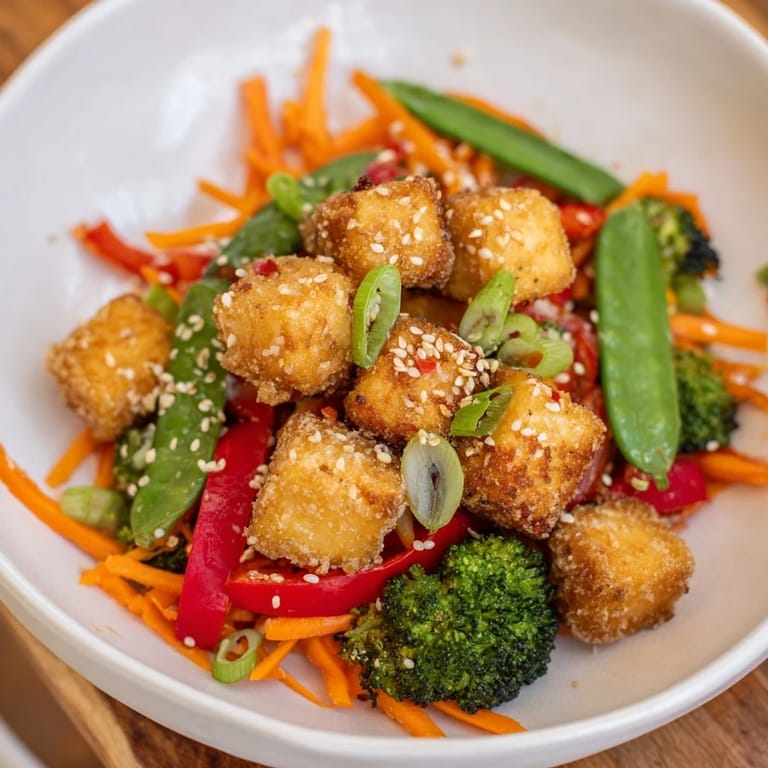
- Red bell pepper, carrot, sugar snap peas, broccoli: These five vegetables give you color, crunch, and nutrition all at once, plus each one has a slightly different texture that makes eating interesting.
- Spring onions: Add these at the very end so they stay fresh and bright, cutting through the richness with their mild onion bite.
- Wheat or rice noodles: Either works beautifully; rice noodles feel lighter while wheat gives you more substance.
- Soy sauce: The umami backbone that makes everything taste more like itself.
- Toasted sesame oil: A small amount goes a long way—this is concentrated flavor, nutty and dark and irresistible.
- Rice vinegar: Keeps everything bright and prevents the sauce from feeling heavy or cloying.
- Honey or maple syrup: Just enough sweetness to balance the salty and sour, making the whole thing harmonious.
- Fresh ginger and garlic: Minced fine so they distribute evenly throughout the sauce, warming every single bite.
- Sesame seeds: Toasted seeds in the sauce plus more sprinkled on top gives you nutty flavor at two different moments.
Tired of Takeout? 🥡
Get 10 meals you can make faster than delivery arrives. Seriously.
One email. No spam. Unsubscribe anytime.
Instructions
- Get your noodles ready:
- Cook them while you prep everything else to save time, then rinse them under cold water so they don't clump together. Set them aside on a clean plate.
- Cube and coat your tofu:
- Cut it into bite-sized pieces and toss gently with cornstarch until every surface is dusted—this coating is what makes them crispy. Handle it kindly; tofu is delicate even though it's tougher than people think.
- Crisp that tofu:
- Heat your oil until it shimmers, then add the tofu cubes carefully so they don't stick together. Let them sit undisturbed for a few minutes on each side until golden brown, which means they're developing flavor, not just cooking. This takes patience but it's worth every second.
- Stir-fry the vegetables:
- Add a splash more oil if the pan looks dry, then toss in your peppers, carrots, snap peas, and broccoli. Keep them moving so they cook evenly and stay crisp rather than turning mushy—you want to hear them sizzle.
- Make your magic sauce:
- While the vegetables are cooking, whisk together soy sauce, sesame oil, rice vinegar, honey, ginger, garlic, and sesame seeds in a bowl. Taste it on a spoon before it goes into the pan; this is your moment to adjust if you want more tang or more sweetness.
- Bring it all together:
- Return the crispy tofu to the pan with the vegetables, add your cooked noodles, and pour the sauce over everything. Toss gently but thoroughly so the sauce coats every strand of noodle and every piece of tofu, letting it warm through for two minutes until it's all unified.
- Finish and serve:
- Scatter spring onions, extra sesame seeds, and fresh cilantro over the top, then serve with lime wedges if you want to brighten it all up at the last moment. Squeeze a little lime over your bowl just before eating—that last bit of citrus brings everything into focus.
 Pin It
 I think about the moment my two-year-old nephew reached for his third helping of this, vegetables and all, completely unbothered by their healthfulness. His mom and I locked eyes over the table with that quiet joy that only other parents understand. Food that brings people together, especially when it nourishes them, feels like a small kind of magic.
The Secret to Perfect Crispy Tofu
The difference between tofu that's pale and soft and tofu that's golden and satisfying comes down to two things: dryness and patience. I used to rush this part, crowding the pan and stirring too often, wondering why my tofu never browned properly. Then I learned to give each side four minutes of undisturbed contact with hot oil, and suddenly I understood why people get excited about tofu at all. The cornstarch isn't just a coating; it's a vehicle for browning, a way to create texture where there was none.
Building Flavor Layers
This dish works because it respects the idea that flavor isn't one single note—it's a conversation between salty, sour, sweet, nutty, and warm spiced notes all happening at once. The soy sauce gives you umami depth, the rice vinegar keeps it from feeling heavy, the honey smooths everything out, and the ginger-garlic-sesame combination creates warmth and complexity. It's not a dish that announces itself loudly; it's one that unfolds in your mouth as you eat, revealing something new in each bite.
Variations and Improvisation
This is the kind of dish that actually improves when you adapt it to what's in your kitchen. I've made it with mushrooms instead of broccoli on nights when I was out of green vegetables, and I've added baby bok choy when I wanted something more delicate. The sauce is forgiving enough to accommodate almost any vegetable you'd want to toss in, and the technique stays exactly the same. One evening I added a teaspoon of chili flakes to the sauce for friends who like heat, and it shifted the whole personality of the dish while keeping the essence intact.
- Swap vegetables based on what you have—mushrooms, baby corn, water chestnuts, or leafy greens all work beautifully.
- For gluten-free, use tamari instead of regular soy sauce and choose rice noodles over wheat.
- If you want more richness, add a spoonful of peanut butter to the sauce or finish with a drizzle of chili oil.
 Pin It
 This dish has become my reliable answer to the question of what to cook when I want something that feels special but doesn't demand hours of my time. It's taught me that vegetarian cooking isn't about substitution or compromise—it's about respecting vegetables and proteins enough to cook them properly, and trusting that good technique and balanced seasoning will create something genuinely delicious.
Recipe Questions & Answers
- → What type of tofu works best?
Firm tofu is ideal as it holds its shape well when pressed, coated, and pan-fried to a crispy texture.
- → Can I use gluten-free noodles?
Yes, rice noodles or certified gluten-free wheat noodles work perfectly in this dish.
- → How can I make the stir-fry spicier?
Add chili flakes or a splash of sriracha to the sesame-ginger sauce to introduce heat.
- → What vegetables complement this dish?
Bell pepper, carrot, broccoli, snap peas, and spring onions add color, crunch, and freshness.
- → How do I achieve crispy tofu?
Press tofu to remove excess moisture, toss in cornstarch, and pan-fry in vegetable oil until golden on all sides.