 Pin It
 My first haggis was a dare, honestly. A friend from Edinburgh brought one to a winter dinner party, and I was convinced it would be inedible—all those organ meats and spices crammed into a sheep's stomach seemed deliberately medieval. But the moment I tasted it, something clicked. The oats gave it this surprising earthiness, the suet made it rich and creamy, and the spices weren't harsh at all; they were warm and almost comforting. I've been chasing that same magic ever since, learning to make it properly in my own kitchen.
I made this for my partner on Burns Night without telling him what he was eating first, which in retrospect was cruel but funny. He asked for seconds before I confessed, then got this comically suspicious look when I explained the offal situation. Now it's become our standing joke—he still eats it, but not before making a show of reluctance that fools absolutely no one.
Ingredients
- Sheeps heart, liver, and lungs (500 g): These are the soul of haggis; don't skip them or substitute lightly. If you can't find them fresh, ask your butcher directly—they'll usually order them. The long simmer makes them tender and mild.
- Beef or lamb suet, finely chopped (200 g): This keeps the texture creamy and binds everything together. Cold suet chops more easily; keep it in the freezer until the last moment.
- Optional lamb or beef mince (300 g): Adds a gentler texture if the offal intimidates you, though purists skip this.
- Steel-cut oats, toasted (150 g): Toasting them first brings out a nuttiness that transforms the whole dish; don't use rolled oats, they'll turn mushy.
- Onions, finely chopped (2 medium): They cook down completely and provide sweetness that balances the spices.
- Beef stock (250 ml): Use good stock; it's one of the few things you taste directly in the final bite.
- Ground black pepper, coriander, nutmeg, allspice (1 tsp each of pepper, coriander, nutmeg, and ½ tsp allspice): The spice ratio is crucial here—they should warm you, not shock you.
- Salt (1½ tsp): Taste as you go; offal needs proper seasoning to shine.
- Sheeps stomach or sausage casing: A cleaned stomach is traditional and forgiving; if using a pudding basin instead, the result is slightly different but equally valid.
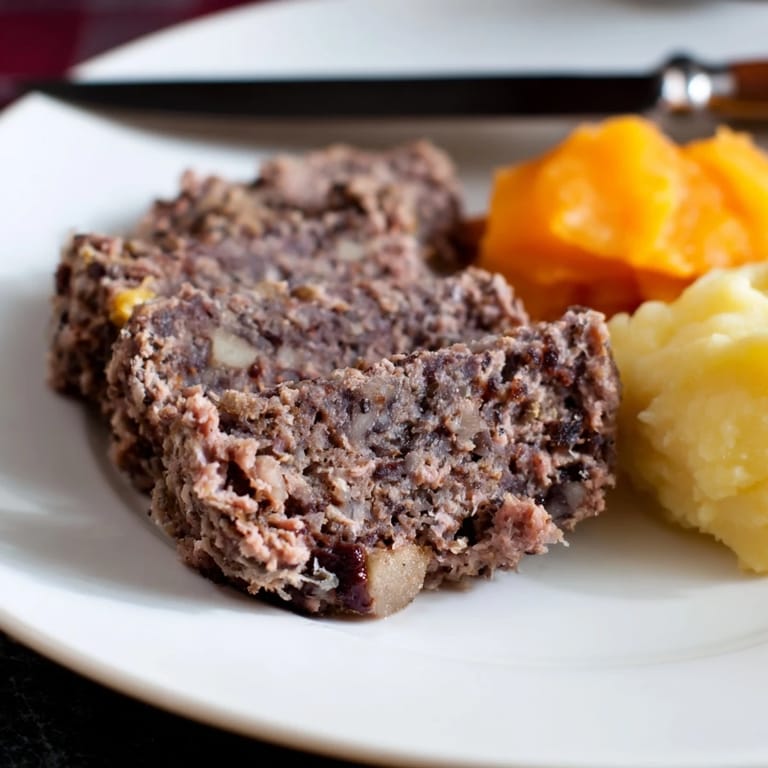
- Potatoes and turnips (500 g each), butter (50 g): The neeps and tatties are your salvation—their simplicity lets the haggis be the star.
Tired of Takeout? 🥡
Get 10 meals you can make faster than delivery arrives. Seriously.
One email. No spam. Unsubscribe anytime.
Instructions
- Prepare the offal with care:
- Rinse the heart, liver, and lungs thoroughly under cold water until the water runs clear; this removes any flavor you don't want. Place them in a large pot, cover generously with cold water, and bring to a boil, then turn the heat down to a gentle simmer for 1 to 2 hours until everything is tender enough to break apart easily with a fork. Save 250 ml of that cooking liquid if you want to use it later for extra depth.
- Build your spiced mixture:
- Once the offal is cool enough to handle, mince it finely—this is easier in batches. In a large bowl, combine the minced offal, cold suet, toasted oats, finely chopped onions, and the optional lamb mince if you're using it, then stir in the beef stock and reserved cooking liquid. Add your spices and salt, then mix thoroughly until you have a moist, cohesive mixture that holds together but isn't gluey.
- Fill and secure the casing:
- If using a sheep's stomach, rinse it well inside and out with cold water, then carefully spoon in the mixture, leaving a couple of fingers of space at the top to allow for expansion as it cooks. Tie the opening securely with kitchen twine, or if you prefer a pudding basin, pack the mixture into it and cover the top tightly with foil.
- Steam gently for two hours:
- Place your filled casing or basin into a large pot of simmering water—the water should come halfway up the sides, not over the top. Keep the water at a gentle, consistent simmer and check it every 30 minutes or so, topping up with hot water if needed to maintain the level.
- Cook your vegetables while haggis rests:
- About 30 minutes before the haggis finishes, boil your cubed potatoes and turnips separately in salted water until they're tender enough to mash easily, usually 20 to 25 minutes. Drain them well, then mash each with butter, salt, and pepper until smooth but not gluey.
- Finish and serve with warmth:
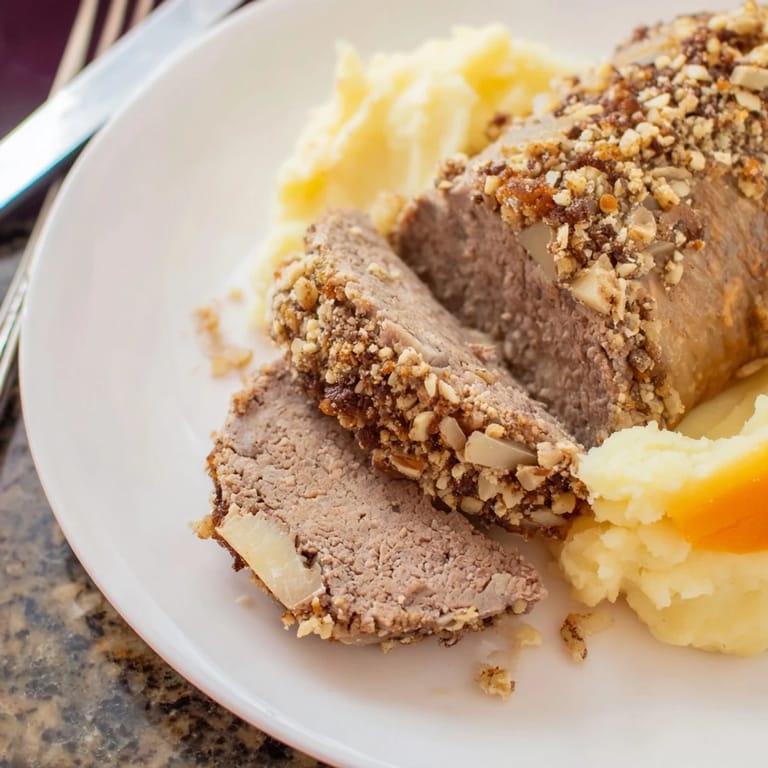
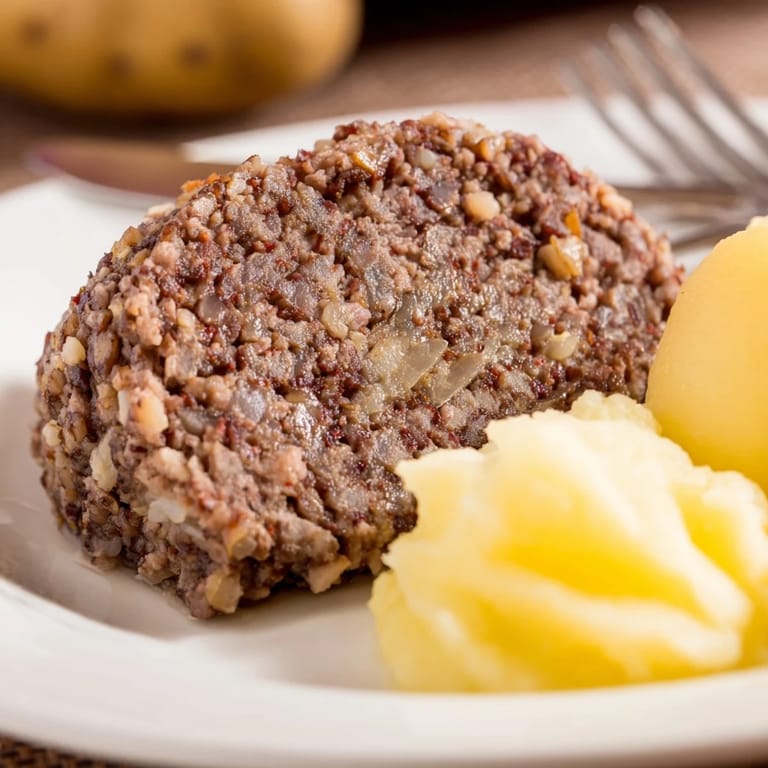
- Carefully remove the haggis from the pot and let it rest for a few minutes to firm up slightly. Slice it open lengthwise and serve it hot, piled alongside generous spoonfuls of creamy neeps and tatties on the same plate.
 Pin It
 What I love most is watching someone's face transform the moment they taste haggis without knowing what it is. The hesitation vanishes, and suddenly they're asking for seconds and admitting they expected something horrible. It's become my favorite thing to cook, not because it's flashy, but because it's honest.
The Story Behind the Spices
The spice blend in haggis isn't random; it evolved over centuries when Scottish cooks were working with limited, hardy ingredients. Coriander and nutmeg were precious, expensive spices brought in by traders, but allspice arrived later from the Caribbean. The way they sit together—warm without being aggressive—tells a story of kitchen invention and making something beautiful with what was at hand. I think about that every time I toast the oats and measure out the spices, standing in my kitchen centuries later, doing almost exactly what someone did in 1700.
Casing Versus Basin: A Practical Choice
A cleaned sheep's stomach is the traditional route and genuinely easier than it sounds; your butcher can walk you through cleaning it, or sell it pre-cleaned. The stomach expands naturally as the haggis cooks, giving you a perfect, rustic serving vessel. A pudding basin works just as well if you're nervous, though you'll lose that traditional drama of slicing it open at the table. I've made it both ways, and honestly, either choice is fine—the food inside is what matters.
Serving and Pairing
Neeps and tatties are not optional; they're the reason the whole dish works. Their gentle sweetness and soft texture keep the rich, spiced haggis from overwhelming your palate, and they let you build each bite to your taste. A whisky cream sauce elevates things if you're feeling luxurious, but simple butter and salt on those vegetables is honestly all you need.
- Try a Scotch whisky from Speyside with this; something smooth and slightly sweet balances the spices perfectly.
- If vegetarian friends are coming, make a second haggis with mushrooms, lentils, and vegetable suet; it's surprisingly good and respects both traditions.
- Leftovers keep for three days and reheat gently in a low oven, wrapped loosely in foil.
 Pin It
 Haggis is one of those dishes that teaches you something about cooking if you let it—about respecting ingredients, about tradition, and about how flavor builds when you're patient. Once you make it, you'll understand why it's endured for so long.
Recipe Questions & Answers
- → What meats are used in haggis?
Haggis typically uses sheep's heart, liver, and lungs, often minced. Some variations include lamb or beef mince for added texture.
- → How is the casing prepared?
The sheeps stomach casing should be thoroughly cleaned and rinsed before filling. Alternatively, an oven-proof pudding basin can be used for cooking.
- → What traditional sides accompany haggis?
It’s traditionally served with neeps and tatties, which are mashed turnips and potatoes, often seasoned with butter, salt, and pepper.
- → Can the oats be substituted?
Steel-cut oats are essential for texture and flavor, but rolled oats may be used if toasted beforehand to achieve a similar effect.
- → Is there a vegetarian alternative?
Vegetarian versions replace meats with pulses, mushrooms, and vegetable suet to mimic the texture and flavor.