 Pin It
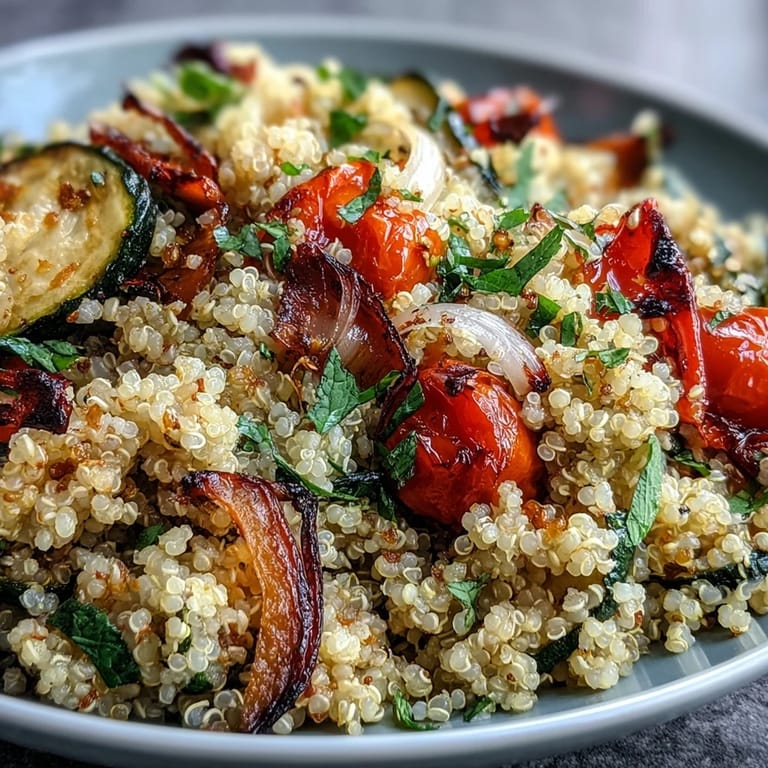
 There's something almost meditative about watching vegetables transform in the oven—that moment when they shift from raw and pale to caramelized and sweet, filling your kitchen with warmth. I stumbled onto this quinoa pilaf one autumn afternoon when I had a surplus of vegetables from the farmers market and wanted something that felt nourishing without being fussy. What started as a simple way to use what I had became the dish I now make whenever I need to feel grounded, both in the kitchen and at the table.
I made this for a potluck once where everyone brought something heavy and rich, and I watched people return to this pilaf three times because it tasted bright and complete without making them feel sluggish. That's when I realized this wasn't just a side dish—it was the kind of food that quietly becomes the star of the meal.
Ingredients
- Quinoa, rinsed: Rinsing removes the bitter coating and ensures a fluffy texture; I learned this the hard way after a gritty batch years ago.
- Vegetable broth or water: Broth adds subtle flavor, but water works perfectly fine if that's what you have.
- Red bell pepper: The sweet, fruity notes balance the earthiness of the roasted vegetables.
- Zucchini: It softens beautifully and absorbs the aromatic spices without becoming mushy.
- Carrot: A touch of natural sweetness and a slight textural contrast when roasted.
- Red onion: It mellows significantly in the oven and adds a subtle sweetness to the whole dish.
- Cherry tomatoes, halved: Halving them helps them burst slightly and release their juices into the pilaf.
- Olive oil: Use enough to coat the vegetables generously so they caramelize properly.
- Garlic, minced: Sautéing it briefly in oil before adding spices opens up its flavors.
- Ground cumin: This is the spice that makes people wonder what secret ingredient you used.
- Dried thyme: It adds an herbal, almost woody depth that ties everything together.
- Smoked paprika: Just a half teaspoon gives the whole dish a subtle smokiness without overpowering it.
- Salt and freshly ground black pepper: Always taste as you go; you'll likely need more than you think.
- Fresh parsley: The brightness at the end is essential—don't skip this or use dried.
- Fresh mint (optional): If you have it, add it; if not, the dish is still wonderful.
- Lemon juice: The acid lifts all the flavors and prevents the dish from tasting flat or heavy.
Tired of Takeout? 🥡
Get 10 meals you can make faster than delivery arrives. Seriously.
One email. No spam. Unsubscribe anytime.
Instructions
- Set your oven and prep:
- Heat your oven to 425°F and give yourself a moment to organize your ingredients. Preheating matters more than you'd think—it ensures those vegetables develop that gorgeous golden exterior.
- Roast the vegetables:
- Toss your diced peppers, zucchini, carrot, red onion, and cherry tomatoes with olive oil, salt, and pepper on a baking sheet, then roast for 20 to 25 minutes, stirring halfway through. You'll know they're ready when the edges are caramelized and the kitchen smells incredible.
- Cook the quinoa:
- While vegetables roast, combine rinsed quinoa with vegetable broth in a saucepan, bring to a boil, then reduce heat to low, cover, and simmer for 15 minutes until the liquid is absorbed. Let it sit covered for 5 minutes after removing from heat—this resting time is what makes it fluffy.
- Fluff and infuse:
- Use a fork to gently fluff the quinoa, breaking up any clumps. Heat a drizzle of olive oil in a large skillet over medium heat, add minced garlic, and sauté for about 30 seconds until it becomes fragrant.
- Bloom the spices:
- Stir in the cumin, thyme, and smoked paprika into the garlic and oil, letting them warm for a few seconds so their oils release into the pan. This step makes an enormous difference in flavor—don't rush it.
- Bring it together:
- Add the cooked quinoa and roasted vegetables to the skillet, gently tossing everything to combine and warm through. This should take just a minute or two.
- Finish and season:
- Remove from heat and fold in the fresh parsley, mint if using, and lemon juice. Taste and adjust seasoning with salt and pepper as needed—trust your palate here.
- Serve:
- Serve warm or let it cool to room temperature; both are equally delicious and the flavors actually deepen as it sits.
 Pin It
 There was an evening when my daughter brought this to a school potluck, and she came home excited because another kid asked for the recipe. That small moment made me realize how food builds confidence and connection in ways we don't always anticipate.
Why Roasting Changes Everything
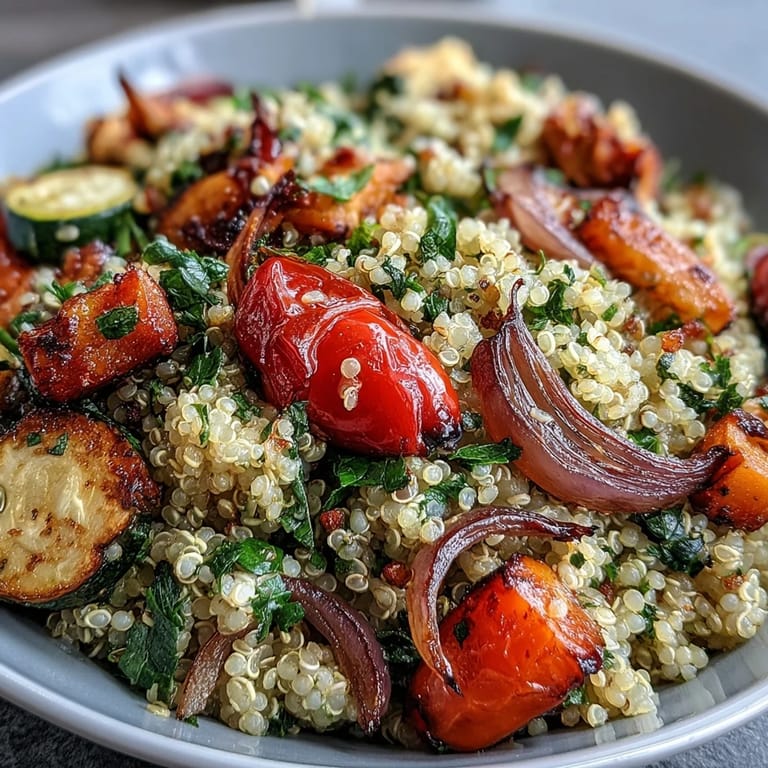
The oven does something magic that a raw salad never could—it concentrates the vegetables' natural sugars and creates texture. When you roast, you're not just cooking vegetables; you're developing flavor through the Maillard reaction, which is the same browning process that makes bread smell like heaven. The difference between steamed and roasted vegetables in this dish is genuinely night and day, and it's worth the extra 25 minutes.
Making It Your Own
This pilaf is genuinely forgiving if you swap vegetables based on the season or what you have lying around. I've made it with butternut squash in autumn, eggplant in late summer, and broccoli when that's what appeared in my CSA box. The spice blend stays constant and works with whatever vegetables you choose, which is one reason this recipe has become part of my regular rotation.
Serving and Storage Wisdom
This pilaf tastes equally wonderful warm straight from the skillet or cooled to room temperature, making it ideal for meal prep or bringing to a gathering. Leftovers keep beautifully in the refrigerator for up to four days, and you can reheat gently or eat cold, even straight from the container if no one's watching.
- If adding protein, crumbled chickpeas or feta both work beautifully without overwhelming the dish.
- A squeeze of extra lemon juice before serving refreshes the flavors if it's been sitting for a while.
- This pairs wonderfully alongside grilled fish, roasted chicken, or simply stands alone as a satisfying vegetarian meal.
 Pin It
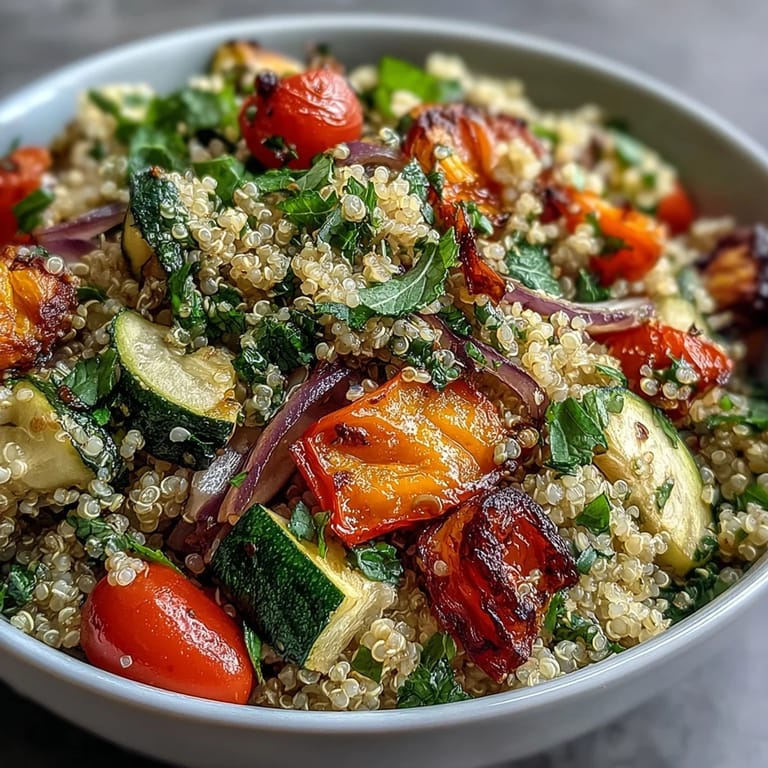
 This is the kind of recipe that invites you to taste, adjust, and make it yours, and that's exactly how it should be. Once you make it once, you'll understand why it keeps finding its way back to my table.
Recipe Questions & Answers
- → Can I use different vegetables in this pilaf?
Absolutely. Swap in any seasonal vegetables like squash, eggplant, broccoli, or green beans. The roasting time may vary slightly depending on your choices.
- → How do I store leftovers?
Store cooled pilaf in an airtight container in the refrigerator for up to 4 days. Reheat gently in the microwave or serve at room temperature.
- → Can I make this dish ahead?
Yes. Roast vegetables and cook quinoa up to 2 days ahead. Combine and reheat with fresh herbs and lemon juice just before serving.
- → What can I add for more protein?
Stir in a can of drained chickpeas, white beans, or crumbled feta cheese. For vegan options, try toasted pine nuts or hemp seeds.
- → Do I need to rinse quinoa before cooking?
Yes. Rinsing removes saponin, a natural coating that can make quinoa taste bitter. Rinse thoroughly under cold water before cooking.
- → Can I use water instead of vegetable broth?
Vegetable broth adds more flavor, but water works perfectly fine. Consider adding an extra clove of garlic or additional herbs if using water.