 Pin It
 My friend Aisha brought a tagine to my kitchen one autumn evening, and the first whiff of cinnamon and cumin hit me before she even lifted the lid. I'd never made Moroccan food before, but watching her hands move through the spice measurements with such certainty made me want to learn. Now whenever I make this chicken, I'm back in that moment—the kitchen suddenly feels warmer, the flavors more intentional, like cooking a story instead of just dinner.
I made this for a dinner party last spring, and my usually skeptical brother came back for seconds without saying a word. When he finally spoke, he just asked for the recipe—which, coming from him, felt like the highest compliment. That's when I knew this dish had the kind of quiet power that bridges cultures and expectations.
Ingredients
- Bone-in, skin-on chicken thighs (1.5 lbs): They're forgiving, flavorful, and stay juicy through the long simmer while breasts would dry out.
- Onion, garlic, and ginger: This aromatic base is your foundation—don't rush it or skip the mincing.
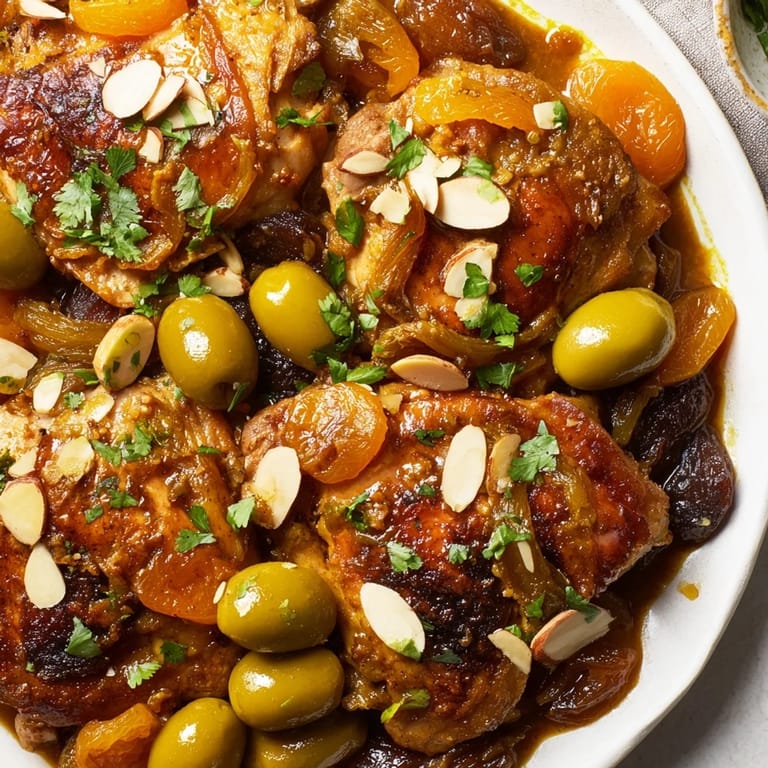
- Dried apricots (1 cup, halved): They plump up beautifully and add natural sweetness without any sugar.
- Ground cumin, coriander, cinnamon, paprika, turmeric (1 tsp each): Whole spices toasted in a dry pan first will deepen their flavor, but ground works perfectly fine.
- Preserved lemon: This is optional but transformative—it adds a bright, funky depth that fresh lemon can't replicate.
- Green olives (½ cup): Pit them yourself if you can; the ritual of it feels important, and jarred pitted ones sometimes taste metallic.
- Chicken broth (1 cup): Use low-sodium so you control the salt level throughout cooking.
- Diced tomatoes (14 oz can): Drain them well so the sauce doesn't become watery.
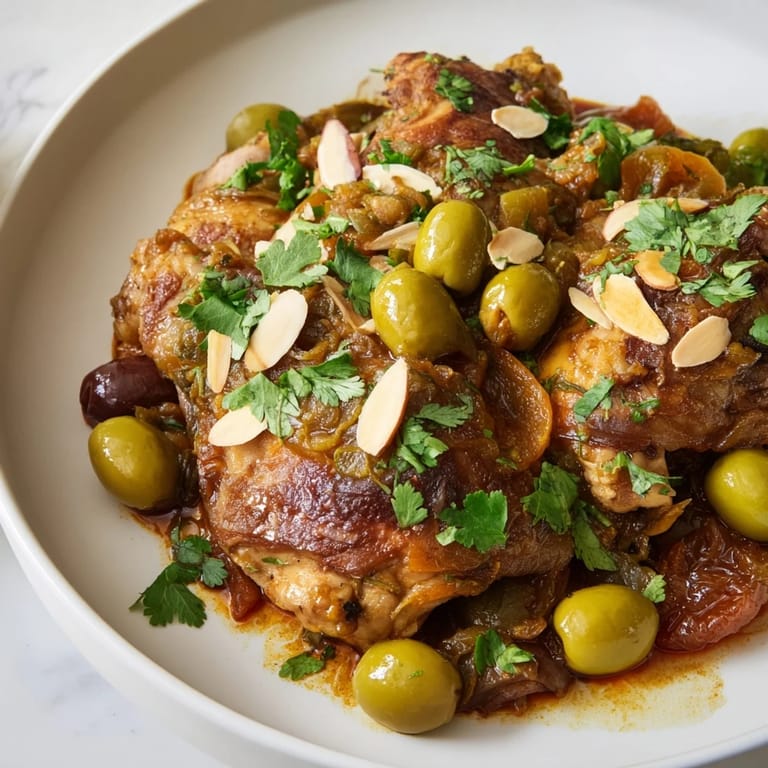
- Cilantro and toasted almonds for garnish: These finish the dish with texture and freshness you won't expect.
Tired of Takeout? 🥡
Get 10 meals you can make faster than delivery arrives. Seriously.
One email. No spam. Unsubscribe anytime.
Instructions
- Prepare and brown your chicken:
- Pat the thighs completely dry—this matters for browning. Season them generously with salt and pepper, then sear them in hot olive oil until the skin is golden and the edges are crispy. This takes patience, but don't crowd the pan.
- Build your aromatic base:
- Once the chicken rests on a plate, soften the onions and carrots in the same pot, scraping up all those caramelized bits. The fond is liquid gold.
- Toast the spices:
- When you add the garlic and ginger, let them bloom for about a minute with the spices—you'll see a change in the kitchen's aroma and that's your signal they're ready.
- Deglaze and build sauce:
- The tomatoes will sizzle when they hit the pan; this is exactly what you want. Scrape and stir until the bottom of the pot is clean.
- Simmer low and slow:
- Return the chicken, add the apricots and broth, then cover and let time do the work. Stir occasionally, but don't obsess over it.
- Finish with olives:
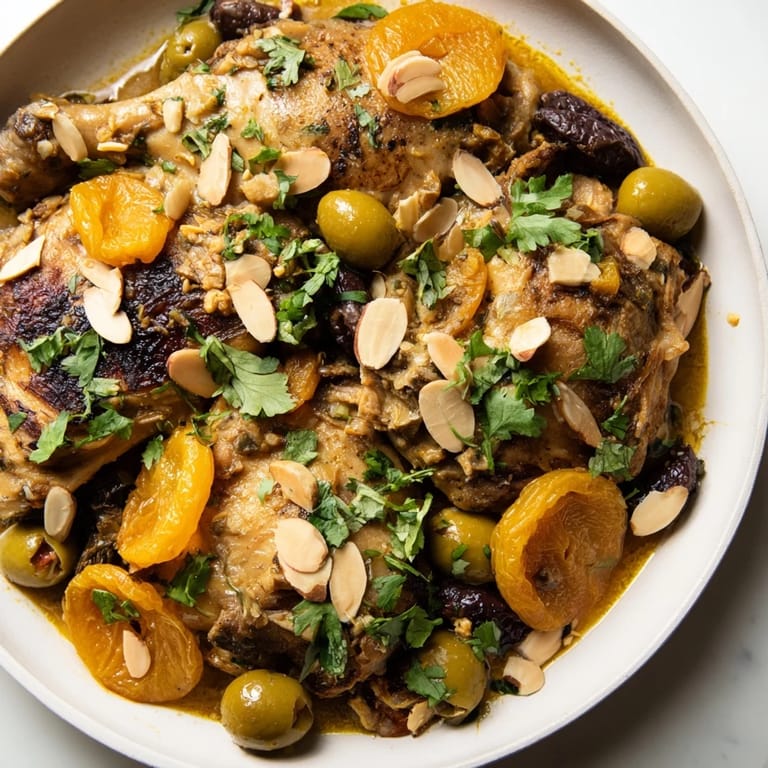
- After 45 minutes, uncover and add the olives, letting the sauce reduce for the final 10 minutes. Taste and adjust salt—you might need less than you think because the olives are already briny.
 Pin It
 There's a moment near the end of cooking when you lift the lid and the steam hits your face, carrying all those warm spices with it. That's when you know something special is happening in that pot. This dish reminds me that the best food doesn't have to be complicated—it just needs time and intention.
Serving and Pairing
Spoon this tagine over fluffy couscous, rice, or warm flatbread that you use to scoop up the sauce. The combination of the tender chicken, those pockets of soft apricot, and the briny olives needs something gentle underneath to catch all the liquid gold. A crisp white wine like Sauvignon Blanc cuts through the richness beautifully, or simply pour cold water with a squeeze of lemon.
Variations and Swaps
Want to stretch this further or change things up? Chickpeas work wonderfully instead of chicken if you're feeding vegetarians—just add them when the apricots go in so they have time to absorb the flavors. Root vegetables like parsnips and sweet potatoes add body and sweetness. A pinch of harissa stirred in at the end will wake everything up if you're craving more heat, though be careful because it builds as you eat.
Why This Recipe Works
Moroccan cooking balances flavors in a way that feels almost musical—sweet plays against savory, warm spices are tempered by brightness, rich sauce is cut by briny olives. This tagine teaches you that balance without being fussy about it. Once you understand how these elements work together, you'll start applying the same logic to other dishes.
- The cooking time is long enough for flavors to marry but short enough to fit a weeknight dinner.
- Everything except the garnishes can be prepped in the morning and the actual cooking is mostly hands-off.
- This dish tastes even better the next day, so don't hesitate to make it ahead.
 Pin It
 This is the kind of recipe that gets better with practice, not because you're fixing mistakes but because you're deepening your understanding of how the spices should smell and when the sauce has reached the right consistency. Make it, share it, and let it become your own.
Recipe Questions & Answers
- → What cut of chicken works best?
Bone-in, skin-on chicken thighs provide the best flavor and tenderness when slow-cooked in this style.
- → Can I substitute dried apricots?
Dried apricots offer sweetness and texture, but dried peaches or raisins can be used as alternatives.
- → Is a traditional tagine necessary?
A heavy Dutch oven works well; it retains heat and simmers the ingredients evenly, similar to a tagine.
- → How to adjust the spice level?
Omit or reduce the cayenne pepper for milder taste; harissa can also be added for extra heat if desired.
- → What sides pair well with this dish?
Steamed couscous, fluffy rice, or warm flatbread complement the rich flavors beautifully.
- → Can this dish be made dairy-free?
Yes, this preparation contains no dairy ingredients and suits dairy-free diets.