 Pin It
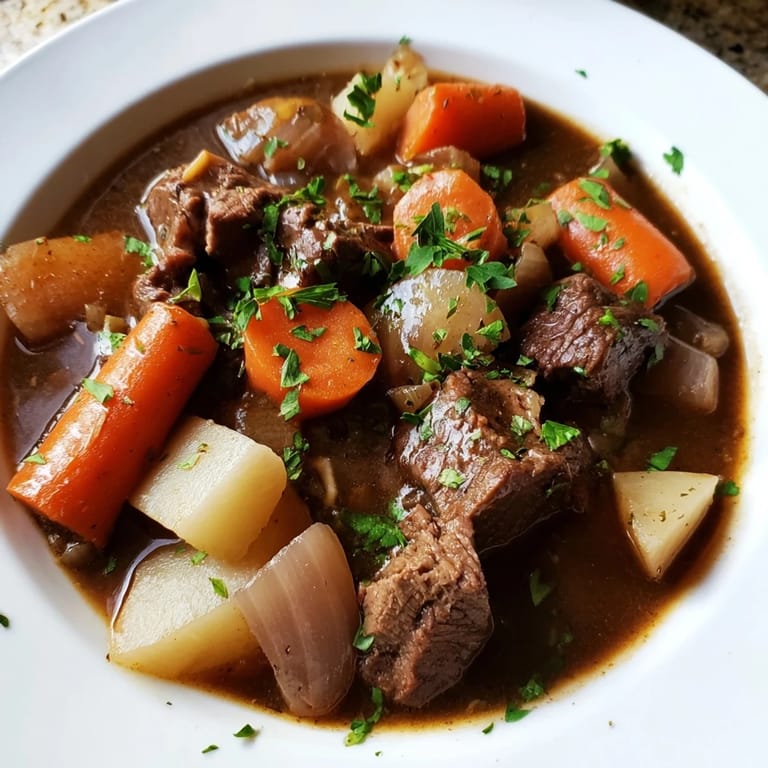
 My grandmother's kitchen always smelled like beef stew on those gray Dublin afternoons when we'd visit. She'd start with just the beef and oil, listening to it sizzle while telling stories about the old country, her hands moving through the familiar motions without hesitation. That smell—toasted meat and browning onions—became my definition of comfort. Years later, I realized she was teaching me that real Irish stew isn't fancy; it's just honest ingredients and time, letting the broth do the talking.
I made this for my partner during the coldest weekend in January, when neither of us wanted to leave the kitchen. We sat at the counter while it simmered, the whole apartment warming up from the steam, just talking and occasionally peeking under the lid. Two and a half hours felt like no time at all.
Ingredients
- Beef chuck (1.5 kg, cut into 2-inch cubes): Chuck has the right amount of fat and collagen to turn silky and rich as it braises; skip the fancy cuts.
- Potatoes (4 large, peeled and chunked): Cut them bigger than you think you need—they'll soften and some will naturally break down to thicken the broth.
- Carrots (4 large, sliced): Their sweetness balances the deep beef flavors and they hold their shape beautifully through the long cooking.
- Onions (2 large, chopped): These dissolve partly into the broth while staying recognizable, which is exactly what you want.
- Celery (2 stalks, sliced): Often overlooked, but it adds a subtle backbone that makes people say 'this tastes right' without knowing why.
- Garlic (3 cloves, minced): Added near the end of sautéing so it doesn't burn and turn bitter.
- Beef stock (1.2 liters): Use good stock if you can; it carries the entire dish, so cheap stock means a thin-tasting stew.
- Guinness or dark beer (330 ml, optional): The stout adds depth and a slight bitterness that rounds everything out; if you skip it, add an extra splash of Worcestershire.
- Tomato paste (2 tbsp): A small amount gives umami and body without tasting like tomato.
- Worcestershire sauce (2 tbsp): The secret ingredient that people can never quite place, adding savory complexity.
- Bay leaves (2): Always remove these before serving or you'll have someone bite one.
- Thyme and rosemary (1 tsp each, dried): Dried herbs are fine here because the long cooking brings them out fully.
- Salt, pepper, vegetable oil (3 tbsp), fresh parsley (2 tbsp): Season as you go and finish with bright parsley on top for color and freshness.
Tired of Takeout? 🥡
Get 10 meals you can make faster than delivery arrives. Seriously.
One email. No spam. Unsubscribe anytime.
Instructions
- Pat and season the beef:
- Dry meat sears better, so grab paper towels and be thorough. A generous pinch of salt and pepper now means you won't have to season as heavily later.
- Build a golden crust:
- Heat oil until it shimmers, then lay beef in without moving it for a few minutes—that's how you get the brown color that flavor comes from. Work in batches so you're not crowding the pot; crowding steams instead of sears.
- Soften the aromatics:
- Once beef is out, the onions and celery go in with a pinch of salt to help them release their moisture. They'll look a bit glossy and smell sweet when they're ready for the garlic.
- Wake up the paste:
- Tomato paste needs a minute in the hot pan to caramelize slightly and lose its raw edge. You'll notice the smell shift.
- Deglaze and build depth:
- If using Guinness, pour it in and scrape the bottom with your wooden spoon—all those browned bits are liquid gold. Let it bubble for a couple minutes so the alcohol mellows.
- Bring it together:
- Return the beef, add all the vegetables, herbs, stock, and Worcestershire. The pot should look almost full but not overflowing. A gentle stir makes sure nothing's stuck to the bottom.
- Let it do its thing:
- Once it comes to a boil, drop the heat so it's just barely simmering—tiny lazy bubbles, not an angry boil. Stir every 20 minutes or so. Two to two and a half hours is the right window; taste the beef and you'll know when it's ready because a fork slides through like butter.
- Taste and finish:
- Fish out the bay leaves, take a spoonful, and decide if it needs more salt, pepper, or Worcestershire. A handful of fresh parsley on top brings color and a whisper of brightness.
 Pin It
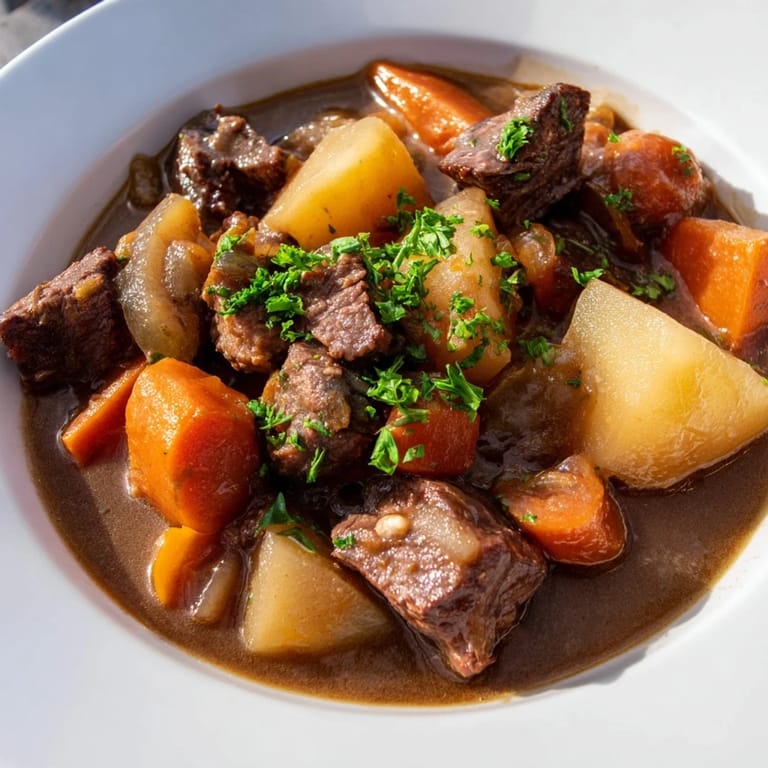
 My favorite moment with this stew came when a friend who claimed not to cook saw how simple the process actually was. She made it the next week and texted me a photo of her own pot simmering on the stove, saying 'I finally understand why my grandmother made this.' That's when I knew the recipe had done its job.
Timing and Make-Ahead Magic
This is the kind of stew that rewards patience and laughs at rushing. You can prep all your vegetables the morning of and store them in the fridge, which means the actual cooking part is just assembly. Even better, make it a day ahead—the flavors deepen overnight and the reheating takes just 20 minutes on the stove while you do something else. I've found that having this in the fridge is like having a warm hug waiting for you after a difficult day.
Variations and Flexibility
Lamb is the traditional Irish swap, and honestly it's worth trying at least once because it brings a different kind of richness. Mushrooms are a quiet addition that work beautifully—just add them in the last 30 minutes so they stay firm. Some people add pearl barley for extra heartiness, or finish with a dark stout instead of during cooking if you want a more pronounced beer flavor.
Serving and Storage Wisdom
Serve this in deep bowls with crusty bread for soaking up every drop, or over creamy mashed potatoes if you're feeling indulgent. I grew up eating it straight from the bowl, and honestly that's still my preference. The stew keeps beautifully in the fridge for four days and freezes wonderfully for up to three months—ladle it into containers before it cools completely so it freezes faster.
- Let leftovers cool to room temperature before refrigerating so they don't warm up the whole fridge.
- When reheating, add a splash of stock or water because the stew will absorb some liquid as it sits.
- If you're freezing, leave a bit of headspace in the container since stew expands slightly when frozen.
 Pin It
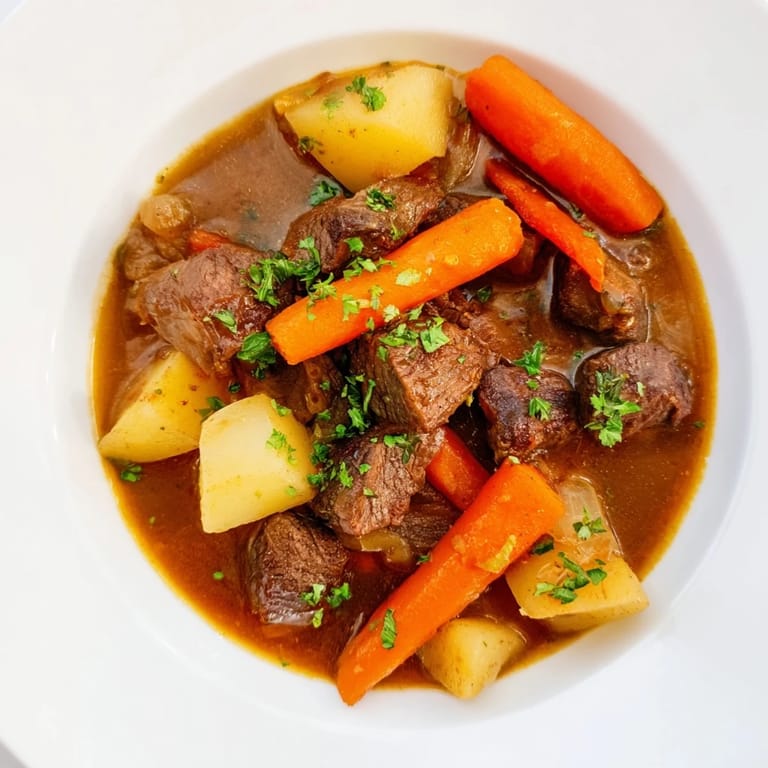
 This is the kind of recipe that gets better every time you make it, not because you're getting fancier, but because you're getting more confident. Trust the process, trust the time, and trust that something this simple can still be exactly what someone needs.