 Pin It
 My wok sits on the back burner most days, but the moment I crack it out for a stir-fry, the kitchen transforms. There's this particular afternoon when a friend dropped by unannounced, and I had exactly what was in my crisper drawer and fifteen minutes before we needed to eat. The ginger smell hit the hot oil and suddenly the whole apartment smelled like a proper meal was happening, and that's when I understood why this simple stir-fry became my go-to for feeding people without fuss.
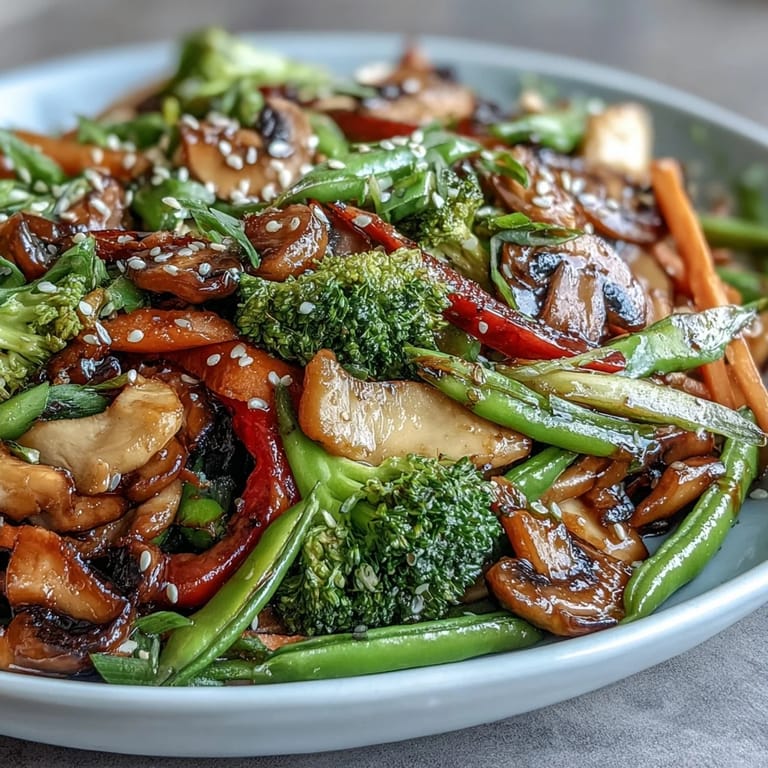
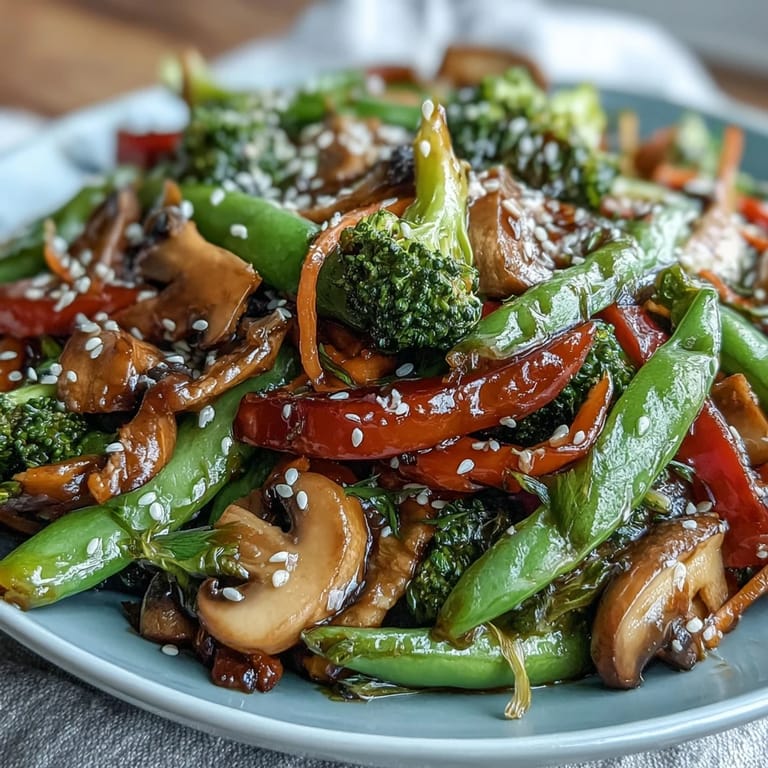
I made this for my sister last spring when she was going through a health kick, and she actually asked for seconds, which never happens with her. The way the colors stayed so vivid on the plate somehow made the whole meal feel more intentional than it actually was, and she started asking me to teach her how I did it.
Ingredients
- Broccoli florets: One cup gives you those little trees that catch sauce beautifully; keep them roughly the same size so they cook evenly.
- Sliced carrots: About one cup, sliced thin enough that they soften in the time it takes everything else to cook.
- Red bell pepper, sliced: The sweetness balances the ginger heat, and it stays crisp if you don't overthink it.
- Snap peas, trimmed: A full cup of these keeps things interesting texture-wise; they're one of the last things that go in.
- Small yellow onion, thinly sliced: Thin slices mean they'll caramelize slightly and mellow out in minutes.
- Sliced mushrooms: One cup absorbs all that ginger-soy flavor like little flavor sponges.
- Fresh ginger, finely grated: Two tablespoons is the non-negotiable heart of this dish; fresh is worth the effort.
- Garlic, minced: Three cloves adds backbone without shouting over the ginger.
- Soy sauce: Three tablespoons, or use tamari if gluten matters to you.
- Sesame oil: One tablespoon for that toasted, nutty finish that makes people ask what your secret ingredient is.
- Vegetable oil: One tablespoon for the high heat work; it lets the sesame oil shine without burning.
- Rice vinegar: One tablespoon cuts through the richness and keeps everything from tasting too heavy.
- Maple syrup or honey: Just one teaspoon to round out the sweet-savory balance.
- Crushed red pepper flakes: A quarter teaspoon optional, but I always add it for that whisper of heat.
- Green onions, sliced: Two of them scattered on top right before serving add a fresh bite.
- Toasted sesame seeds: One tablespoon for garnish, and yes, the toasted version tastes completely different from raw.
Tired of Takeout? 🥡
Get 10 meals you can make faster than delivery arrives. Seriously.
One email. No spam. Unsubscribe anytime.
Instructions
- Make Your Sauce First:
- Whisk soy sauce, rice vinegar, maple syrup, and red pepper flakes together in a small bowl and set it aside where you can reach it. This way you're not scrambling while vegetables are actively cooking in the hot pan.
- Heat Your Pan Properly:
- Pour vegetable oil and sesame oil into a large skillet or wok over medium-high heat and let it get genuinely hot before anything goes in. You want to hear that immediate sizzle when the ginger hits the oil.
- Start With Aromatics:
- Add ginger and garlic and stir constantly for about thirty seconds until your kitchen smells absolutely incredible. This short window blooms all that flavor into the oil.
- Build Your Stir-Fry in Stages:
- Add the onion, carrots, and broccoli first since they need the longest cooking time, stirring constantly for two to three minutes. These three need a head start on the quicker vegetables.
- Add the Quick-Cooking Vegetables:
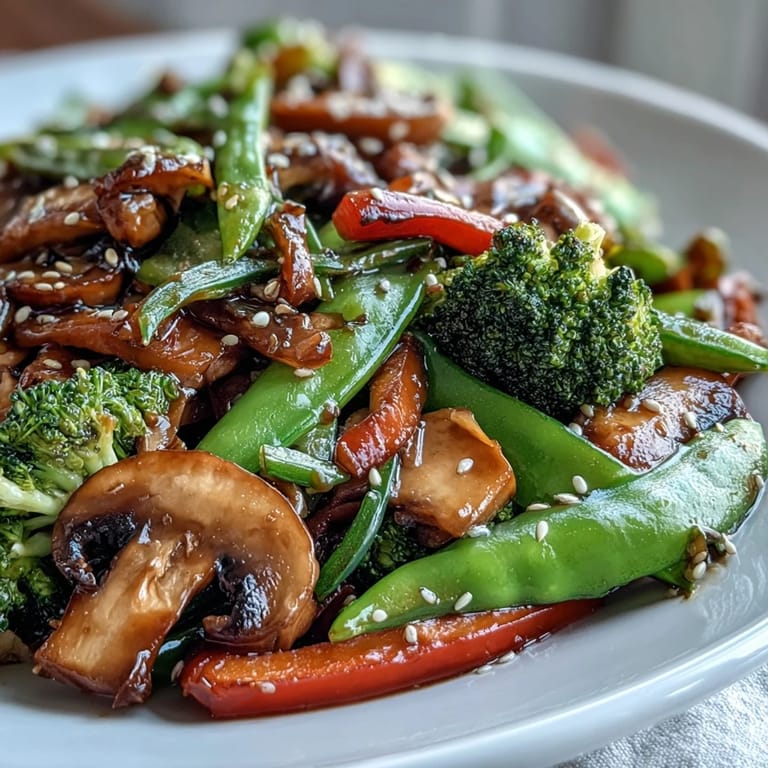
- Toss in bell pepper, snap peas, and mushrooms and keep the heat high, stirring for another three to four minutes until everything looks crisp-tender. You're looking for the point where vegetables still have a little resistance when you bite them, not soft.
- Bring It All Together:
- Pour your prepared sauce right over everything and toss until every vegetable is coated, then cook for another minute or two. The sauce will glaze everything and come together into something deeper than its parts.
- Finish and Serve:
- Pull the pan off heat and scatter green onions and toasted sesame seeds across the top. Serve immediately over rice or noodles if you're making it a full meal.
 Pin It
 One evening I cooked this for myself after a long day, nothing fancy, just dinner at my kitchen counter. By the time I finished eating, I realized I'd been too distracted by how good it tasted to think about anything else for those few minutes, and that's the real magic of a meal this straightforward.
Building Layers of Flavor
The order you add things matters more than you'd think, and I learned this by doing it wrong several times. When ginger and garlic hit hot oil first, they release their essential oils all at once, creating this aromatic base that every vegetable then rides on. Starting with the hardest vegetables means they're already tender by the time the delicate ones join the party, so everything finishes at the same moment instead of some pieces still being crunchy while others fall apart.
Choosing and Prepping Vegetables
You can absolutely swap vegetables based on what's in your fridge, but the principle stays the same: cut everything to roughly the same size and thickness. I've used bok choy, zucchini, baby corn, whatever looked good at the market, and the stir-fry adapts beautifully. The one thing I learned is that watery vegetables like tomatoes or summer squash work better if you add them at the very end, since they release liquid that can dilute your sauce.
Making It Taste Like More Than Vegetables
If this is dinner rather than a side dish, nestling it over jasmine rice or noodles transforms it into something more substantial. I've also started stirring in a block of crumbled tofu or some tempeh in the last couple minutes, and it picks up all that sauce without overpowering the vegetables. You can even use leftover rotisserie chicken if you're not keeping it vegan, though the beauty of this recipe is it doesn't need it.
- Brown rice, white rice, or even cauliflower rice all work perfectly as a base.
- A squeeze of fresh lime juice right before eating brightens everything up in an unexpected way.
- Keep sesame seeds in your pantry because they're the easiest way to make something look like you tried harder than you actually did.
 Pin It
 This stir-fry taught me that some of the best meals are the ones that don't take up your whole evening, and don't require a list of hard-to-find ingredients. Come back to this one whenever you need something quick and honest.
Recipe Questions & Answers
- → What vegetables work best in this dish?
Broccoli, carrots, bell peppers, snap peas, and mushrooms provide excellent texture contrast. Feel free to substitute with bok choy, snow peas, zucchini, or baby corn based on availability and preference.
- → How do I prevent vegetables from becoming mushy?
Maintain medium-high heat and avoid overcrowding the wok. Cook denser vegetables like carrots and broccoli first, then add quicker-cooking peppers and peas. Keep ingredients moving constantly for even cooking.
- → Can I add protein to make it more substantial?
Absolutely. Cubed tofu, tempeh strips, or edamame work beautifully for plant-based options. Pre-cooked proteins can be added during the final 2 minutes to heat through without overcooking.
- → What's the best way to adjust the heat level?
Start with half the red pepper flakes and taste after adding the sauce. Increase gradually for more spice. Fresh minced chili peppers or chili garlic paste offer alternative heat dimensions.
- → How should I store and reheat leftovers?
Store in an airtight container for up to 3 days. Reheat in a hot skillet with a splash of water or oil to refresh crispness. Microwave reheating works but may soften texture slightly.
- → Is this dish gluten-free friendly?
Simply substitute regular soy sauce with gluten-free tamari. Verify all other ingredients, especially pre-made sauces, are certified gluten-free if avoiding wheat entirely.