 Pin It
 The first time I tasted koshari was at a tiny Cairo street stall wedged between a fabric shop and a phone repair booth, where this humble dish was being assembled with such casual precision that I knew I was watching something essential. The vendor worked without hesitation, layering rice, lentils, and pasta with the confidence of someone who'd done it ten thousand times, then crowned it all with a tomato sauce so vibrant it seemed to glow under the afternoon sun. I've made it countless times since, and it never loses that same magic—the way every component keeps its own identity while somehow creating something greater together.
My sister called from the kitchen one evening saying she'd burned her dinner and could I help save the night, so I threw together koshari for six people with whatever was in her pantry, and she's been asking for it every time I visit ever since. There's something about how forgiving this dish is—you can make it in the time it takes someone to set a table, and it somehow tastes like you've been cooking all day.
Ingredients
- Medium-grain rice (1 cup): The slightly starchy grains hold their shape and soak up the sauce without becoming mushy—this is where your foundation's success lives.
- Brown or green lentils (1 cup): They cook in about twenty minutes without falling apart, giving you little bursts of earthiness that keep the dish grounded.
- Elbow macaroni or ditalini pasta (1 cup): Small shapes work best because they nestle into the layers rather than dominating the bowl.
- Olive oil (2 tablespoons): Use a good one—it flavors the sauce in ways you'll notice from the first spoonful.
- Onion (1 large): Chopped fine for the sauce, it should cook until it's nearly invisible but leaves behind all its sweetness.
- Garlic (6 cloves total): Two cloves go into the sauce where they gentle and become part of the flavor base, four go raw into the vinegar for a sharp edge.
- Crushed tomatoes (15 oz can): The backbone of everything, choose one without added sugar if you can.
- Tomato paste (1 tablespoon): It concentrates the flavor and helps the sauce cling to each component.
- Ground cumin and coriander (1 teaspoon each): These are the spices that make people ask what's in this, toasting them briefly in the hot oil brings them alive.
- Chili flakes (1/2 teaspoon optional): Add this if you want heat that whispers rather than shouts.
- Onions for frying (2 large): Slice them thin and even—uniform thickness means even browning and that shattering crispness you're after.
- All-purpose flour (1/2 cup): A light coat that gives the onions their crunch without making them heavy.
- White vinegar (1/4 cup): Sharp and clean, it's the counterpoint that cuts through the richness and wakes up your palate.
Tired of Takeout? 🥡
Get 10 meals you can make faster than delivery arrives. Seriously.
One email. No spam. Unsubscribe anytime.
Instructions
- Start the lentils first:
- They need the most time, so cover them with cold water, bring to a rolling boil, then lower the heat until they're just simmering—you want them tender enough to break easily between your fingers but not so soft they've given up their shape. About twenty-five minutes and you're done.
- While those bubble away, rinse your rice:
- Cold water three times, until the water runs almost clear—this washes away the starch that would make everything gluey. Combine with fresh water and salt, cover, and let it steam for fifteen to eighteen minutes until each grain is tender but distinct.
- Get your pasta going:
- Salt the water generously so it tastes like the sea, cook the pasta until it has just a tiny bit of resistance when you bite it, then drain and set aside in a bowl where it won't stick to itself.
- Build the sauce while everything cooks:
- Warm olive oil in a saucepan, add your minced onion, and let it cook slowly until it's turned translucent and golden at the edges—this takes about five minutes and you'll know it's right when the kitchen smells sweet. Add your minced garlic and let it warm through for just a minute more, then add your tomatoes, tomato paste, and spices all at once. The mixture should bubble and hiss slightly, a small moment of drama that settles into a gentle simmer. Let it cook uncovered for fifteen to twenty minutes, stirring now and then, until it's thickened and the flavors have melded into something deeper than their individual parts.
- Make crispy onions while the sauce finishes:
- Toss your thin-sliced onions with flour and salt until each slice is lightly coated, then carefully add them to hot oil in batches—they should sizzle immediately. Watch them closely because they go from golden to burnt in about thirty seconds, turning them occasionally until they're uniformly crispy and a deep golden brown. Spread them on paper towels to drain and cool, where they'll crisp up even more.
- Optional vinegar moment:
- Combine raw minced garlic with vinegar and chili flakes in a small bowl and let it sit for ten minutes while the flavors get to know each other. This is your sharp counterpoint, the thing that cuts through richness and makes people take another bite.
- Assemble with intention:
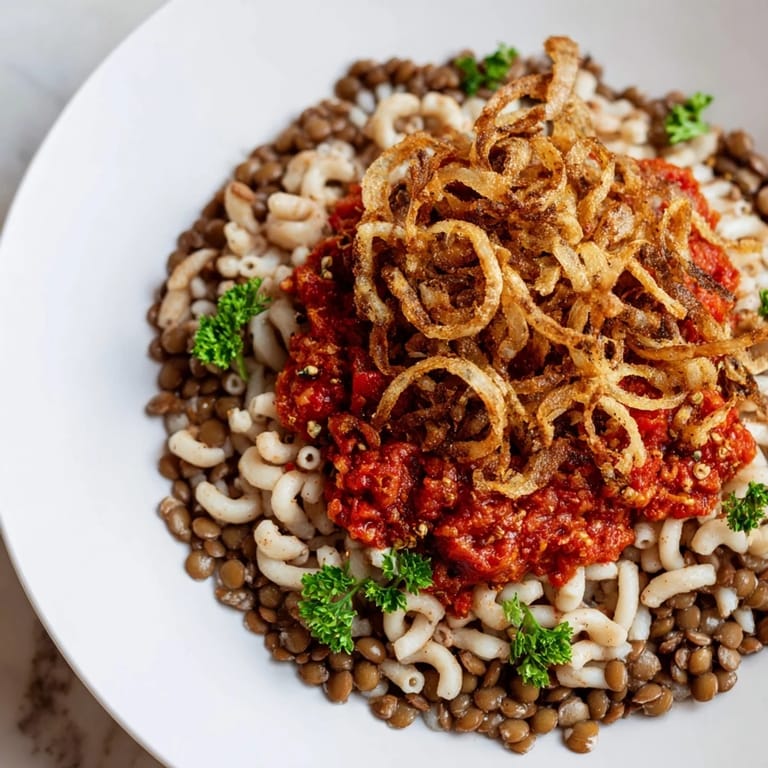
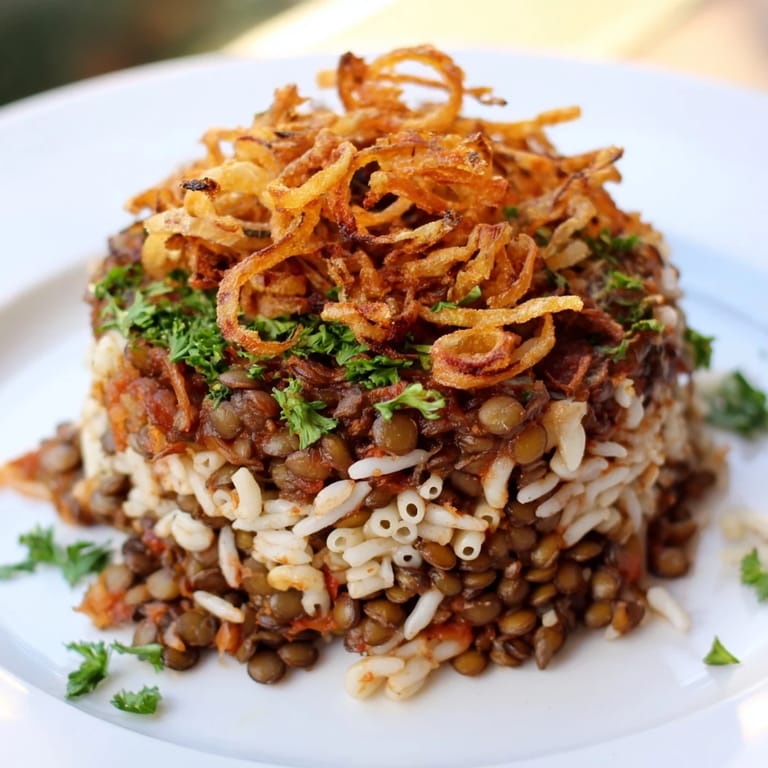
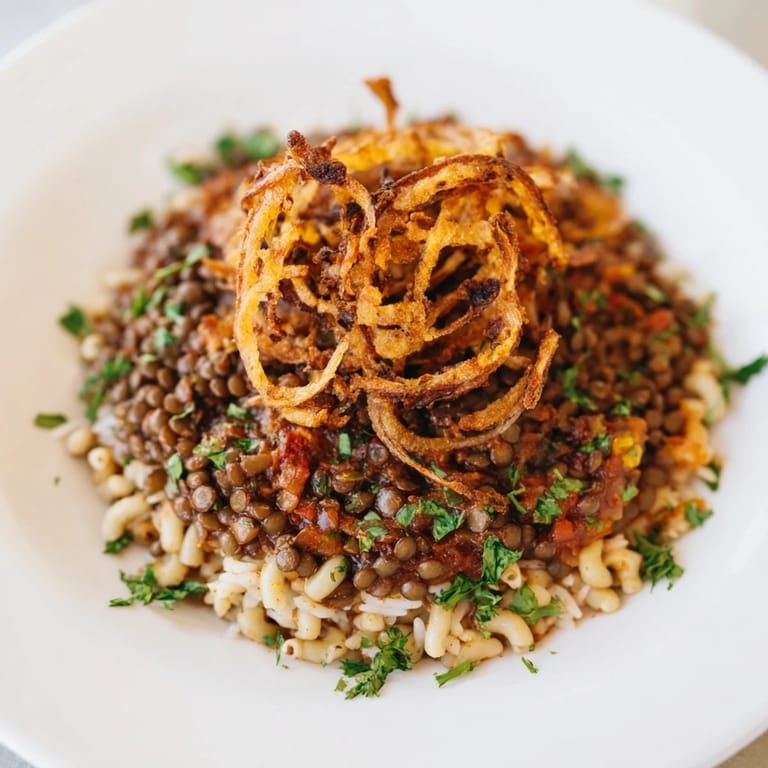
- In a large bowl or on individual plates, start with a layer of rice as your base, then add lentils, then pasta—the order matters less than making sure each component is represented. Spoon generous amounts of warm sauce over the top, scatter your crispy onions across it like you mean it, and if you've made the vinegar, drizzle it over. A handful of fresh parsley on top, and you're done.
 Pin It
 I watched my roommate taste it for the first time and get completely quiet in that way that means food has done something right, and that's when I understood that koshari isn't fancy or complicated—it's just honest, and somehow that's more powerful than anything elaborate could ever be.
Why This Combination Works
Every element has a job and stays in its lane without stepping on anyone else's toes. The rice and lentils give you substance and different textures, the pasta adds a slight chew, the sauce ties everything together with warmth and spice, and then the crispy onions come in and remind you that contrast is what makes food memorable. It's the kind of dish that feels like it might have evolved organically from what was available rather than being designed by committee.
The Sauce Is Where Everything Happens
Don't rush it—the sauce needs time to thicken and for the spices to wake up and mellow at the same time. If you use good tomatoes and give it the full twenty minutes, it becomes something entirely different than the sum of its parts, rich and complex and bright all at once. The tomato paste is crucial here because it deepens the flavor and makes everything cling together rather than sliding off into separate puddles.
Building Your Bowl
The beauty of koshari is that you're not aiming for perfect aesthetics—you're aiming for a bite that has everything in it, where your spoon catches rice and lentils and pasta all at once, with sauce binding it all and crispy onions adding their final word. Some people eat it as a composed bowl, some mix it all together like they're tossing pasta, and both are right.
- Layer generously rather than being precious about proportions—this is comfort food that deserves boldness.
- The crispy onions are non-negotiable, so if you're short on time, skip something else but not these.
- Always serve the sauce and vinegar on the side so people can adjust to their own taste without apology.
 Pin It
 This is the kind of food that moves through a kitchen like it belongs there, asking nothing but patience and leaving behind a kind of warmth that lingers long after the last bowl is cleared.
Recipe Questions & Answers
- → What type of lentils are best for this dish?
Brown or green lentils work best as they hold shape well and provide a hearty texture without becoming mushy.
- → Can I use different pasta shapes?
Yes, small elbow macaroni or ditalini are traditional, but orzo or vermicelli are good alternatives depending on preference.
- → How should the tomato sauce be seasoned?
The sauce is flavored with garlic, onion, cumin, coriander, and optional chili flakes, creating a warm and slightly spicy profile.
- → What is the best way to achieve crispy onions?
Thinly sliced onions coated in flour and fried in hot vegetable oil until golden brown create a crunchy and flavorful topping.
- → Is there a way to add extra tanginess?
A drizzle of garlic-infused white vinegar mixed with chili flakes enhances the layers with a fresh, tangy note.