 Pin It
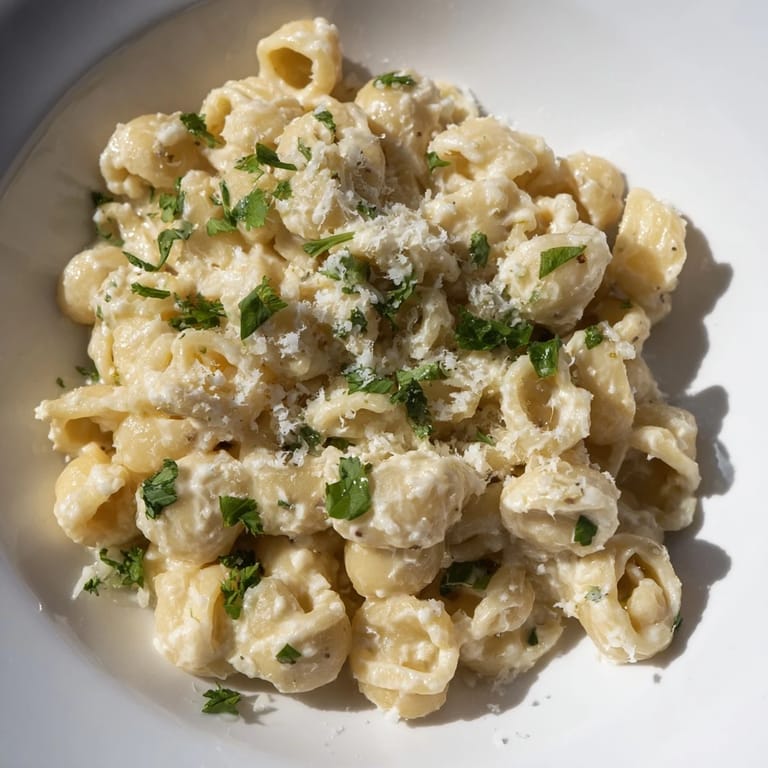
 There's something about the smell of garlic hitting hot oil that stops me mid-thought every single time. Years ago, I was standing in my tiny kitchen on a random Tuesday evening, starving and staring at a nearly empty pantry, when a box of ditalini caught my eye. I had half-and-half, garlic, and Parmesan—nothing fancy, but something told me these humble ingredients wanted to become something warm and comforting. Twenty minutes later, I was twirling creamy, garlicky pasta on a fork, amazed at how such simple things could taste this good. Now, whenever I need to feel taken care of by my own cooking, this is what I make.
I made this for my roommate once when she came home with that specific kind of tired that food can only fix. She took one bite and looked at me like I'd performed magic with a whisk. That's when I realized this recipe has a quiet power—it doesn't demand attention or complex technique, but it delivers the kind of comfort that makes people want to sit down at the table instead of eating at their desks.
Ingredients
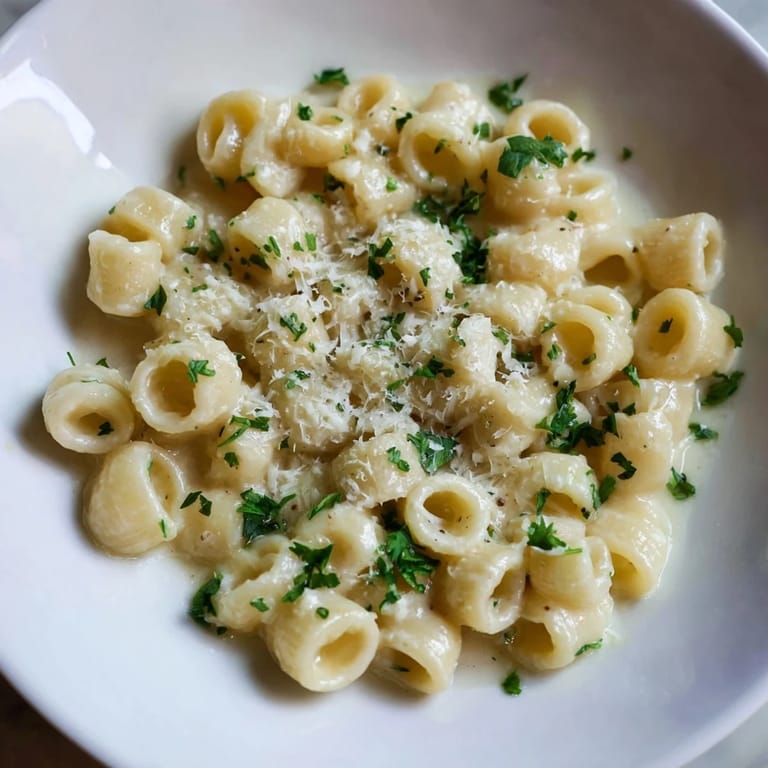
- Ditalini pasta, 300 g (10.5 oz): These tiny tubes are perfect because they catch the sauce in all their little pockets—trust me, bigger pasta shapes will disappoint you here.
- Olive oil, 1 tablespoon: Good quality makes a difference, but don't waste your best stuff on the initial sauté.
- Garlic, 4 cloves, finely minced: Mincing fine matters more than you'd think; it distributes the flavor evenly and melts into the sauce rather than leaving chunky pieces.
- All-purpose flour, 2 tablespoons: This is your thickener—it creates the roux that turns the cream into something silky and luxurious.
- Half-and-half, 480 ml (2 cups): The secret to keeping this lighter than traditional cream pasta while still tasting indulgent.
- Low-sodium vegetable broth, 60 ml (1/4 cup): This adds subtle depth and prevents the sauce from becoming too heavy or rich.
- Grated Parmesan cheese, 40 g (1/3 cup): Freshly grated if you can manage it; pre-grated sometimes has additives that prevent it from melting as smoothly.
- Salt and freshly ground black pepper: Season gradually and taste as you go—you'll know when it's right.
- Red pepper flakes, a pinch (optional): That unexpected warmth in the background is what makes people ask for the recipe.
- Fresh parsley, 2 tablespoons, chopped: Don't skip this; it brightens everything and adds a fresh visual contrast to the creamy sauce.
Tired of Takeout? 🥡
Get 10 meals you can make faster than delivery arrives. Seriously.
One email. No spam. Unsubscribe anytime.
Instructions
- Get your pasta water ready:
- Fill a large pot with salted water—it should taste like the sea, my grandmother always said—and bring it to a rolling boil. Add the ditalini and cook according to the package instructions until al dente, which means it still has a slight resistance when you bite it. Before you drain it, grab a measuring cup and scoop out about half a cup of that starchy cooking water and set it aside; you'll use it later to adjust your sauce.
- Start your garlic magic:
- While the pasta cooks, pour the olive oil into a large skillet and let it get warm over medium heat. Listen for the oil to shimmer slightly, then add your minced garlic and let it sauté for about a minute—you want it fragrant and pale golden, never brown, or it turns bitter and ruins the whole thing.
- Make your roux:
- Sprinkle the flour over the garlic and stir constantly for a full minute; you're creating a paste that will thicken your sauce and give it that luxurious texture. It should smell a little nutty and toasty, which means you're doing it right.
- Build the sauce:
- Slowly pour in the half-and-half while whisking constantly—this prevents lumps from forming and ensures everything melds smoothly. Add the vegetable broth next and keep whisking until the mixture thickens, which should happen in about three to four minutes. The sauce will go from thin and milky to silky and coat-the-back-of-a-spoon thick.
- Season and finish:
- Stir in the Parmesan, salt, black pepper, and that pinch of red pepper flakes if you're using them, then let everything simmer gently for two more minutes. The sauce should smell creamy and rich, with an underlying warmth from the garlic and a subtle heat from the pepper.
- Bring it all together:
- Add your drained ditalini to the sauce and toss everything until each piece is coated in that creamy goodness. If the sauce seems too thick, add a splash of your reserved pasta water—a little goes a long way, and you can always add more.
- Serve with love:
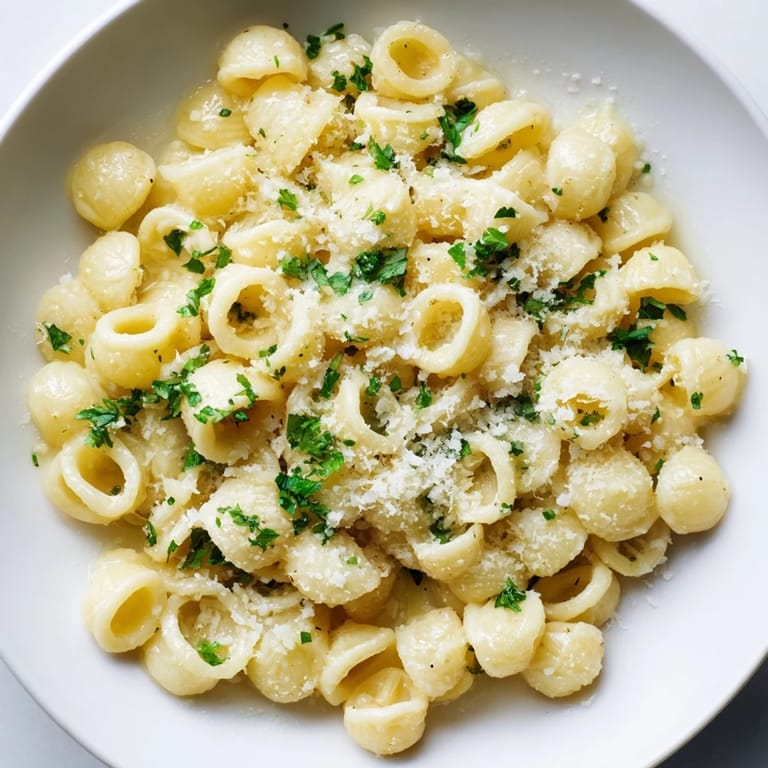
- Turn off the heat and transfer to bowls or plates, then top with fresh parsley and extra Parmesan. Serve immediately while it's warm and the sauce still clings to every piece of pasta.
 Pin It
 This dish became my comfort food during a winter when everything felt uncertain. I'd make it on random weeknights and sit by the window with a bowl, watching the rain, and for those twenty minutes everything just felt okay. Food doesn't have to be complicated to be meaningful.
Making It Your Own
While this recipe is perfect as written, it's also forgiving enough to handle your additions and preferences. Some nights I add roasted mushrooms or sautéed spinach, and other times I stir in cooked chicken breast for extra protein. The sauce is neutral enough to carry whatever you want to add without losing its character—that's part of what makes it such a reliable favorite.
Pairing and Serving
The creaminess of this pasta is rich without being heavy, which means it pairs beautifully with something bright and acidic. A crisp green salad with lemon vinaigrette cuts through the sauce perfectly, or a cold glass of Pinot Grigio works if you're drinking. The simplicity of the dish means it stands on its own, but these additions turn an easy weeknight dinner into something that feels a little more intentional.
Storage and Leftovers
This dish keeps well in an airtight container in the refrigerator for about three days, though I'll be honest—it rarely lasts that long in my house. When you reheat it, the sauce may thicken slightly from the starch in the pasta, so add a splash of milk or broth and stir gently over low heat until it reaches the right consistency. It's not quite as magical as the first night, but it's still deeply satisfying, and sometimes that's exactly what a tired afternoon needs.
- Let leftovers cool completely before storing to prevent condensation from making the pasta mushy.
- If the sauce separates slightly during storage, a gentle stir and a touch of heat brings it back together.
- This isn't the kind of dish that freezes beautifully, so enjoy it fresh or within a few days.
 Pin It
 This recipe is proof that you don't need a long list of expensive ingredients or hours in the kitchen to make something that feels like genuine comfort. Make it when you need reminding that simplicity, done well, is its own kind of luxury.
Recipe Questions & Answers
- → What type of pasta works best for this dish?
Ditalini pasta is ideal as its bite-sized shape holds the creamy garlic sauce well, but small tubular pasta can be a good substitute.
- → How can I make the sauce creamier without heavy cream?
Using half-and-half combined with a roux creates a smooth, creamy texture that's lighter but still rich.
- → Can I add protein to this dish?
Yes, cooked chicken or sautéed mushrooms are great additions to enhance protein content and flavor.
- → What is the best way to adjust sauce consistency?
Reserved pasta water can be gradually added to thin the sauce if it gets too thick before serving.
- → Is this dish suitable for vegetarians?
Yes, this version is vegetarian-friendly but includes dairy from Parmesan and half-and-half.