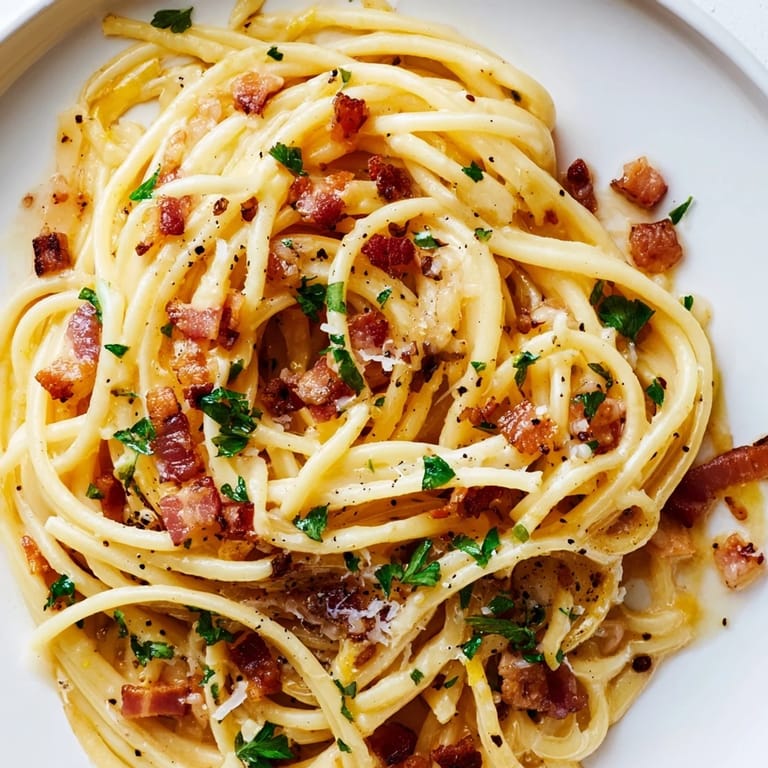
 Pin It
 The sizzle of bacon hitting a warm skillet used to wake my roommate every Sunday morning. I never planned it that way, but once I started making this linguine on lazy weekends, it became our unofficial tradition. The smell alone was enough to lure anyone out of bed, and by the time the garlic hit the pan, there was usually someone standing behind me asking when it would be ready. It's funny how a dish this simple can turn into something people remember.
I made this for a friend who swore she didn't like bacon. She changed her mind halfway through her second bowl. We sat at my tiny kitchen table with the skillet still between us, twirling forkfuls of pasta and talking until the sun went down. That night, the recipe wasn't just dinner, it was the reason we stayed up late laughing about nothing in particular. Sometimes the best meals are the ones that give you an excuse to linger.
Ingredients
- Linguine (400 g): The long, flat shape holds onto the bacon and sauce better than other pastas, and cooking it just to al dente keeps the texture firm enough to toss without breaking.
- Salt for pasta water: Don't skip this, the water should taste like the sea because it's your only chance to season the pasta from the inside out.
- Bacon (200 g, diced): Use thick cut if you can find it, the pieces stay meatier and crispier, and the rendered fat becomes the base of your sauce.
- Olive oil (2 tbsp): Helps the bacon cook evenly and prevents sticking, plus it adds a subtle richness that balances the saltiness.
- Garlic (3 cloves, finely chopped): Fresh garlic is non negotiable here, the jarred stuff just doesn't bloom the same way when it hits the hot oil.
- Freshly ground black pepper (1/2 tsp): Crack it yourself if possible, the flavor is sharper and more aromatic than pre ground.
- Red pepper flakes (1/4 tsp, optional): A tiny pinch adds warmth without making it spicy, but you can leave it out if you're cooking for kids.
- Reserved pasta cooking water (1/2 cup): This starchy liquid is what transforms everything into a creamy, glossy sauce, so don't pour it all down the drain.
- Grated Parmesan cheese (40 g, plus extra): Use real Parmigiano Reggiano if you can, it melts smoother and tastes infinitely better than the shelf stable stuff.
- Fresh parsley (2 tbsp, chopped): Adds a pop of color and a fresh, grassy note that cuts through the richness of the bacon.
- Lemon zest (from 1/2 lemon, optional): A little brightness at the end makes the whole dish feel lighter and more awake, especially if you're serving it in warmer weather.
Tired of Takeout? 🥡
Get 10 meals you can make faster than delivery arrives. Seriously.
One email. No spam. Unsubscribe anytime.
Instructions
- Boil the pasta:
- Bring a large pot of salted water to a rolling boil and cook the linguine according to the package instructions until al dente. Before draining, scoop out half a cup of the starchy cooking water and set it aside, you'll need it to bring everything together.
- Crisp the bacon:
- While the pasta cooks, heat olive oil in a large skillet over medium heat and add the diced bacon, stirring occasionally until it turns golden and crispy, about 6 to 8 minutes. The edges should be crunchy but not burnt, and the fat should pool at the bottom of the pan.
- Add the aromatics:
- Lower the heat and toss in the chopped garlic, black pepper, and red pepper flakes if you're using them, then sauté for about a minute until the garlic smells sweet and toasted. Watch it closely because garlic can go from perfect to bitter in seconds.
- Toss the pasta:
- Add the drained linguine directly into the skillet with the bacon and pour in a quarter cup of the reserved pasta water, tossing everything together with tongs or a wooden spoon. Add more water a splash at a time until the sauce looks creamy and clings to the noodles without being soupy.
- Finish with cheese:
- Take the skillet off the heat and sprinkle in the grated Parmesan, tossing quickly so it melts into the sauce and coats every strand. Stir in the chopped parsley and lemon zest if you want a little brightness, then taste and adjust the seasoning.
- Serve immediately:
- Divide the pasta among bowls and top with extra Parmesan and a few cracks of black pepper. Serve it hot, straight from the skillet if you're eating with friends, because it tastes best when it's still steaming.
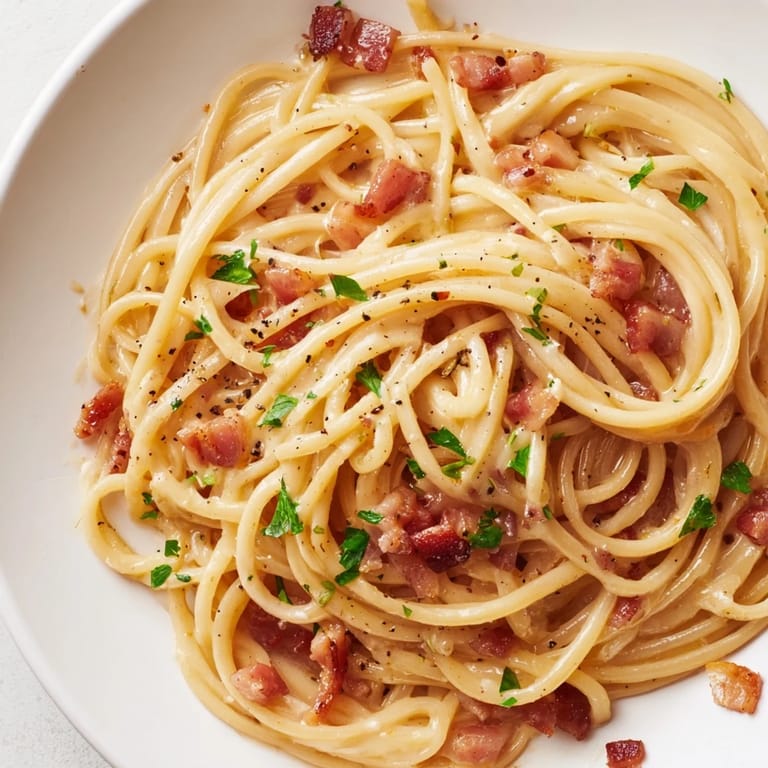 Pin It
 One night I made this after a long, frustrating day at work, and I wasn't expecting much beyond a full stomach. But as I stood at the stove, watching the garlic turn golden and smelling the bacon crisp up, I felt my shoulders drop and my breathing slow. By the time I sat down to eat, the day didn't seem so bad anymore. It reminded me that sometimes comfort isn't about fixing what's wrong, it's just about giving yourself something warm and good.
What to Serve It With
This pasta is rich and savory, so it pairs beautifully with something light and crisp on the side. A simple arugula salad with lemon vinaigrette cuts through the bacon fat and adds a peppery bite that balances each forkful. Garlic bread is always a crowd pleaser, but if you want to keep it easy, just toast some crusty bread and rub it with a clove of raw garlic. A chilled glass of Pinot Grigio or Sauvignon Blanc complements the dish without overpowering it, though sparkling water with a twist of lemon works just as well if you're keeping things casual.
How to Store and Reheat Leftovers
If you have leftovers, store them in an airtight container in the fridge for up to three days. The pasta will soak up some of the sauce as it sits, so when you reheat it, add a splash of water or broth to loosen it back up. I usually reheat it in a skillet over low heat, tossing it gently until it's warmed through and glossy again. Microwaving works in a pinch, but the texture won't be quite as silky, so add a little liquid and stir halfway through to keep it from drying out.
Ways to Make It Your Own
This recipe is forgiving and easy to tweak based on what you have or what you're craving. If you want to lighten it up, swap the bacon for turkey bacon or even pancetta for a slightly sweeter flavor. Tossing in a handful of frozen peas or sautéed mushrooms during the last minute adds color and a bit of earthiness without much effort. Some people like to crack an egg into the hot pasta and toss it quickly for a carbonara style twist, and I've done that more times than I can count when I'm out of Parmesan.
- Try adding a squeeze of fresh lemon juice at the end for extra brightness.
- Stir in a handful of baby spinach right before serving, it wilts instantly and adds a pop of green.
- Top with toasted breadcrumbs for a crunchy contrast to the silky noodles.
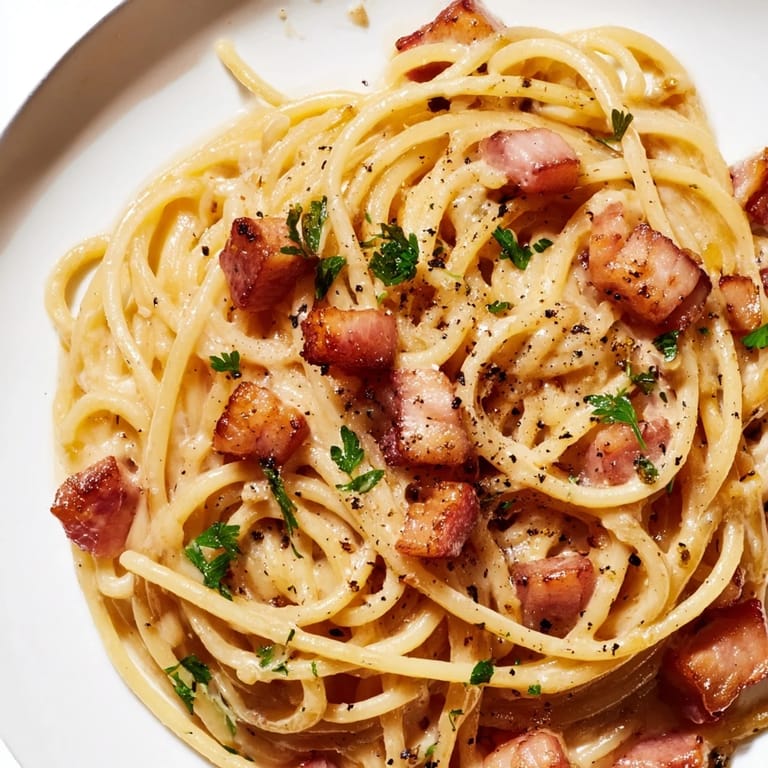 Pin It
 This dish has become one of those recipes I turn to when I want something comforting without spending an hour in the kitchen. It's proof that you don't need a long ingredient list or fancy techniques to make something that feels special, just good bacon, hot pasta, and a little bit of care.
Recipe Questions & Answers
- → Why reserve pasta water instead of using cream?
Pasta water contains starch that emulsifies with fat and cheese to create a naturally silky sauce. This traditional technique delivers authentic flavor and texture while keeping the dish lighter than cream-based versions.
- → Can I substitute the bacon?
Yes. Turkey bacon works well for a lighter option, or try pancetta for deeper flavor. Prosciutto adds elegance, though you may need to adjust saltiness accordingly.
- → How do I prevent the garlic from burning?
Always reduce heat to low before adding garlic, and watch carefully for just 1 minute. Remove from heat immediately after it becomes fragrant to preserve its delicate flavor.
- → What if the sauce is too thick?
Add more reserved pasta water, 1 tablespoon at a time, tossing between additions. The sauce should coat the pasta glossily without pooling at the bottom of the pan.
- → Can I make this ahead?
This dish is best served immediately while hot. However, you can prep ingredients in advance—cook pasta just before serving and combine while still warm for optimal texture and flavor.
- → What wine pairs well with this dish?
Crisp white wines like Pinot Grigio or Vermentino complement the richness of bacon and cheese. The acidity cuts through the fat and refreshes the palate between bites.