 Pin It
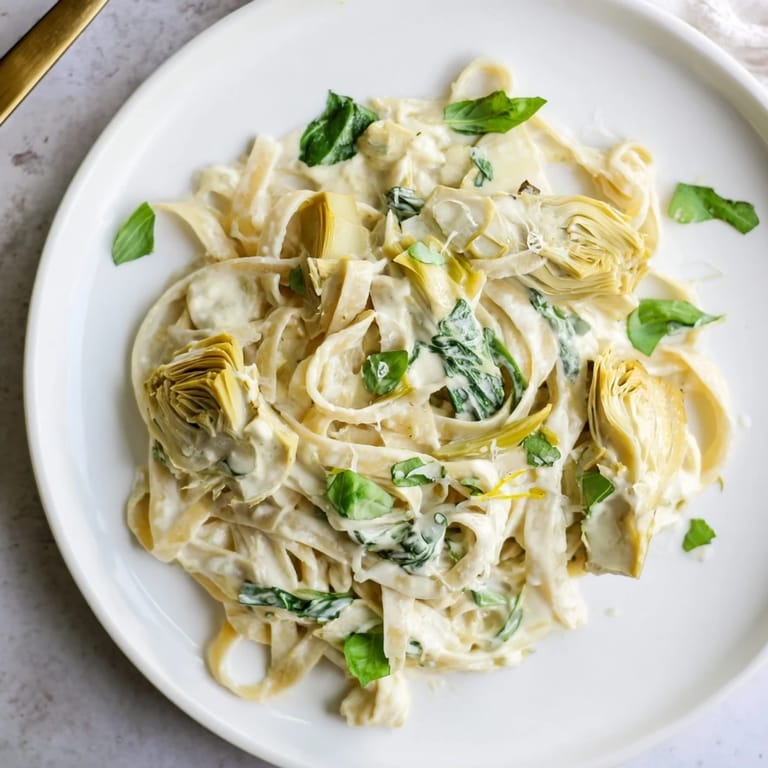
 There's something about the way lemon and cream play together that caught me off guard the first time I made this pasta. I was standing in my kitchen on a Tuesday evening, reaching for what I thought would be a quick dinner, when a can of artichoke hearts caught my eye in the pantry. That single ingredient sparked the whole thing, and twenty minutes later I was tasting something that felt far more intentional than the last-minute decision it actually was. The brightness of the lemon cut through the richness in exactly the right way, and I realized I'd stumbled onto something I'd be making again and again.
I made this for my sister last spring when she was going through a phase of saying yes to fewer things, and she showed up to dinner looking tired. But somewhere between the first bite and the second, something shifted—her shoulders dropped, and she asked for the recipe before dessert. That's when I knew this wasn't just dinner. It became the thing we make when we need to remind each other that good food doesn't require complicated effort.
Ingredients
- Fettuccine or linguine (350 g / 12 oz): The flat ribbons catch the sauce in all the right places, but you can use whatever shape you love—it's really about the sauce doing its job.
- Artichoke hearts (1 can, 400 g / 14 oz, drained and quartered): Canned works beautifully here; don't feel obligated to buy fresh and spend thirty minutes prepping them.
- Baby spinach (2 cups, optional): I leave it in most of the time because the wilting adds texture, but it's truly optional if you want to keep things simple.
- Garlic (2 cloves, minced) and shallot (1 small, finely chopped): These two build the flavor foundation—don't skip the shallot, it adds a sweetness garlic alone can't deliver.
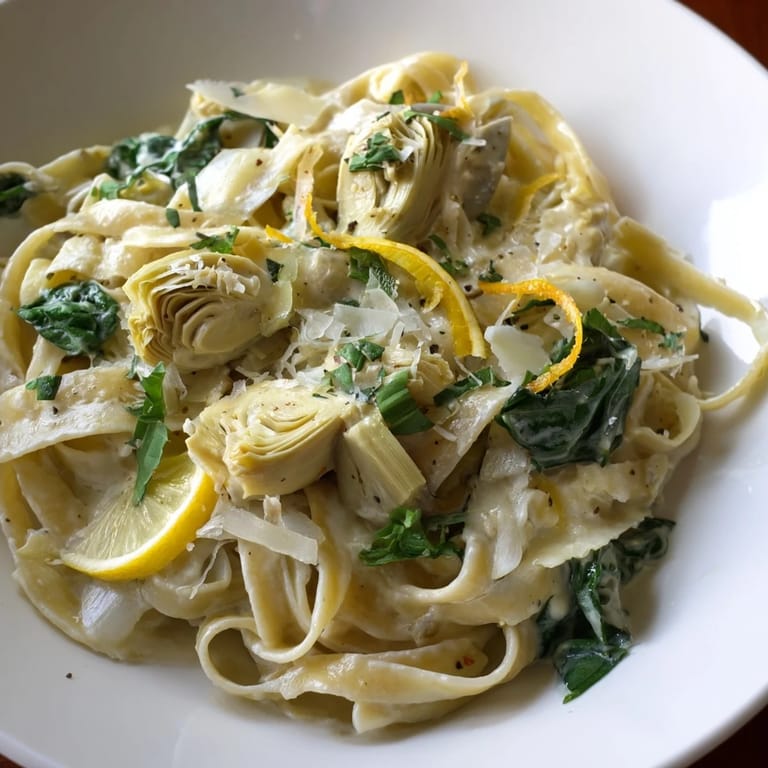
- Lemon zest and juice (1 whole lemon): Use a microplane if you have one; it makes the zest finer and more fragrant, which changes everything.
- Heavy cream (200 ml / 3/4 cup + 2 tbsp): The backbone of the sauce—this is where the silkiness comes from.
- Parmesan cheese (60 g / 1/2 cup, grated): Freshly grated makes a real difference in how it melts into the sauce.
- Unsalted butter (2 tbsp): Toasts the aromatics and adds depth to the cream base.
- Extra-virgin olive oil (2 tbsp): Choose one you actually like tasting; it's not hidden in this dish.
- Salt, black pepper, and red pepper flakes (1/2 tsp, 1/4 tsp, 1/4 tsp optional): Season as you taste; the lemon is already bringing acidity so you can afford to be generous with salt.
- Fresh basil or parsley: A handful scattered at the end wakes everything up again.
Tired of Takeout? 🥡
Get 10 meals you can make faster than delivery arrives. Seriously.
One email. No spam. Unsubscribe anytime.
Instructions
- Get the water boiling:
- Fill a large pot with salted water and let it come to a rolling boil while you prep everything else. Salt it generously—it should taste like the sea.
- Cook the pasta:
- Drop the pasta in and stir it immediately so it doesn't stick to itself. Cook until it still has a tiny bit of resistance when you bite it; the sauce will finish softening it. Before draining, scoop out half a cup of that starchy water and set it aside—trust me on this.
- Build the base:
- In a large skillet, melt butter into olive oil over medium heat. Add your minced garlic and chopped shallot, then listen for the quiet sizzle and watch for the shallot to turn translucent—this should take about two minutes and fills your kitchen with the best kind of smell.
- Add the artichokes:
- Stir the quartered artichoke hearts into the butter and oil, letting them cook undisturbed for a minute or two so they pick up a little color. Then add your lemon zest and let it perfume everything before you do anything else.
- Wilt the spinach:
- If you're using spinach, add it now and watch it collapse into the pan—it takes less than a minute. This is optional, but it adds a quiet earthiness.
- Pour in the cream:
- Turn the heat down slightly and pour in the heavy cream, stirring gently. Bring it to a simmer and let it bubble softly for a minute, then stir in your Parmesan until it's completely melted and silky.
- Season and brighten:
- Add the lemon juice, salt, pepper, and red pepper flakes if you want a whisper of heat. Taste it—this is the moment to adjust anything that feels off.
- Toss it together:
- Add the drained pasta to the skillet and toss everything gently, adding splashes of that reserved pasta water as needed until the sauce coats every strand. You're looking for something that moves freely but isn't swimming.
- Plate and garnish:
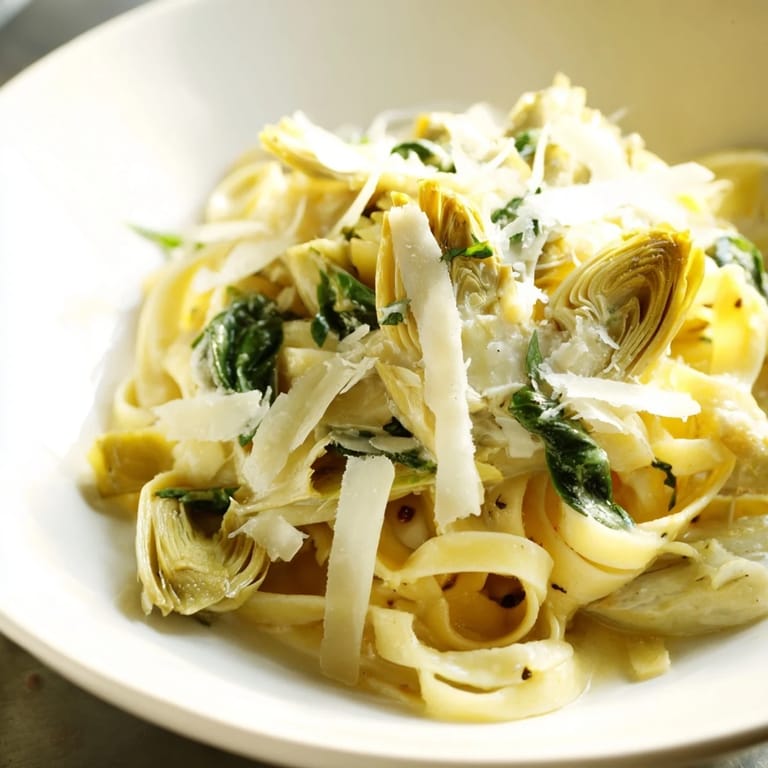
- Divide into bowls while it's still steaming, then shower it with fresh basil or parsley and maybe a little extra Parmesan for good measure.
 Pin It
 My neighbor watched me cook this through the open kitchen window one evening and showed up at my door asking what smelled so good. We ended up eating together on my small porch, and she brought wine. That's the moment I understood that this dish has an invisible quality—it doesn't just taste good, it makes people want to gather around it.
Why This Combination Works
Tuscan cooking understands something fundamental about flavor: that cream needs brightness to feel elegant instead of heavy, and that vegetables perform better when they're treated simply. Artichokes have a subtle earthiness that lemon actually amplifies rather than overpowers, and when you add the umami from Parmesan, everything resolves into something that tastes both complex and impossibly straightforward. The cream is there to bind it all together, but the real star is how these three elements—lemon, artichoke, and cheese—actually belong in the same sentence.
Variations and Additions
If you want to stretch this into something more substantial, add a handful of cooked shrimp or diced chicken breast in the final step; they warm through in the sauce without disrupting the balance. For a vegan version, use coconut cream or cashew cream and nutritional yeast instead of Parmesan—the brightness of the lemon carries it just as well. You can also swap the pasta shape entirely; I've made it with penne and with linguine, and the sauce works equally well with each.
- A splash of dry white wine added to the cream brings extra sophistication and cuts through richness in a different way.
- Roasted cherry tomatoes added at the end add color and a little acidity that echoes the lemon.
- A tiny pinch of nutmeg stirred into the cream tastes understated but changes how rounded the whole dish feels.
Pairing and Serving
Pour a crisp Pinot Grigio or Sauvignon Blanc alongside this—something with acidity that matches what's already on the plate. A simple green salad with lemon vinaigrette beforehand keeps the meal from feeling too rich, and if you want something after, fruit feels right instead of dessert. Serve the pasta immediately while the cream is still silky; this is not a dish that reheats gracefully, so eat it straight from the stove.
 Pin It
 This recipe became my version of cooking for someone without overthinking it—proof that good food lives in simplicity and intention, not complication. I hope it becomes something you make not just once, but the thing you turn to when you want to feel like you tried without actually trying that hard.
Recipe Questions & Answers
- → What type of pasta works best for this dish?
Fettuccine or linguine are ideal as their flat, wide shape holds the creamy sauce well, enhancing every bite.
- → Can I substitute heavy cream with a lighter option?
Yes, you can use half-and-half or a plant-based cream alternative to reduce richness while maintaining a creamy texture.
- → How do I prevent the sauce from breaking when simmering cream?
Maintain medium-low heat when adding cream and stir gently to avoid curdling or separation of the sauce.
- → What herbs complement the flavors in this pasta?
Fresh basil and parsley add brightness and complement the lemon and artichoke flavors effectively.
- → Is it possible to add protein to this dish?
Yes, cooked chicken or shrimp can be incorporated to boost protein while keeping the light character of the dish.
- → Can baby spinach be omitted or replaced?
Spinach adds freshness but can be omitted or replaced with arugula or kale for a different leafy green texture.