 Pin It
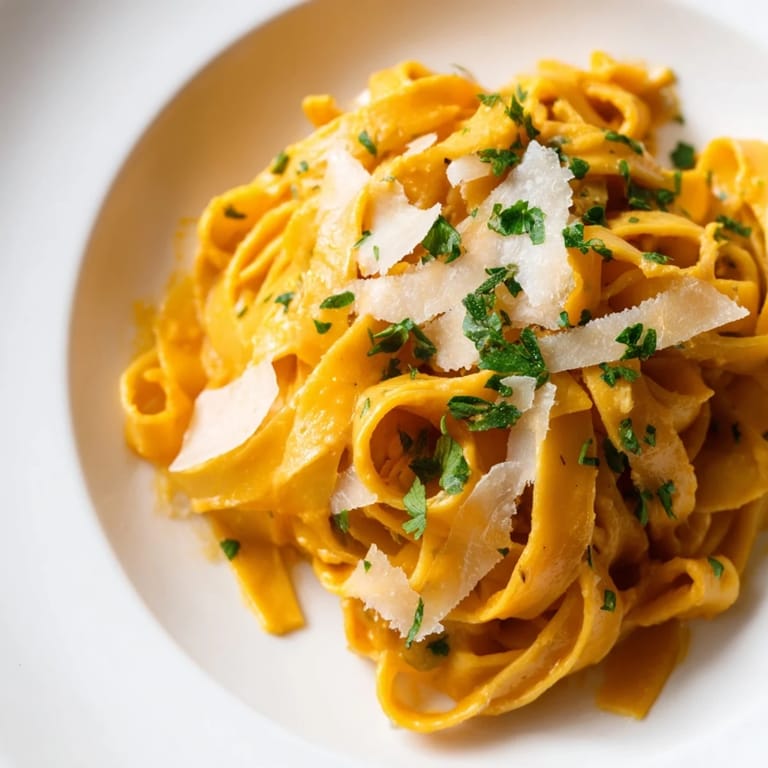
 My neighbor knocked on my door one October evening holding a butternut squash the size of a small dog. She'd grown too many and wondered if I wanted one. I had no plan, just a hunch that roasting it might lead somewhere good. That somewhere turned out to be this pasta, a dish I now make every time the air gets crisp. The squash caramelizes in the oven and transforms into a sauce so creamy you'd swear there was a pound of butter in it.
I made this for a small dinner party where half the guests were vegetarian and the other half were skeptical of anything without meat. By the second bite, the skeptics went quiet. One friend scraped his plate clean and asked if I'd started a secret catering business. I hadn't, but that night I realized a good sauce doesn't need to shout, it just needs to be smooth, warm, and taste like something you'd want to eat with your hands if no one was watching.
Ingredients
- Butternut squash: Look for one that feels heavy for its size, the flesh will be denser and sweeter, and peel it with a sturdy vegetable peeler to save your wrists.
- Garlic cloves: Roasting them unpeeled turns them soft and mellow, no sharp bite, just deep caramelized flavor you can squeeze out like toothpaste.
- Yellow onion: Diced small so it melts into the sauce, adding a quiet backbone of sweetness that you taste without really noticing.
- Fresh sage: This herb is the secret, it smells like autumn and tastes earthy and slightly peppery, dried works but fresh makes you feel like a real cook.
- Fettuccine or tagliatelle: Wide noodles grab onto the sauce better than skinny ones, if you can find fresh pasta it cooks faster and tastes silkier.
- Olive oil: Use something you'd happily dip bread into, it coats the squash before roasting and helps the onions soften without burning.
- Heavy cream: This is what makes the sauce feel like velvet, but coconut milk works if you want it plant based and adds a subtle sweetness.
- Parmesan cheese: Grate it fresh from a block, the pre-shredded stuff has anti-caking agents that make the sauce grainy instead of smooth.
- Vegetable broth: Thins out the puree and adds a savory depth, taste it first because some store-bought broths are way too salty.
- Nutmeg: Just a pinch, it's barely noticeable but it makes the whole dish taste more complex and slightly mysterious.
Tired of Takeout? 🥡
Get 10 meals you can make faster than delivery arrives. Seriously.
One email. No spam. Unsubscribe anytime.
Instructions
- Roast the squash and garlic:
- Preheat your oven to 400°F and spread the cubed squash and unpeeled garlic on a parchment-lined baking sheet. Drizzle with olive oil, season with salt and pepper, toss it all together with your hands, then roast for 25 to 30 minutes, flipping halfway so the edges get golden and sweet.
- Cook the pasta:
- Boil a big pot of salted water and cook your pasta until it's just shy of tender. Before you drain it, scoop out half a cup of that starchy pasta water, it's liquid gold for adjusting your sauce later.
- Sauté the aromatics:
- While the squash roasts, heat a tablespoon of olive oil in a large skillet over medium heat and cook the diced onion and chopped sage until the onion turns translucent and your kitchen smells like a forest. This takes about four minutes.
- Blend the sauce:
- Squeeze the roasted garlic out of its papery skins and toss it into a blender along with the roasted squash, sautéed onion and sage, vegetable broth, and heavy cream. Blend until it's completely smooth and looks like liquid sunshine.
- Finish the sauce:
- Pour the blended mixture back into your skillet over low heat, stir in the grated Parmesan and a pinch of nutmeg if you're feeling fancy, then season with salt and pepper. If it looks too thick, splash in some of that reserved pasta water until it coats a spoon nicely.
- Combine and serve:
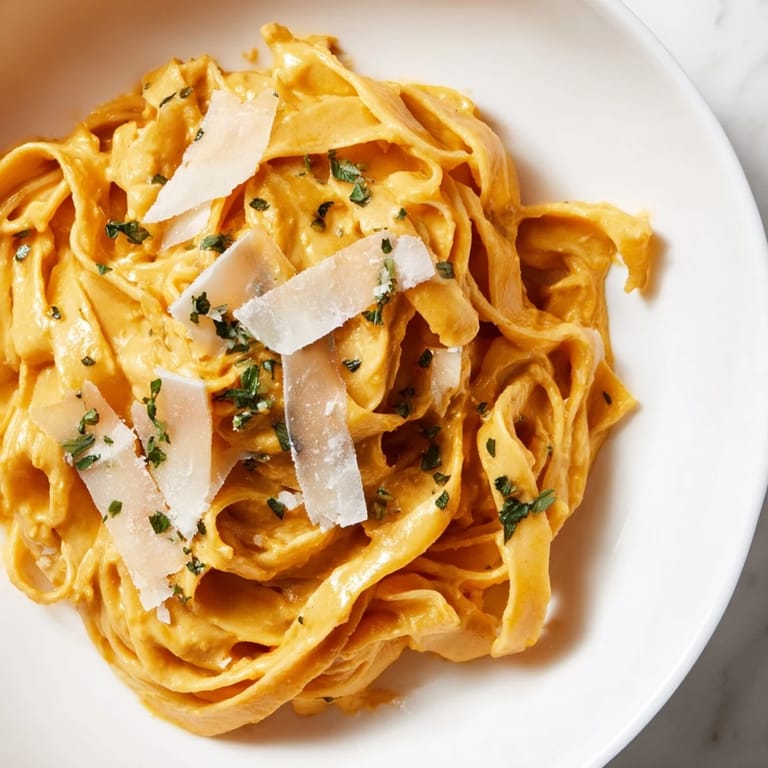
- Add the drained pasta to the sauce and toss gently until every strand is coated. Let it warm through for a couple of minutes, then serve it hot with a sprinkle of chopped parsley and extra Parmesan on top.
 Pin It
 The first time I served this to my mom, she asked for the recipe halfway through her first bowl. She never asks for recipes. She said it reminded her of something her own mother used to make, though I'm pretty sure her mother never touched a butternut squash in her life. I think it just tasted like care, the kind of food that makes you feel like someone was thinking about you while they cooked it.
Making It Your Own
This recipe is a starting point, not a rulebook. I've added sautéed mushrooms when I had them sitting in the fridge, tossed in handfuls of baby spinach at the end for color, and topped it with toasted walnuts when I wanted crunch. A friend of mine stirs in a spoonful of miso paste for extra umami, and another swears by a squeeze of lemon juice right before serving. The sauce is forgiving and rich enough to handle whatever you throw at it, so trust your instincts and use what you have.
Storage and Reheating
Leftovers keep in the fridge for up to four days in an airtight container, and they reheat like a dream. I usually add a splash of water or broth when I warm it up on the stove because the pasta soaks up the sauce as it sits. You can also freeze the sauce on its own for up to three months, then cook fresh pasta and toss it together whenever you need a quick dinner. I've done this more times than I can count on busy weeknights when I didn't have the energy to think.
Pairing and Serving Ideas
This pasta doesn't need much alongside it, but a simple arugula salad with lemon and olive oil cuts through the richness nicely. I've served it with garlic bread when I wanted to go full comfort, and with roasted Brussels sprouts when I was pretending to be healthy. A crisp white wine like Pinot Grigio is perfect if you're pouring something, but honestly a cold glass of sparkling water with lemon works just as well.
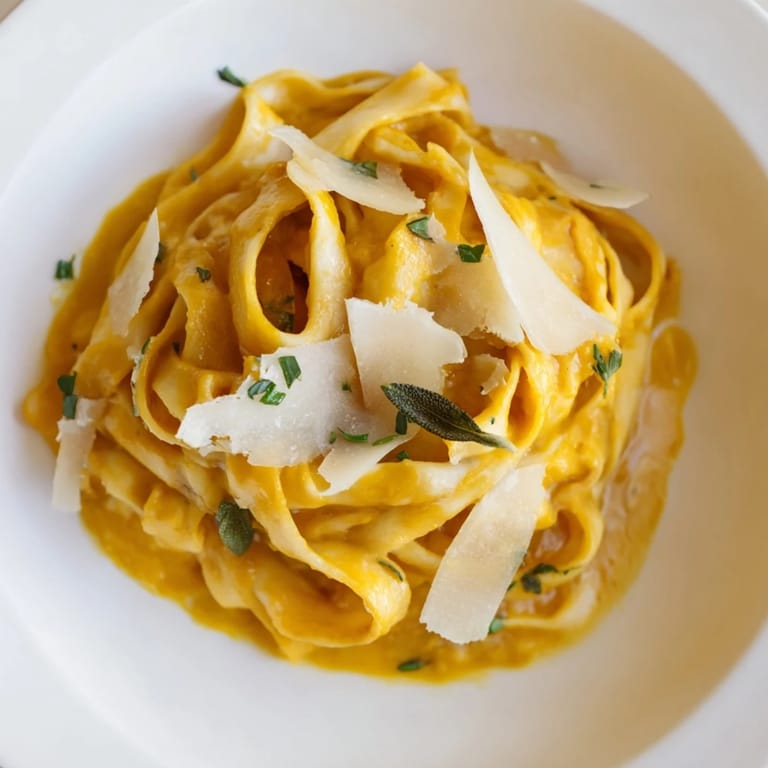
- Top with crispy fried sage leaves for a restaurant-style finish that takes two minutes.
- Serve it in shallow bowls so everyone can see how pretty it looks.
- If you're feeding kids, blend the sauce extra smooth and call it magic orange pasta, they'll never know it's vegetables.
 Pin It
 This is the kind of dish that makes people lean back in their chairs and sigh happily, the kind that turns a regular Tuesday into something worth remembering. I hope it does the same for you.
Recipe Questions & Answers
- → Can I make this dish ahead of time?
Yes, you can prepare the sauce up to two days in advance and store it in an airtight container in the refrigerator. Reheat gently over low heat, adding a splash of vegetable broth or pasta water if it thickens too much. Cook the pasta fresh just before serving for best texture.
- → What's the best pasta shape for this sauce?
Fettuccine and tagliatelle are ideal because their wide, flat surface area captures the creamy sauce beautifully. Pappardelle works wonderfully too. Avoid thin pastas like spaghetti, which may get overwhelmed by the rich sauce.
- → How do I make this completely vegan?
Replace heavy cream with full-fat coconut milk or oat cream for similar richness. Substitute Parmesan with nutritional yeast or vegan parmesan alternatives. Confirm your pasta is egg-free. The roasting and blending process remains identical.
- → Why do you roast the squash instead of steaming it?
Roasting develops deeper, caramelized flavors that steaming cannot achieve. The dry heat concentrates the squash's natural sweetness and creates a more complex taste profile. This technique also gives the garlic cloves a mellow, nutty character that adds sophistication to the sauce.
- → What should I do if my sauce is too thick or too thin?
If too thick, add reserved pasta water one tablespoon at a time until you reach desired consistency. If too thin, simmer uncovered over low heat for a few minutes to reduce. The sauce should coat the back of a spoon but flow easily when plated.
- → Can I use fresh butternut squash instead of buying pre-cut?
Absolutely. Halve a whole squash, remove seeds, and roast cut-side down at 400°F for 35-40 minutes. Scoop out the soft flesh once cooled. This method actually enhances flavor through caramelization and is more economical than pre-cut versions.