 Pin It
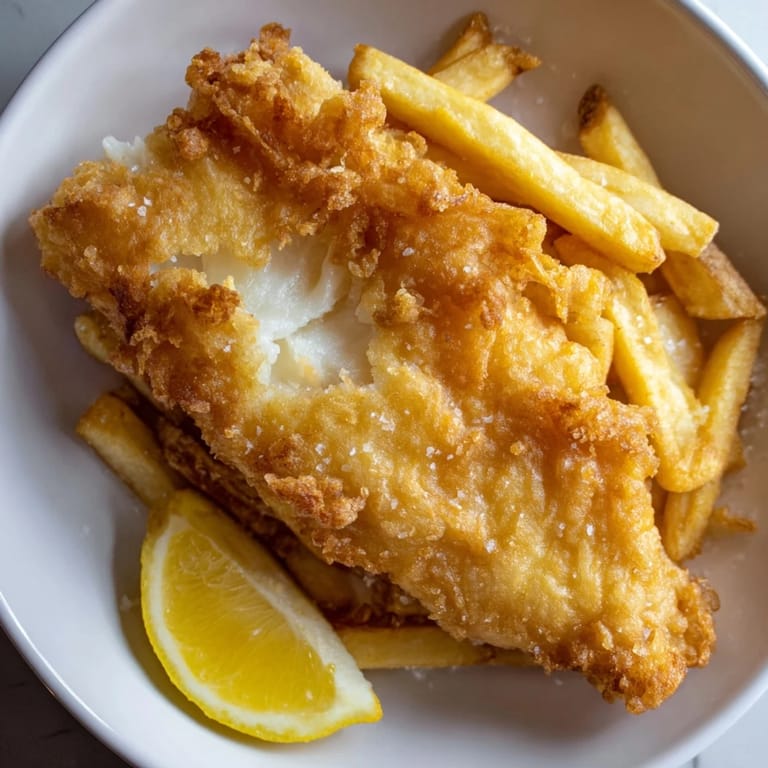
 There's something about standing in front of a bubbling pot of hot oil that takes me straight back to a rainy Friday evening in a cramped London pub, watching a cook with flour dusting his apron pull golden-brown fish and chips from the fryer like he was performing magic. I'd always thought it was impossible to recreate at home until a friend challenged me to try, and after my first batch emerged perfectly crispy, I understood why this dish has survived centuries of food trends. Now whenever I make it, that exact smell of battered fish and hot oil fills my kitchen, and suddenly everyone wants to stay for dinner.
I made this for a group of friends who'd never had proper fish and chips, and watching their faces when they bit into that first piece—the batter cracking, steam rising from the fish—was worth every minute of prep work. One friend actually went quiet, which never happens, and then asked if I could make it every Friday. That's when I knew this recipe had become more than just following instructions; it was about creating a moment.
Ingredients
- White fish fillets (cod or haddock): These are your foundation—mild, flaky, and sturdy enough to stand up to a hard fry without falling apart. Buy them fresh the day you plan to cook, and pat them completely dry before battering or they'll absorb oil instead of crisping up.
- All-purpose flour and cornstarch: The cornstarch is the secret weapon here; it creates extra crispness that regular flour alone can't achieve, and it's worth keeping a box just for this.
- Baking powder: This creates the tiny bubbles that make the batter light and airy, not dense and oily—don't skip it thinking it won't matter.
- Cold sparkling water or beer: The cold temperature keeps the batter from absorbing too much oil, and the carbonation adds lift; beer gives deeper flavor and extra crispness if you're feeling adventurous.
- Russet or Maris Piper potatoes: These varieties have the right starch content for fluffy insides; waxy potatoes will just turn gluey and disappointing.
- Sea salt and pepper: Don't underestimate these—they're what transform good chips into ones people actually talk about later.
- Sunflower or vegetable oil: Use oil with a high smoke point; I learned the hard way that olive oil is not your friend here.
Tired of Takeout? 🥡
Get 10 meals you can make faster than delivery arrives. Seriously.
One email. No spam. Unsubscribe anytime.
Instructions
- Soak the potatoes first:
- Cut your potatoes into thick fries and submerge them in cold water for at least 15 minutes—this removes starch and is the reason your chips will be fluffy instead of gluey inside. Pat them completely dry with a towel before frying, and I mean completely.
- Low fry the chips:
- Get your oil to 150°C (300°F)—no hotter—and fry the potatoes in batches for 4 to 5 minutes until they're tender but still pale. This first fry cooks them through without coloring; rush this step and you'll end up with burnt outsides and raw insides.
- Make a batter you can trust:
- Whisk flour, cornstarch, baking powder, salt, and pepper together, then add cold sparkling water slowly, whisking until you have a smooth batter that coats the back of a spoon without being runny. If it's too thick it won't coat evenly; too thin and it'll slip off in the oil.
- Crank up the heat for the second fry:
- Increase your oil temperature to 190°C (375°F) and fry those pre-cooked chips again in batches for 2 to 3 minutes until they're golden and crispy. This is where the magic happens—the contrast between the fluffy interior and shattered exterior is what makes people ask for your recipe.
- Prepare the fish for battering:
- Pat your fillets dry with paper towels and dust them lightly with flour—this helps the batter stick instead of sliding off in the oil. Work quickly once you start battering so the coating doesn't get soggy.
- Batter and fry with confidence:
- Dip each floured fillet into your batter, let the excess drip off for a second, then carefully lower it into the hot oil and don't move it around—let it fry undisturbed for about 5 minutes before gently flipping. You want that golden, crispy shell, which takes about 5 to 7 minutes total.
- Rest everything before serving:
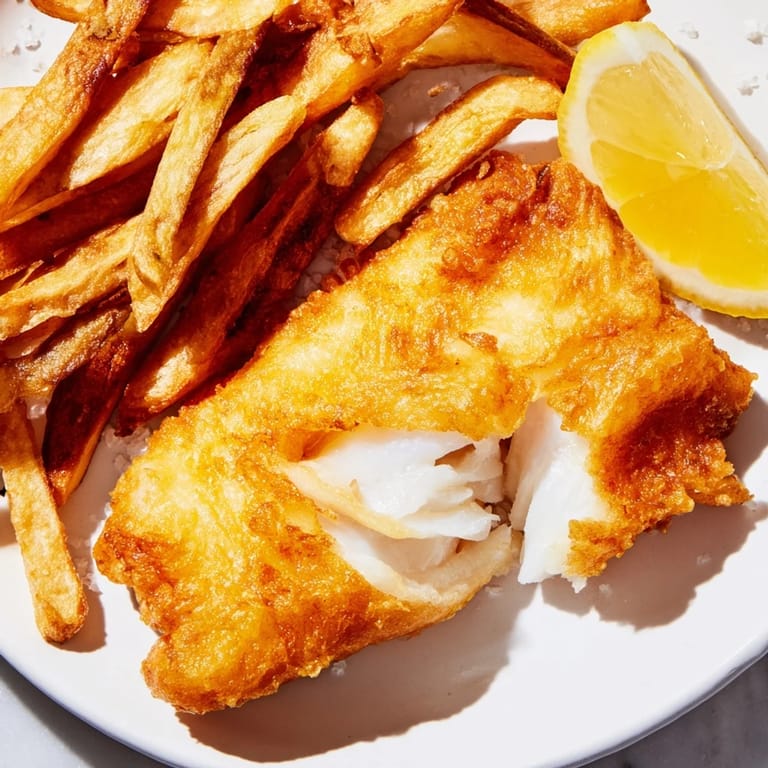
- Drain your fish and chips on a wire rack or paper towels so the steam escapes and they stay crispy instead of getting soggy from their own heat. Sprinkle with sea salt while they're still hot.
 Pin It
 The first time I nailed the timing and pulled everything out of the fryer simultaneously—hot fish, golden chips, steam rising—I felt like I'd unlocked something. It wasn't just food anymore; it was proof that with attention and respect for technique, you can create something that tastes like it came from a centuries-old British kitchen, right there in your own home.
Why This Dish Endures
Fish and chips has survived every food revolution because it solves a problem perfectly: it's simple ingredients elevated by technique, affordable, and deeply satisfying in a way that trendy dishes often aren't. The salt-to-crispy-batter ratio, the way malt vinegar cuts through the richness, the steam rising from the first bite—these things work together like they were designed by someone who understood hunger and comfort. I think that's why it appears in every British pub, from seaside tourist traps to neighborhood locals, unchanged for over a century.
Timing and Temperature Are Everything
What surprised me most about mastering this dish wasn't the ingredients—they're humble and forgiving—but understanding that every temperature point matters. The difference between 185°C and 190°C in your oil is the difference between a batter that absorbs grease and one that shatters when you bite into it, and it's worth investing in a good thermometer if you don't have one. Your first batch might not be perfect, and that's fine; the second or third time you make this, your hands will remember the feel of it, and you'll stop thinking about temperatures and start thinking about who you're cooking for.
Serving Suggestions and Pairings
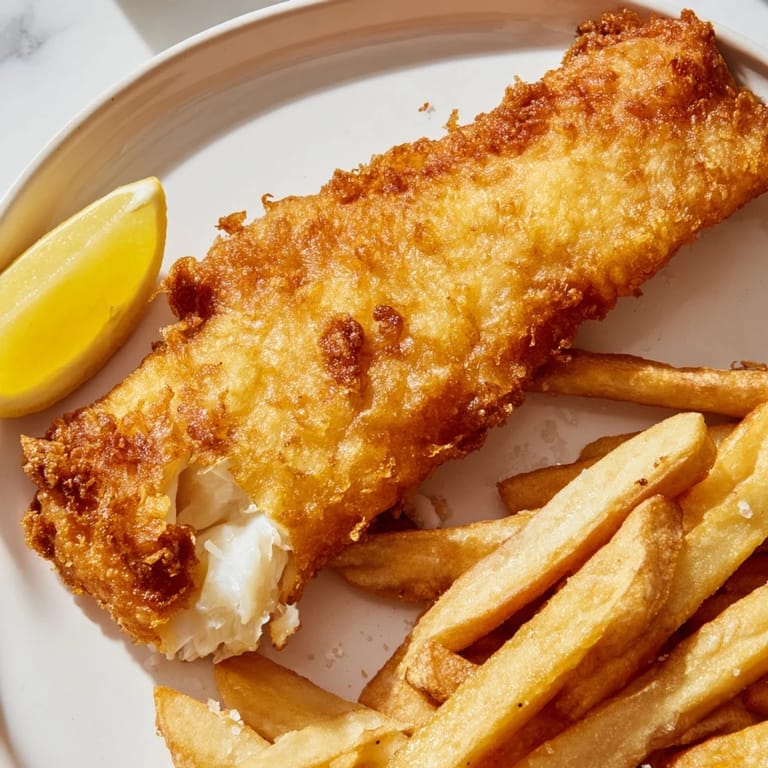
The magic happens in the moment between the fryer and the plate—serve this hot, because even five minutes of cooling down steals something from the texture. Malt vinegar is traditional and absolutely essential; lemon wedges are for people who like brightness; tartar sauce adds richness if you're not worried about calories. Mushy peas on the side transform this from dinner into an experience, and if you pour a chilled English ale or a crisp white wine alongside it, you've just made something worth sitting down for, not just grabbing and going.
- Never let these rest longer than five minutes before eating, or the heat escape and the texture suffer.
- If you're feeding a crowd, keep finished batches warm in a low oven while you fry the rest, but prop the door slightly open so steam can escape.
- Leftovers, should there be any, are unexpectedly good cold the next day with a sandwich and extra vinegar.
 Pin It
 Making fish and chips isn't about proving you're a great cook; it's about respecting an old recipe enough to do it right, and then sharing something warm and satisfying with people you care about. That's all it's ever been, really.
Recipe Questions & Answers
- → What type of fish works best for this dish?
Cod or haddock fillets are ideal due to their mild flavor and firm texture, which hold up well to frying.
- → How do you achieve a crispy batter?
Using cold sparkling water or beer in the batter helps create a light, crispy coating when fried.
- → Why is the double-fry method used for the chips?
Double-frying ensures the fries are tender inside and extra crispy on the outside by frying at two different temperatures.
- → Can I substitute the oil used for frying?
Neutral oils with high smoke points like sunflower or vegetable oil work best to avoid burnt flavors.
- → What sides complement this dish traditionally?
Malt vinegar, lemon wedges, tartar sauce, and mushy peas are classic accompaniments that enhance the flavors.
- → How long should I soak the potatoes before frying?
Soaking cut potatoes in cold water for 15–30 minutes removes excess starch, helping the fries become crispier.