 Pin It
 The first time I made arrabbiata, I was standing in a tiny Roman kitchen with my hands shaking from the heat of fresh chilies—not the cooking kind, but the panic of trying to impress someone I'd just met. Years later, I've learned that the best version of this dish isn't about perfection; it's about that moment when you hear the sauce bubble in the oven and you know something warm and honest is about to come out. Baked penne arrabbiata became my go-to comfort meal, the one I make when I want to feel like I'm feeding people something that matters.
I remember watching my neighbor's kids devour this straight from the baking dish, their faces flushed from the heat and the spice, pasta sauce on their chins, asking for seconds before anyone else had finished their first bite. That's when I realized this wasn't just dinner—it was the kind of food that made people slow down and actually taste what they were eating.
Ingredients
- Penne pasta (350 g): The ridges catch the sauce beautifully, and stopping just short of the package directions' cooking time keeps it from getting mushy when it hits the oven.
- Olive oil (2 tbsp): Use something you'd actually taste—not the cheapest bottle, but something with a little character.
- Garlic (4 cloves, finely chopped): The finer you chop, the more evenly it infuses the oil; I learned this the hard way after biting into a raw chunk.
- Crushed red pepper flakes (1–2 tsp): Start with 1 and taste as you go—heat builds, and you can't take it back.
- Canned crushed tomatoes (800 g): The backbone of everything; good canned tomatoes are honestly better than mediocre fresh ones.
- Sugar (1 tsp): Just enough to balance the acidity without making it sweet—trust the amount.
- Dried oregano (1 tsp): Oregano and tomato are meant for each other; this is non-negotiable.
- Salt and black pepper (½ tsp and ¼ tsp): Season as you taste; the cheese adds salt later.
- Fresh basil (1 small bunch): Save some leaves for the end—fresh basil at the finish is what makes this feel alive.
- Parmesan cheese (80 g): Grate it fresh if you can; the pre-grated stuff never quite melts the same way.
- Mozzarella cheese (150 g), shredded: This is what makes it a bake and not just sauce—it creates that golden, bubbling top you're chasing.
Tired of Takeout? 🥡
Get 10 meals you can make faster than delivery arrives. Seriously.
One email. No spam. Unsubscribe anytime.
Instructions
- Get your oven ready and prep:
- Preheat to 200°C (400°F) and grease a large baking dish—this prevents that frustrating moment when pasta sticks to the sides.
- Cook the pasta just shy of done:
- Boil the penne in salted water until it's still slightly firm, about 2 minutes before the package says it's ready. It'll finish cooking in the oven, and you want it tender, not falling apart.
- Make the magic happen with garlic and heat:
- Warm olive oil over medium heat, add garlic and red pepper flakes, and listen for the sizzle—you want fragrant and toasted, not brown and bitter. This step takes maybe 90 seconds, so don't wander away.
- Build the sauce slowly:
- Stir in tomatoes, sugar, oregano, salt, and pepper, then let it bubble gently for 10–12 minutes. The sauce thickens slightly, the flavors deepen, and this is when your kitchen starts to smell like Italy.
- Finish with fresh basil:
- Pull the pan off heat and fold in chopped basil. The heat will slightly soften it, and the aroma will make you pause for a second.
- Combine pasta and sauce:
- Toss the drained pasta with the sauce until every piece is coated evenly. This is easier than you'd think and deeply satisfying.
- Layer for the bake:
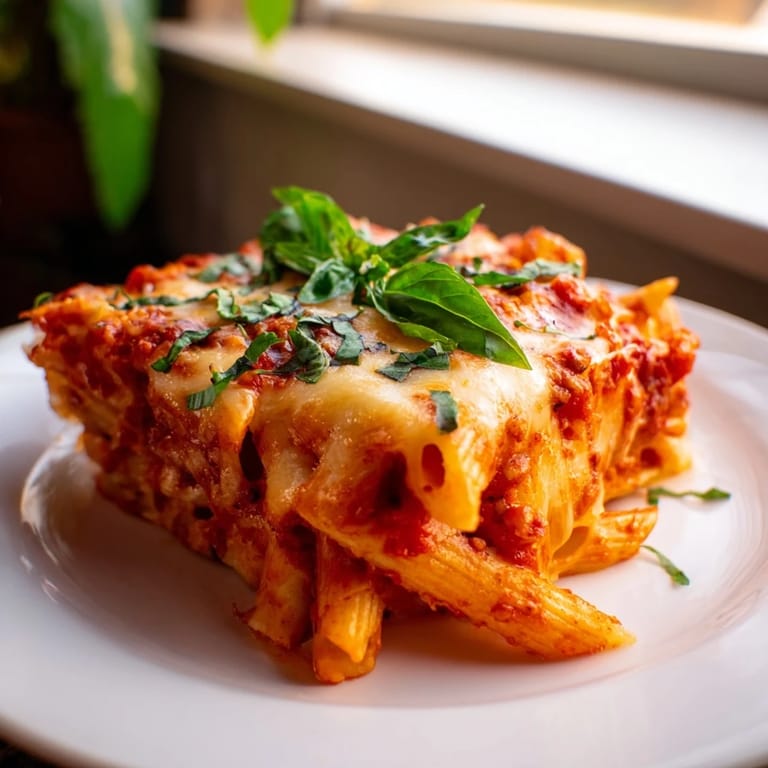
- Spread half the sauced pasta into the baking dish, scatter half the Parmesan and mozzarella over it, then layer the rest of the pasta on top and finish with the remaining cheese. The cheese acts as a blanket that will turn golden and crispy.
- Bake until bubbling and golden:
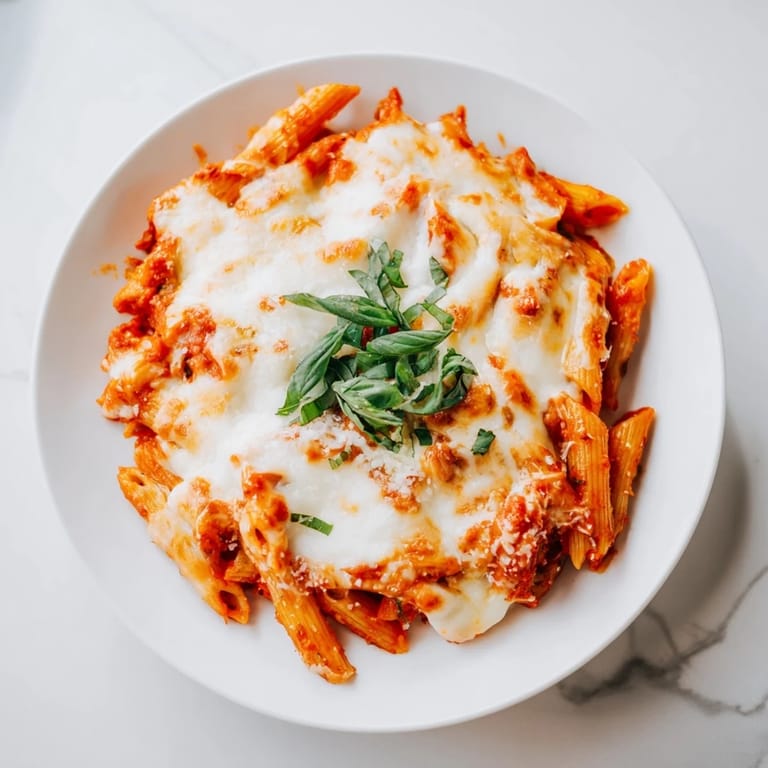
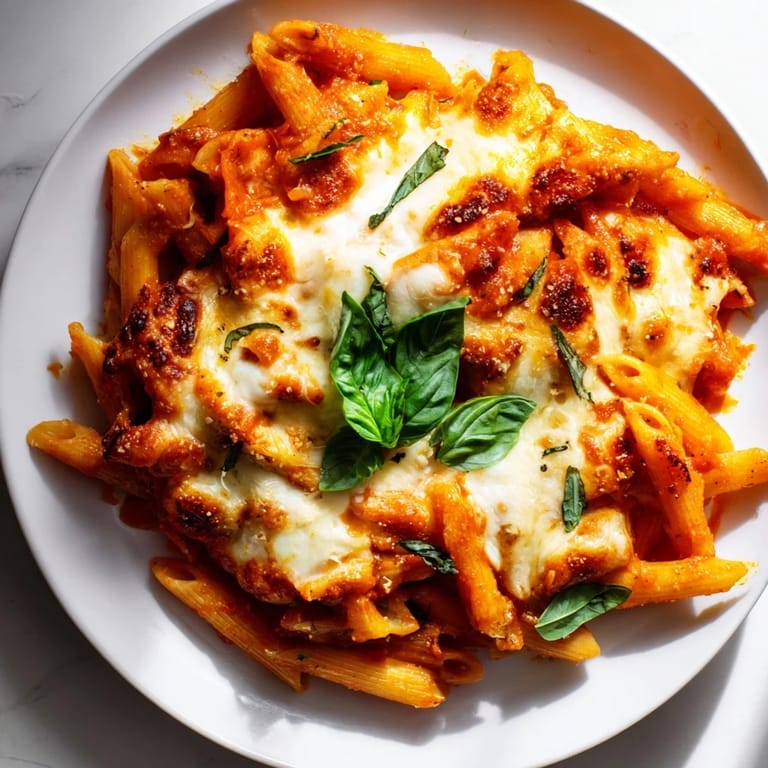
- Bake for 18–20 minutes; you're looking for melted, golden-brown cheese and sauce bubbling at the edges. That's your signal that everything underneath is hot and happy.
- Rest and garnish:
- Let it sit for 5 minutes—this seems short, but it lets everything settle so the pasta holds together when you serve it. Scatter fresh basil on top and serve while it's still steaming.
 Pin It
 There's a moment, about halfway through baking, when you peek through the oven window and watch the cheese bubble and brown—that's when you realize this simple dish has become something that'll make people happy. It's honest food, the kind that doesn't apologize for itself.
The Secret to Perfect Spice
Arrabbiata means angry in Italian, but the heat shouldn't blindside you—it should sneak up gradually and then warm you from the inside. The trick is tasting as you go; start with 1 teaspoon of red pepper flakes and add more if you want it sharper. I've learned that the spice also mellows slightly as the sauce simmers, so what tastes hot at first becomes more nuanced after 10 minutes.
Why This Works as a Baked Dish
Turning arrabbiata into a bake changes the game entirely—the cheese creates a shield that keeps everything underneath hot and creamy while the pasta absorbs the flavors differently than it would on a plate. It's more forgiving than a fresh pasta dish too; it stays warm longer, and the flavors actually deepen as it sits. This is why it's perfect for dinner parties or feeding a crowd.
Serving and Pairing Ideas
Serve this straight from the baking dish while it's still bubbling, with a crisp green salad on the side and maybe a glass of wine to cut through the richness. The salad matters more than you'd think—the acidity and fresh crunch balance the warm, cheesy pasta and give you somewhere to rest your palate between bites.
- A Chianti or even a crisp white wine pairs beautifully with the spice and tomato.
- Leftovers reheat gently in a 180°C oven with a splash of water, and they're just as good cold the next day.
- This feeds four generously or six if you're serving it alongside other dishes.
 Pin It
 This is the kind of dish that reminds you why cooking for people matters—it's simple, honest, and impossibly good. Make it for someone you want to feed well.