 Pin It
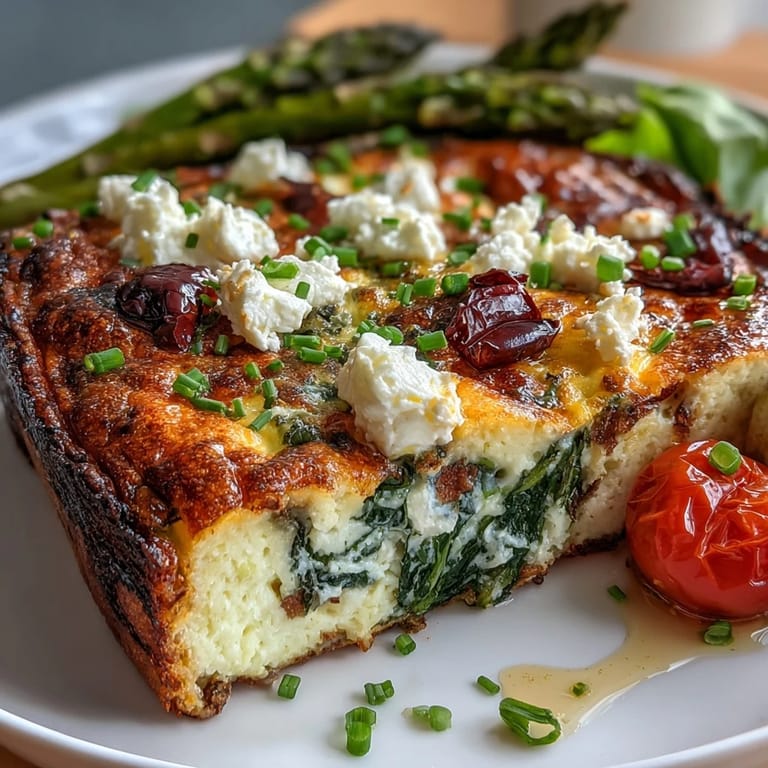
 Steam circled around my kitchen window as I cracked eggs for this Easter frittata, sunlight dappling through the glass and onto the cutting board. The cheerful tumble of vegetables, bright and a little unruly, always feels like spring is nudging its way into my day. What began as an improvisation before a brunch gathering is now my favorite way to spend a chilly April morning. The frittata’s oven-baked puffiness never fails to surprise me, even though I make it more often than just Easter. Once, a neighbor strolled by, catching the herby aroma wafting out—the magnetism of this dish is no joke.
Last year, my siblings gathered round with mismatched mugs and opinions about when brunch should actually begin. We took turns suggesting frittata fillings while I stirred the eggs: a kind of assembly-line creativity that left us laughing and, messily, with just the right mix of veggies. Passing the feta around the table felt like a small party in itself. That was the moment this recipe became the guaranteed crowd-pleaser for any family occasion.
Ingredients
- Asparagus: Snapping off the woody ends keeps the texture tender, and I love how its flavor feels extra fresh in early spring.
- Cherry Tomatoes: Halving these releases their juices just enough to dot the frittata with sweet tangy spots.
- Bell Peppers (red and/or yellow): The pop of color and crunch make every slice cheerful and lively.
- Baby Spinach: I roughly chop it so it cooks fast and folds into the eggs more easily, and I never worry about a few bigger leaves sneaking in.
- Red Onion: Slicing thinly ensures it softens quickly and adds gentle bite.
- Large Eggs: The base that brings everything together—I always check they’re truly fresh for the fluffiest results.
- Whole Milk: A little splash lightens the eggs without making them watery, and I once learned the hard way that less is more here.
- Feta Cheese (or goat cheese): The briny crumble is deliciously salty and creamy, but swapping to goat cheese makes it just as dreamy.
- Parmesan Cheese: Grating it fresh gives the best melting and those little golden flecks.
- Olive Oil: I use it twice: once for the sauté and again to slick the pan for easy serving.
- Fresh Chives: The mild oniony lift ties all the flavors together, and it’s my trick for restaurant-level flavor.
- Fresh Parsley: Adds brightness and color—a handful is enough to wake up the whole pan.
- Salt and Black Pepper: Season generously, but taste as you go—sometimes the cheeses add enough saltiness.
- Smoked Paprika (optional): If you’re feeling bold, this warms up the flavor in a subtle, almost mysterious way.
Tired of Takeout? 🥡
Get 10 meals you can make faster than delivery arrives. Seriously.
One email. No spam. Unsubscribe anytime.
Instructions
- Heat the Oven and Prep the Pan:
- First things first: get your oven roaring at 400F and line your trusty rimmed sheet pan with parchment, or slick it with olive oil for easy clean-up later.
- Whisk the Eggs and Milk:
- In your biggest bowl, whisk the eggs, milk, salt, black pepper, and smoked paprika until the mixture is light and a little foamy—think of it as waking up the eggs for their big moment.
- Mix in Cheeses and Herbs:
- Stir in the crumbled feta, freshly grated Parmesan, chives, and parsley so you spot little flecks and creamy bits all through the eggs.
- Sauté the Vegetables:
- Add olive oil to a skillet over medium heat, toss in the asparagus, bell peppers, and red onion, and stir until just tender. Spinach goes in last and wilts in a flash, so don’t take your eyes off it.
- Assemble on the Pan:
- Spread out the sautéed veggies across the pan, dotting the whole thing with cherry tomatoes—arrange casually for easy slicing later.
- Pour and Distribute the Eggs:
- Slowly pour the egg mixture over the vegetables, nudging anything that looks crowded to make sure every bite has a bit of everything.
- Shake and Bake:
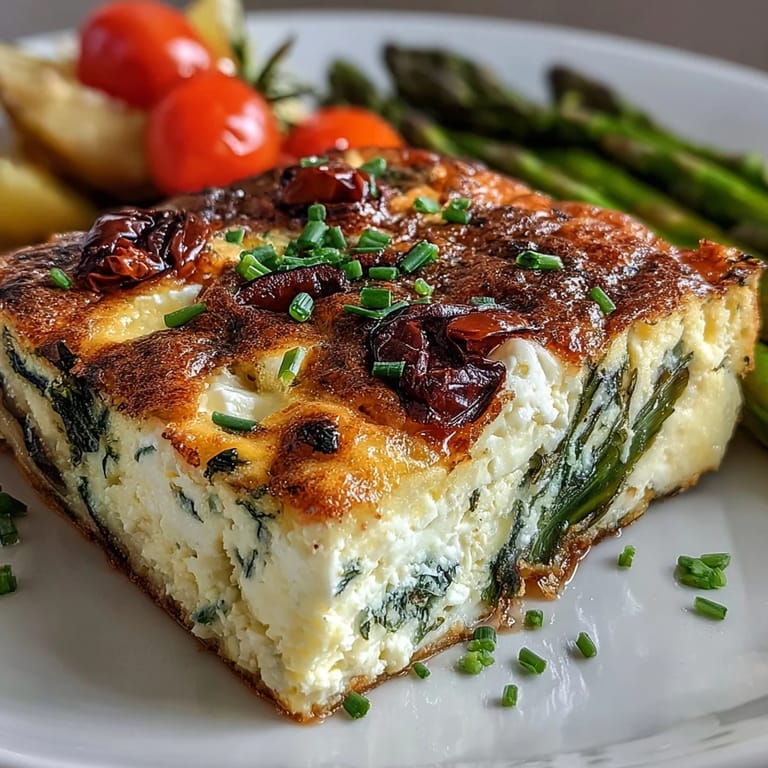
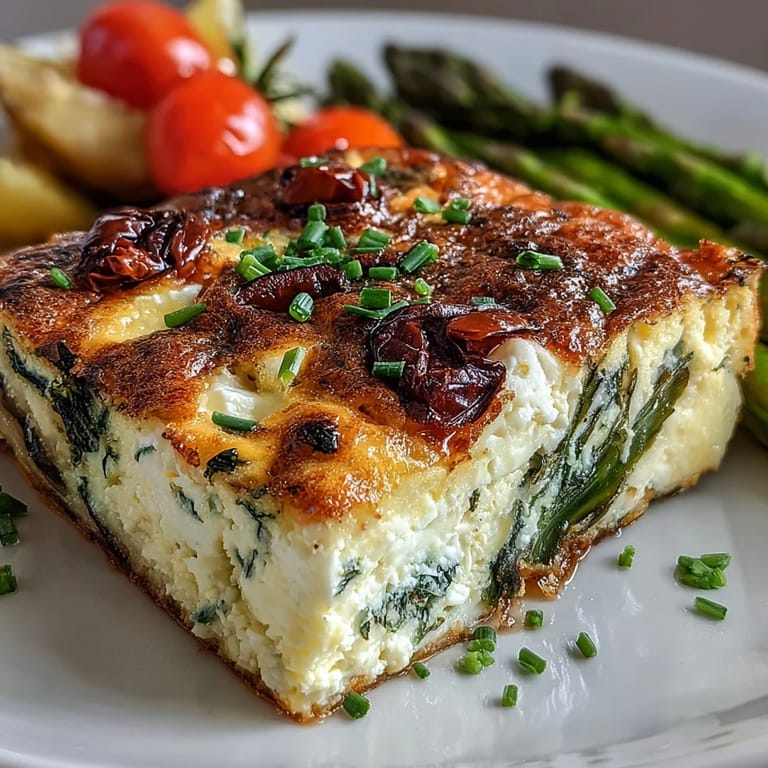
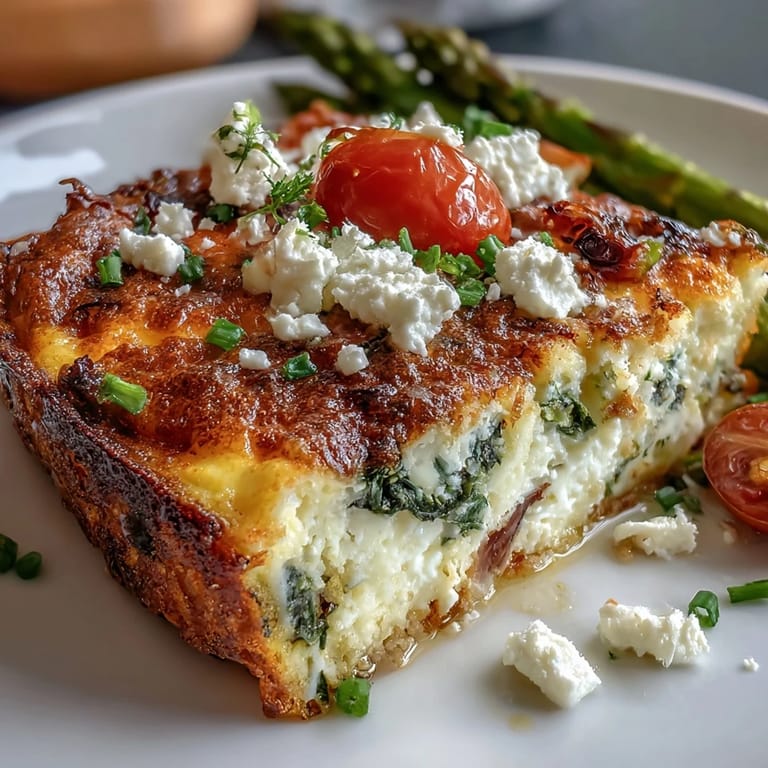
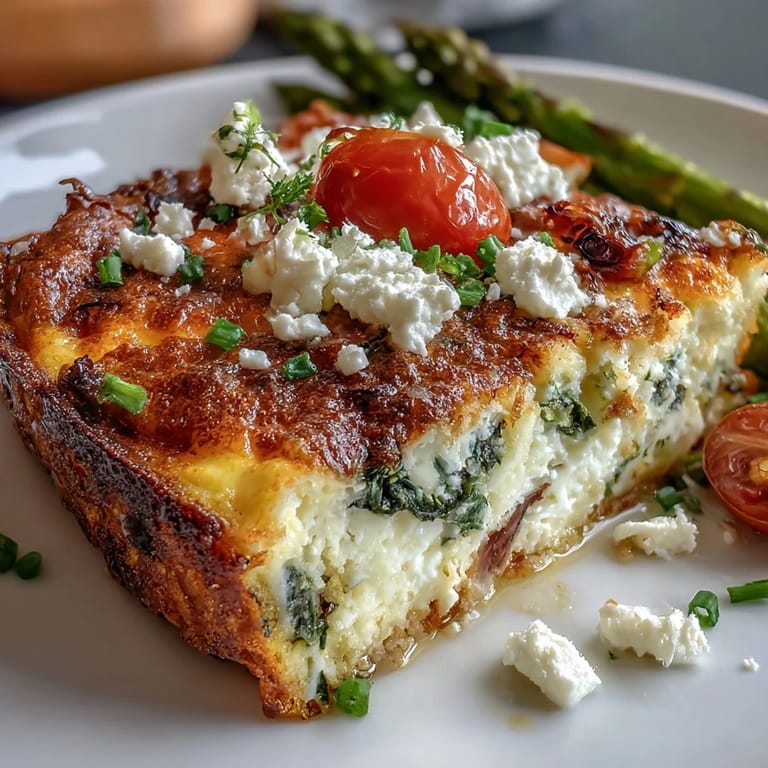
- Give the pan a gentle shake to level things out, then slide it onto the oven rack. Peek through the glass as it puffs and browns—mine always looks like a golden quilt at this stage.
- Cool and Serve:
- Let the pan rest for five minutes so slicing is simple, then cut into squares and serve warm or, for later brunchers, at room temperature.
 Pin It
  Pin It
 There was a day this frittata turned a disjointed weekend into an impromptu celebration. Everyone lingered around the table just a bit longer, forks clinking, and someone quietly asked for the recipe not five minutes after the first bite. All at once, it stopped being just another brunch option and became the dish everyone waited for.
Sheet Pan Success – What Matters Most
I learned that spreading the filling evenly and whisking the eggs just enough (not too much) makes the frittata cook evenly and stay extra fluffy. The big surface area of the pan is the secret to those golden corners everyone fights over, so don’t crowd it with add-ins. I always assemble everything before turning on the oven so there are no last minute scrambles.
Making It Your Own
No two frittatas have ever been exactly alike in my kitchen. Swap in peas or artichoke hearts if you’re feeling adventurous, or use up leftover roasted vegetables from the night before for extra depth. Try goat cheese for extra creaminess or a sharp cheddar for something familiar—either way, the base is flexible and forgiving.
Timing, Storage, and Leftovers
Letting the frittata cool for a few minutes before slicing keeps the squares looking sharp and prevents burns on eager hands. It keeps beautifully in the fridge for a make-ahead win; I’ve even shared cold slices with friends for a surprisingly delicious picnic lunch. Don’t be shy about reheating—just a quick stint in the oven brings it back to life.
- Slice before storing to make busy mornings easier.
- Layer parchment between squares so they don’t stick together in the fridge.
- Cover tightly—eggs like to absorb fridge odors if left uncovered.
 Pin It
  Pin It
 This frittata always signals a table full of laughter and clinking glasses, no matter the season. I hope it brings as much color and ease to your brunch as it has to mine.
Recipe Questions & Answers
- → What pan size is best?
A rimmed 18x13-inch sheet pan yields an even, thin frittata that bakes uniformly and is easy to slice into squares.
- → How do I prevent a soggy center?
Sauté vegetables until tender to remove excess moisture, use a rimmed pan for even heat, and bake until the center is set and slightly golden.
- → Can I swap cheeses or make it dairy-free?
Yes. Swap feta for goat cheese or shredded cheddar; for dairy-free, use plant-based milk and a dairy-free crumbling alternative, adjusting salt to taste.
- → How far in advance can I prepare it?
Assemble and refrigerate up to 24 hours before baking, or fully bake and chill for up to 3 days; reheat gently to retain texture.
- → What are good vegetable substitutions?
Use seasonal options like zucchini, peas, artichoke hearts or roasted mushrooms. Chop vegetables uniformly so they cook at the same rate.
- → How should leftovers be stored and reheated?
Store cooled portions in an airtight container in the fridge for up to 3 days. Reheat in a low oven or toaster oven to preserve texture, or microwave briefly.