 Pin It
 Sunlight streamed through my kitchen window the first time I tinkered with making lemon blueberry scones, and the scent of lemon zest swirling with baking sugar was enough to stop me mid-whisk for a deep inhale. I remember smiling as a few rogue blueberries bounced onto the counter, leaving purple trails behind. Baking these on a lazy weekend brought a sense of anticipation—would they end up as buttery clouds, or something less photogenic? The thrill was as much in the process as in sneaking the first bite, still warm from the oven. These scones are now a staple whenever I crave a breakfast treat that’s both zesty and comforting.
The last time I baked these for my book club, the kitchen filled with bursts of laughter and the gentle clatter of coffee mugs as we reached for second helpings. One friend confided she’d never liked scones until now, and another insisted on taking the last one home for her partner. It’s funny how a simple plate of scones can anchor a whole afternoon of conversation, creating easy moments that linger far longer than crumbs on a plate.
Ingredients
- All-purpose flour: Use a light hand when measuring to keep the scones tender, not tough.
- Granulated sugar: Sweetens just enough—I found a touch more or less tweaks the balance nicely for personal taste.
- Baking powder and baking soda: These combine forces for lift and crumb; always check they’re fresh for best rise.
- Salt: Essential to amplify the citrus and round out flavors—don’t skip it!
- Lemon zest: Finely grated zest brings vibrant aroma—gently rub the zest with sugar for even more zing.
- Cold unsalted butter: The secret to flakiness; work quickly so the butter stays cold for those signature pockets.
- Heavy cream: Rich and luscious, cream adds moisture and indulgence, both inside the dough and brushed on top.
- Egg: Holds it all together while giving a soft, cakey bite.
- Vanilla extract: Just a splash melts into the background, letting lemon and blueberries shine.
- Fresh blueberries: Plump berries burst as they bake—I gently fold them in with floured hands to keep them intact.
- Powdered sugar: The glaze’s backbone—sift it for a clump-free finish.
- Lemon juice: Squeezed fresh, it turns the glaze from sweet to zippy.
Tired of Takeout? 🥡
Get 10 meals you can make faster than delivery arrives. Seriously.
One email. No spam. Unsubscribe anytime.
Instructions
- Prep the baking sheet:
- Line your tray with parchment—I learned the hard way that even buttery scones need it to prevent stubborn sticking.
- Mix dry ingredients:
- Whisk flour, sugar, baking powder, baking soda, salt, and lemon zest together until you smell that fragrant citrus liftoff.
- Cut in the butter:
- Add the cold butter cubes, then use your fingertips or pastry cutter to work them in until it’s crumbly with pea-sized bits.
- Combine wet ingredients:
- In a separate bowl, mix cream, egg, and vanilla, then pour over the dry mix—a quick stir brings the dough together, but don’t overwork it.
- Add blueberries:
- Gently fold them in, trying not to burst the berries so you get whole pockets of fruit in each wedge.
- Shape and cut:
- Pat the dough into a 7-inch round on a floured surface—don’t fuss too much about perfect edges, rustic is charming here.
- Slice and arrange:
- Cut into 8 wedges, then move each to the prepared sheet, leaving space so they bake up golden not crowded.
- Brush and bake:
- Dab with cream and bake 16–18 minutes until just turning golden—your kitchen will smell like a bakery at this point.
- Cool and glaze:
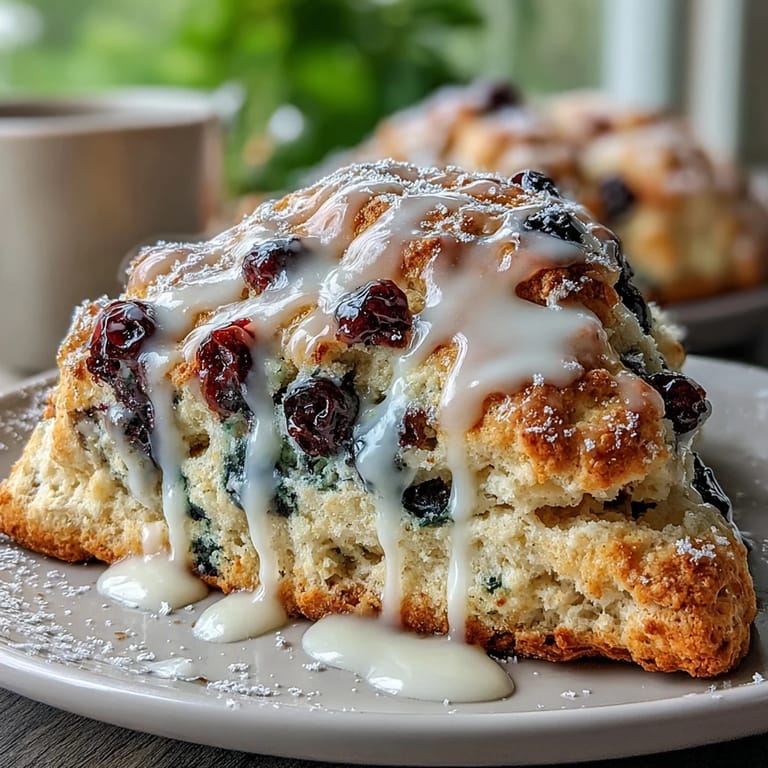
- Let them cool on a rack, then drizzle with lemon glaze, watching it gleam before setting into sweet little shells.
 Pin It
 Slicing into a still-warm scone while answering a video call with my sister, I heard her gasp at the flaky layers and golden crumb. It’s become a running joke—half the time I make these, someone ends up wanting the recipe, but everyone agrees there’s nothing like eating them fresh from my kitchen counter.
Let’s Talk Butter
Cold butter is a non-negotiable here. I’ve even chilled my mixing bowl on hot days to give myself a chilly edge—the little pools of unmelted butter steam in the oven, creating those dreamy, delicate pockets that make each bite so tender.
How to Avoid Overmixing
If my dough looks a little messy, I know I’m on the right path. Overmixing toughens the crumb, so I remind myself to stop folding just as the last streak of flour disappears; that way, the scones bake impossibly soft inside.
Make-Ahead Magic
I’ve discovered these scones freeze beautifully, unbaked or baked, making future brunches one less thing to plan for. Just pop them from freezer to oven, adding a little extra baking time.
- Cut and freeze scones raw, then bake straight from the freezer.
- Glaze after baking for the best texture.
- Label the bag with date and baking directions to avoid guessing games.
 Pin It
 Let lemon and blueberry season inspire you to fill your kitchen with bright, buttery aromas—these scones make any ordinary morning feel like a special brunch for one or a crowd.
Recipe Questions & Answers
- → How do I keep blueberries from sinking in the dough?
Lightly toss berries with a teaspoon of flour before folding them in. Fold gently and only until just combined to maintain distribution without crushing the fruit.
- → Can I use frozen blueberries?
Yes. Keep them frozen and do not thaw before adding; toss briefly with flour to reduce bleeding and fold them gently into the dough.
- → How can I tell when the scones are done?
Look for a golden-brown top and firm edges. A toothpick inserted into the center should come out clean or with a few moist crumbs, not wet batter.
- → What is the best way to store and reheat scones?
Store cooled scones in an airtight container at room temperature for up to 2 days, refrigerate up to 4 days, or freeze for 2–3 months. Reheat in a 325°F oven for 8–10 minutes to revive texture.
- → How can I keep the scones tender?
Keep ingredients cold, cut butter into small pieces until the mixture resembles coarse crumbs, and avoid overmixing once the wet ingredients are added. Use heavy cream for richer texture.
- → Can I swap the lemon for another citrus?
Yes. Substitute orange zest and juice for a milder citrus note. Adjust the glaze acidity to taste by reducing juice or adding a bit more sugar if needed.