 Pin It
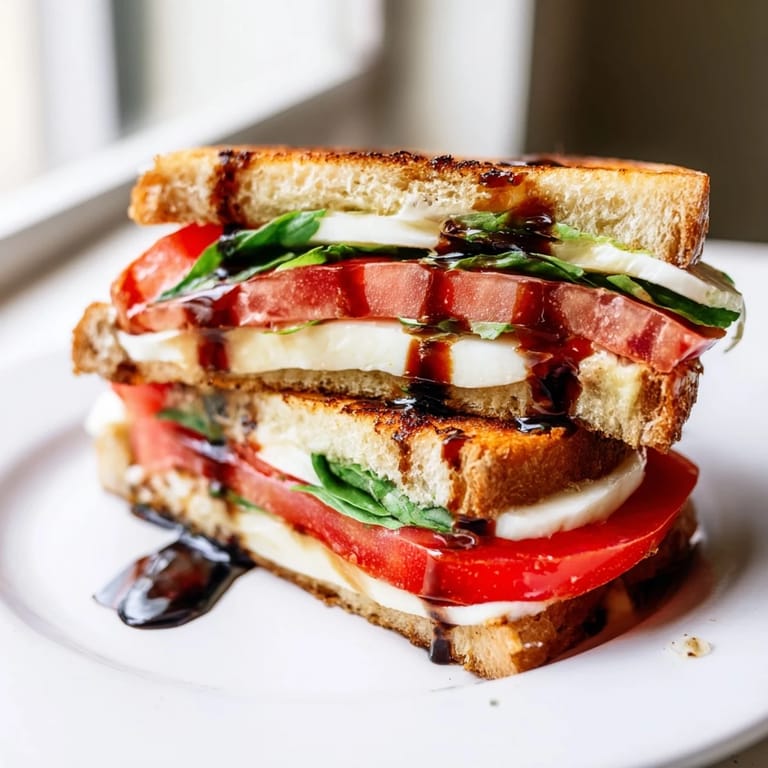
 There's something about the moment when butter hits the hot pan that makes everything feel possible. I was standing in my kitchen on a rainy Tuesday, staring at a ripe tomato and a ball of fresh mozzarella, when it occurred to me that grilled cheese didn't have to be a nostalgic relic from childhood. What if I borrowed from the summers I'd spent in Italy, when I'd eat caprese salads until my fingers were sticky with basil and balsamic? That's when this sandwich was born—a bridge between two different kinds of comfort food, melting together on golden bread.
I made this for my neighbor one evening when she showed up with fresh mozzarella from her sister's farm. The way her eyes lit up when she bit into it made me realize that sometimes the best meals aren't the complicated ones—they're the ones that let each ingredient do what it does best. She came back the next week asking for the recipe, which meant I had to admit I didn't write anything down. I just knew it by heart after that first time.
Ingredients
- Sourdough or Italian bread: Use something with structure that won't collapse when the cheese gets melty; it's your foundation, and cheap bread will make you regret every choice.
- Fresh mozzarella cheese: The difference between rubbery and creamy comes down to buying it fresh, ideally from a place where you can taste it before committing.
- Unsalted butter: Softened means it spreads like a whisper instead of ripping your bread, so let it sit out for 10 minutes.
- Ripe tomato: Pick one that smells like tomato, not one that smells like nothing—ripeness is everything here.
- Fresh basil: The moment it loses its scent, it loses its point; buy it the day you plan to use it.
- Balsamic glaze: The thick syrupy kind, not vinegar; it's the sweet punctuation mark at the end of every bite.
- Salt and black pepper: The tomato brings moisture, so don't be shy with seasoning—it gets lost in the heat.
Tired of Takeout? 🥡
Get 10 meals you can make faster than delivery arrives. Seriously.
One email. No spam. Unsubscribe anytime.
Instructions
- Butter your bread:
- Lay out all four slices and spread softened butter on one side of each—it should feel almost effortless, not like you're fighting the bread. The butter needs to coat evenly so every edge gets crispy.
- Build your foundation:
- Take two slices butter-side down and arrange mozzarella on top, then tomato, then basil leaves torn just big enough to recognize what they are. A light sprinkle of salt and pepper matters more than you'd think; the tomato will release its own moisture, so you're seasoning the whole thing here.
- Add the glaze:
- Drizzle a small amount of balsamic over the tomato and basil—less than you think you need, because this stuff is concentrated and bold.
- Close it up:
- Place the remaining bread slices on top, butter-side up, so you're creating a sealed package ready for the pan.
- Get the pan ready:
- Heat a nonstick skillet or grill pan over medium heat until a drop of water sizzles and disappears almost immediately. You're not making it scream; you want gentle, even heat.
- Cook with patience:
- Place the sandwiches in the pan and resist the urge to touch them for the first three minutes; let them develop that golden-brown crust. Press down gently with the back of a spatula only after the first flip, and you'll feel the cheese begin to give under pressure. Cook the other side for another three to four minutes until it matches the first side.
- Rest and serve:
- Let them sit for a minute after removing from heat—this lets the cheese set just slightly so it doesn't spill everywhere. Slice diagonally, drizzle with extra balsamic if you're feeling generous, and eat while the bread is still singing.
 Pin It
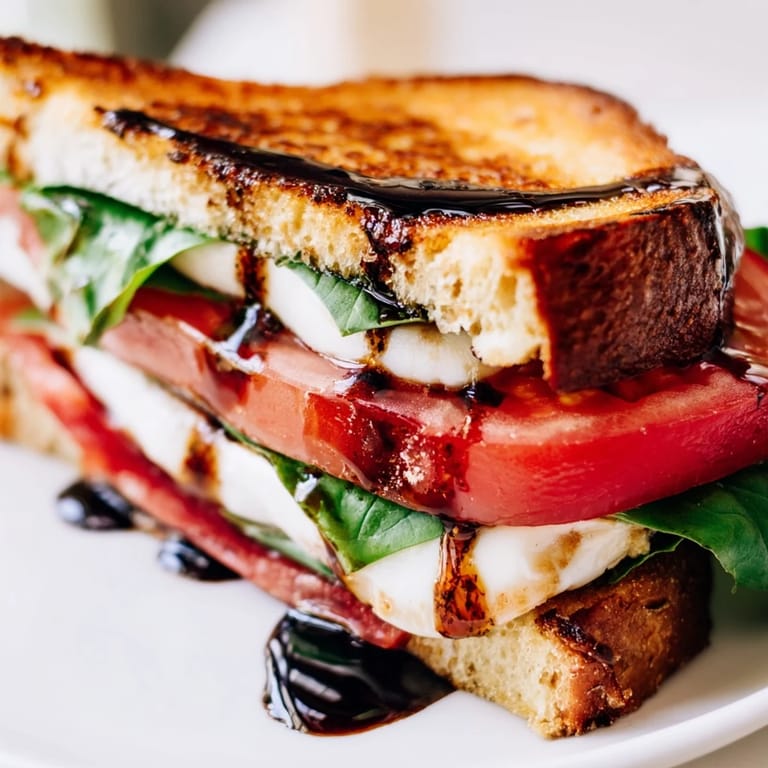
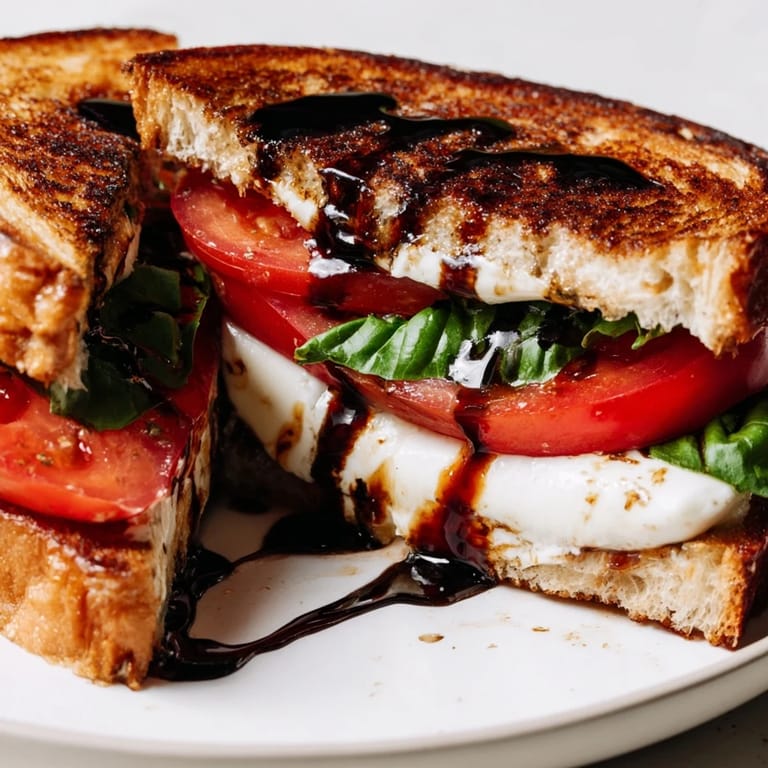
 There's a moment when you first bite into this sandwich where the warm, slightly stringy cheese meets the cool tomato that's been sitting against hot bread, and you understand why Italians never felt the need to complicate caprese in the first place. It's pure, it's simple, and somehow it tastes like you belong in a kitchen where good things happen.
Why Tomato Matters
I learned this the hard way by using a mealy winter tomato and wondering why the sandwich felt hollow. Tomato brings acid, it brings moisture, and it brings a kind of brightness that makes the richness of mozzarella feel less heavy. A truly ripe tomato will make you understand why it's the star here, not just an ingredient filling space.
The Basil Question
Some people wilk their basil into the cheese, cooking it until it turns dark and bitter. I prefer to let it stay as itself—green, fragrant, almost peppery against everything else. If you warm it gently between the hot cheese and the warm bread, it releases its oils without losing its identity, which feels like the right balance between cooked and raw.
Making It Your Own
This sandwich is a canvas if you want it to be, but I'd add things carefully to avoid overwhelming what makes it work. A thin smear of pesto works beautifully if you love garlic, and a slice of prosciutto turns it into something closer to a full meal.
- Try adding a layer of pesto for depth, but use it sparingly so basil doesn't become redundant.
- Ciabatta bread adds an airier texture; whole-grain brings nuttiness that pairs surprisingly well with the balsamic.
- A pinch of red pepper flakes in the filling adds a whisper of heat that makes the mozzarella taste creamier.
 Pin It
 This sandwich reminds me that comfort food and sophistication aren't opposites—they're just two sides of the same warm, melted coin. Make it once, and you'll find yourself making it again.
Recipe Questions & Answers
- → What type of bread works best for this sandwich?
Sourdough or Italian bread provide the ideal texture and flavor, but ciabatta or whole-grain can be used for variation.
- → Can I use a different cheese instead of mozzarella?
Fresh mozzarella is preferred for its meltability and creaminess, but mild cheeses like provolone can be a substitute.
- → How do I prevent the sandwich from becoming soggy?
Spreading butter evenly on the outside and cooking on medium heat ensures a crisp exterior and melted interior without sogginess.
- → Is it possible to make a vegan version?
Yes, use plant-based butter and vegan mozzarella alternatives to keep the flavors while accommodating dietary preferences.
- → What enhances the flavor besides the main ingredients?
A drizzle of balsamic glaze adds a tangy sweetness that complements the fresh basil and tomato perfectly.