 Pin It
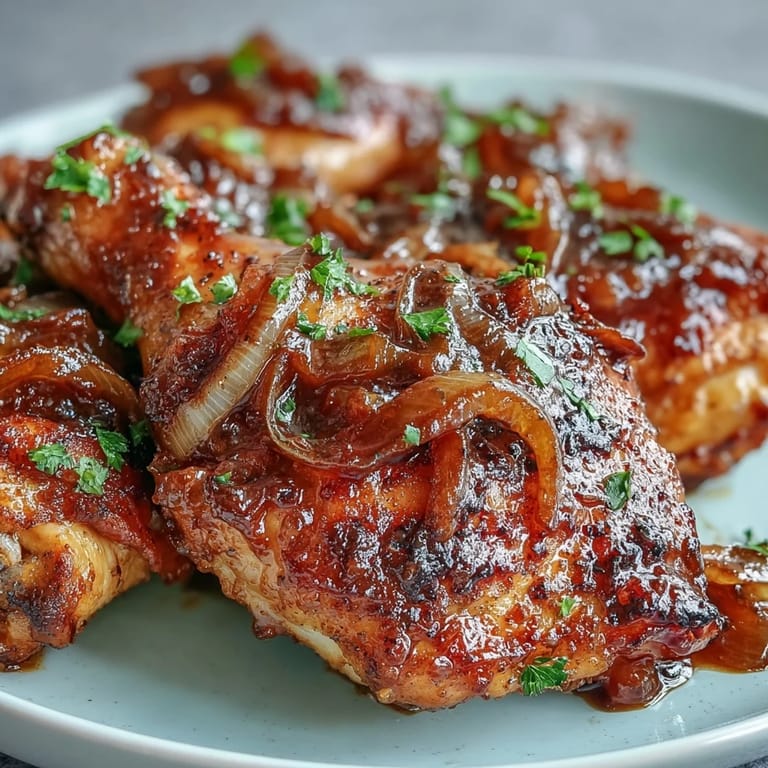
 My grandmother's kitchen on Sunday afternoons always smelled like this dish—golden chicken sizzling in cast iron while onions melted into something almost sweet. She'd hum while stirring that gravy, never measuring anything, just knowing when it was right by the way it coated the back of a wooden spoon. Years later, I finally understood what she was doing, and now when I make this, I feel her presence in every caramelized onion and every spoonful of that rich, savory sauce poured over tender chicken.
I served this to my partner on a random Tuesday when neither of us had planned dinner, and they asked if I'd been cooking it all day. The way they scraped their plate and went back for more gravy told me everything—some food doesn't need fancy plating or trendy ingredients to feel special. It just needs to be made with attention and served with care.
Ingredients
- Bone-in, skin-on chicken thighs and drumsticks: These cuts have more flavor and fat than breasts, so they stay moist and don't dry out during the long simmer—they're also forgiving if your timing is slightly off.
- All-purpose flour (for dredging and gravy): This creates a golden crust and thickens the gravy without overpowering the other flavors; don't skip the dredging step even if it feels tedious.
- Vegetable oil: You need a high-heat oil for the initial frying; I use vegetable or canola because they won't brown too quickly and leave burnt bits.
- Yellow onions: These caramelize beautifully and become almost buttery, which is the foundation of a proper gravy—don't rush this step or substitute with something else.
- Low-sodium chicken broth: Homemade is genuinely superior here, but if you use store-bought, taste before seasoning because the salt content varies wildly.
- Dried thyme and paprika: These are optional but worth including—thyme adds an earthiness and paprika brings color and a subtle warmth that deepens the flavor.
- Unsalted butter: A final whisking of butter at the end makes the gravy silky and rounds out all those savory edges in a way that's almost luxurious.
Tired of Takeout? 🥡
Get 10 meals you can make faster than delivery arrives. Seriously.
One email. No spam. Unsubscribe anytime.
Instructions
- Season your chicken thoroughly:
- Pat the chicken completely dry with paper towels—this is crucial for browning—then season every surface, including under any skin flaps, so the flavor penetrates all the way through.
- Prepare the dredging station:
- Mix your flour with salt and pepper in a shallow bowl, then coat each chicken piece generously, shaking off excess but keeping a light, even layer. Save whatever flour falls to the bottom of the bowl for thickening the gravy.
- Get that golden crust:
- Heat your oil until it shimmers, then lay the chicken skin-side down and resist the urge to move it for at least 6 minutes—you want a proper golden crust, not pale spots. Flip carefully and do the same on the other side, then remove to a plate.
- Build your gravy foundation:
- Pour off all but 2 tablespoons of that flavorful oil, then add your sliced onions and let them cook low and slow, stirring often, until they're golden and completely softened. This takes patience, but those caramelized onions are where the magic lives.
- Create the roux:
- Sprinkle your reserved flour over the onions and stir constantly for a minute or two until it smells toasty and turns a light brown. You're creating a roux that will thicken everything without lumps.
- Whisk in the broth carefully:
- Slowly pour the broth while whisking to prevent lumps, making sure to scrape up all those browned bits stuck to the pan—they taste incredible and deepen the flavor. Add your thyme, paprika, salt, pepper, and butter, then simmer until the gravy thickens enough to coat a spoon.
- Nestle the chicken back in:
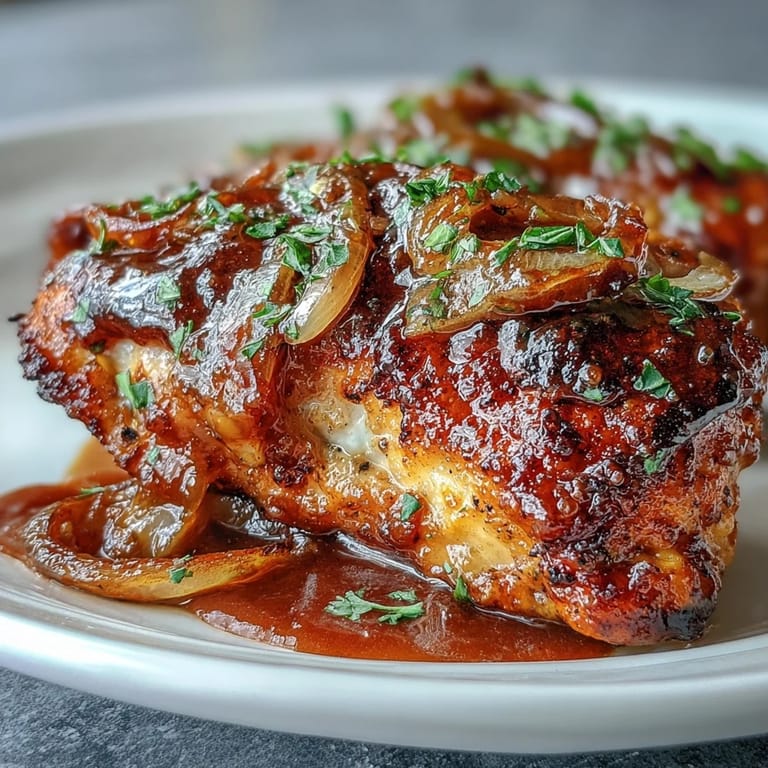
- Return the chicken pieces to the skillet, partially submerging them in the gravy, then cover and reduce the heat to low. Let everything simmer together for 25 to 30 minutes, until the chicken is fork-tender and the internal temperature hits 165°F, then taste and adjust seasoning if needed.
 Pin It
 There's a moment near the end of cooking when you lift that lid and the steam rises up carrying the smell of thyme and caramelized onions—that's when you know you've made something right. It's the kind of meal that brings people to the table without fanfare, where everyone just wants another bowl.
The Art of Caramelizing Onions
Caramelizing onions properly is less about temperature and more about time and patience—rushing them over high heat gives you soft onions that taste like they were boiled, not the sweet, complex flavor you're after. I learned this the hard way by turning up the heat to speed things along and ending up with acrid, burnt bits that ruined an otherwise beautiful gravy. Now I keep the heat at a steady medium, stir every couple of minutes so they brown evenly, and let at least 10 minutes pass. The payoff is onions that taste almost buttery and sweet, like they've been caramelizing since morning.
Why Bone-In Chicken Matters Here
The bones and skin add gelatin and fat to the gravy, which creates that silky, luxurious mouthfeel that boneless, skinless chicken simply cannot achieve. When the chicken simmers in that gravy, it releases its own flavors and the bones create a subtle richness that store-bought broth alone never quite captures. It's worth the extra few minutes it takes to simmer and clean up, trust me on this one.
Serving and Storage
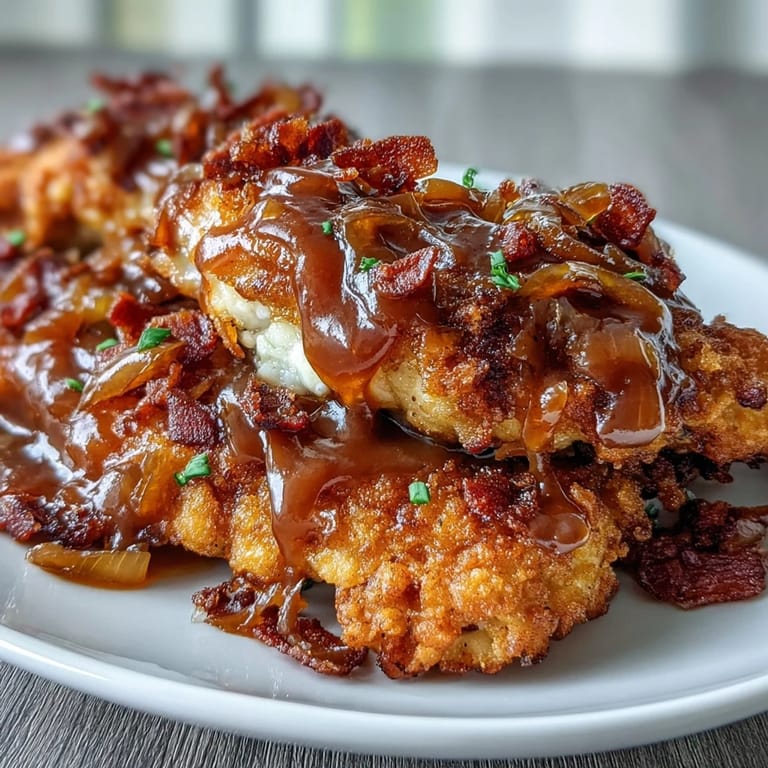
This dish is best served hot over creamy mashed potatoes or fluffy white rice, where all that onion gravy can pool and soak in. A side of collard greens or simple salad balances the richness without overshadowing the main event.
- Leftovers keep for up to three days in the refrigerator and actually taste better on day two when the flavors have deepened overnight.
- You can make this dish up to the point of simmering the chicken, refrigerate everything in the skillet, and finish cooking it the next day without any loss of quality.
- If the gravy thickens too much when reheating, stir in a little chicken broth or water to loosen it back to the right consistency.
 Pin It
 This is the kind of cooking that connects you to generations of people who understood that real comfort food doesn't need to be complicated—it just needs to be made with intention and served to people you care about. Make this, and let the smell of caramelized onions and simmering chicken do the talking.
Recipe Questions & Answers
- → What type of chicken works best for this dish?
Bone-in, skin-on chicken thighs and drumsticks provide the best flavor and keep the meat tender during cooking.
- → How do I make the onion gravy rich and smooth?
Caramelize sliced yellow onions slowly before adding flour and chicken broth, then simmer with butter to develop a thick, flavorful gravy.
- → Can I use boneless chicken instead?
Yes, boneless skinless chicken can be used, but reduce simmering time by about 10 minutes to avoid overcooking.
- → What sides pair well with smothered chicken?
Traditional options include mashed potatoes, rice, or collard greens to complement the savory gravy and tender chicken.
- → How do I achieve crispy skin on the chicken before braising?
Pan-fry the seasoned chicken pieces skin-side down in hot oil until golden brown before finishing in the gravy.
- → Can I add extra spice to the dish?
Yes, a pinch of cayenne pepper in the breading flour adds a subtle heat without overpowering the Southern flavors.