 Pin It
 There's something about April mornings that makes you want to cook with asparagus, and it was during one of those unexpectedly warm spring days that I first assembled these tartines in my tiny kitchen. My neighbor had brought over a bunch of pencil-thin spears from her garden, still dewy and practically glowing green, and I suddenly understood why she'd been raving about them all week. I'd thrown together what I had on hand—some good bread, eggs, a dollop of crème fraîche—and the result was so simple yet so elegant that I've made them dozens of times since. It's the kind of dish that feels both effortless and impressive, which is exactly what I needed that morning.
I made these for my sister's brunch club last spring, and watching everyone's faces when they took that first bite was genuinely rewarding—they all expected something overly complicated, but instead found themselves biting into perfect simplicity. The lemon brightness cuts through the richness in a way that somehow makes you want to eat more, not less, and suddenly the tartines were gone before anyone could have a second. That afternoon, my sister texted me the recipe request from three different people who'd been at the table, which felt like the ultimate compliment.
Ingredients
- Thin asparagus spears: Use the thinner ones if you can find them—they cook faster and have a more delicate texture that doesn't overpower the creamy eggs.
- Shallot: Its gentle sweetness adds depth without the sharpness of regular onion, which would clash with the lemon.
- Fresh chives: Don't skip these or substitute with dried—fresh chives bring a whisper of onion flavor that makes the whole dish feel alive.
- Large eggs: These matter more than you'd think; they have better flavor and a more vibrant yolk than smaller eggs.
- Crème fraîche or Greek yogurt: The crème fraîche is authentic and slightly richer, but Greek yogurt works beautifully if that's what you have and adds a subtle tang.
- Unsalted butter: It's essential to use unsalted so you control the salt level and taste the purity of the butter's flavor.
- Rustic country bread or sourdough: The texture and slight tang of sourdough complement these flavors perfectly, and thicker slices won't fall apart under the eggs.
- Lemon zest and juice: These brighten everything and prevent the dish from feeling heavy, so don't be shy with them.
Tired of Takeout? 🥡
Get 10 meals you can make faster than delivery arrives. Seriously.
One email. No spam. Unsubscribe anytime.
Instructions
- Blanch the asparagus until it sings:
- Boil your salted water first (it should taste like the sea), then add the asparagus and watch it closely—you're aiming for that moment when it turns from pale to vivid green, about 2 to 3 minutes. The ice bath stops it dead in its tracks, so it stays tender-crisp and doesn't turn into mush.
- Toast your bread with intention:
- You want the surface crispy and golden but the inside still slightly yielding, not dry and brittle. If you don't have a toaster, a grill pan works beautifully and adds a subtle char.
- Soften the shallot slowly:
- Melt your butter on medium heat and let the finely chopped shallot sit there quietly for a minute or two, just until it becomes translucent and sweet. You're coaxing out its flavor, not rushing it.
- Scramble the eggs gently and stop early:
- This is where most people go wrong—you want the eggs creamy and soft, not firm and rubbery, so stir constantly and pull them off heat while they still look slightly underdone. The residual heat will finish the cooking, and folding in the crème fraîche will cool everything down while adding silkiness.
- Assemble with care:
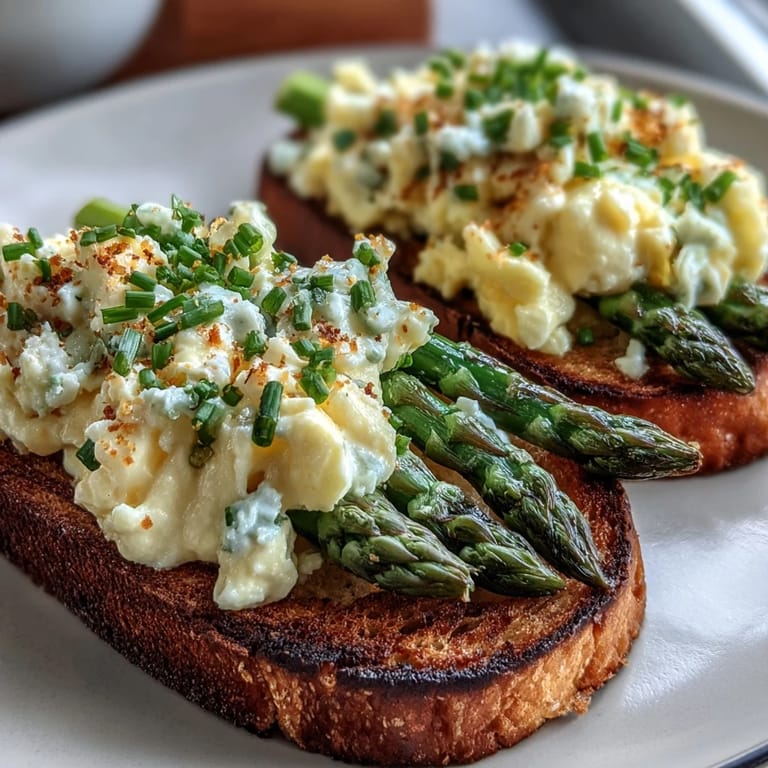
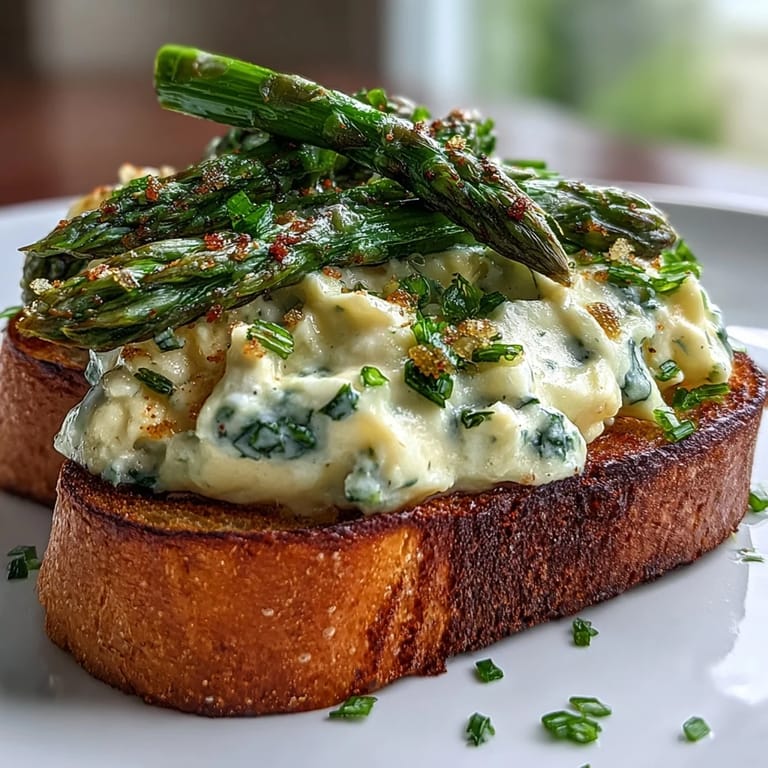
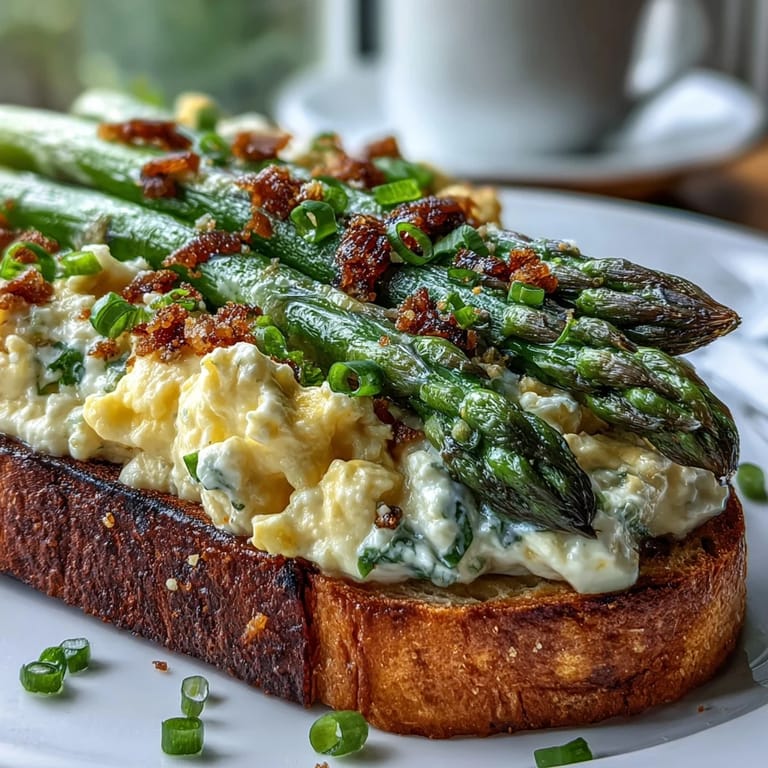
- Spoon the creamy eggs generously onto each piece of toasted bread, then lean three asparagus spears across the top like they're posing for a photograph. Finish with a squeeze of lemon juice and a shower of fresh chives and black pepper.
 Pin It
 My friend Marcus once said that tartines are just fancy open-faced sandwiches, and I almost threw a kitchen towel at him, but then I realized he wasn't wrong—except they're also so much more than that. There's something about eating with a knife and fork instead of your hands that makes you slow down and actually taste each component, and that matters when the ingredients are this simple and this good.
Why Spring Deserves Asparagus
There's a reason asparagus shows up at farmer's markets in spring and disappears by June—it's meant to be seasonal and brief, which makes you appreciate it more. The tender spears practically melt on your tongue after that quick blanch, and their subtle grassy sweetness becomes almost floral when paired with lemon and eggs. Once you've had truly fresh asparagus prepared this way, the pale frozen stalks at the grocery store in December will feel like a sad impostor.
The Egg Technique That Changes Everything
Scrambling eggs for tartines is different from scrambling them for a regular breakfast plate—you're aiming for a cloud-like texture rather than distinct curds, which means low heat and constant stirring while you're actually paying attention. The folding-in step at the end (crème fraîche, chives, zest) cools everything down slightly and transforms the eggs into something luxurious without any extra effort. Once you master this technique, you'll find yourself using it for everything from simple weeknight dinners to impressing people who think they don't like scrambled eggs.
Variations That Keep Things Interesting
I've made these tartines with fresh dill instead of chives on a whim, and it shifted the entire flavor profile toward something more Scandinavian—still beautiful but with a different energy entirely. Sometimes I crumble a bit of goat cheese over the top, which adds a tanginess that plays wonderfully against the lemon, and once I even added a tiny pinch of smoked paprika because I was feeling adventurous. The foundation is solid enough that you can play around without breaking anything.
- Try swapping in tarragon or parsley for the chives if you want to shift the herbal notes.
- A sprinkle of grated Parmesan or crumbled goat cheese adds complexity without overwhelming the delicate flavors.
- For a completely different mood, drizzle with truffle oil instead of plain lemon juice if you're feeling fancy.
 Pin It
 These tartines became my go-to move when I want to feel like I've made something restaurant-quality without actually spending hours in the kitchen. There's real magic in simplicity when you get the technique right and the ingredients are good.
Recipe Questions & Answers
- → How do you prepare the asparagus for tartines?
Blanch thin asparagus spears in salted boiling water for 2–3 minutes until tender-crisp, then shock in ice water to stop cooking and preserve color.
- → What is the best bread choice for this dish?
Rustic country bread or sourdough sliced about 1/2-inch thick works best to provide a sturdy, crisp base that holds the toppings well.
- → How are the eggs cooked for maximum creaminess?
Cook the eggs gently in butter with shallots, stirring constantly until just set but still creamy, then fold in crème fraîche and chives for richness.
- → Can other herbs be used instead of chives?
Yes, fresh dill, tarragon, or parsley can be substituted to complement the flavors while adding a different herbal note.
- → What seasoning enhances the flavor of the tartines?
Adding lemon zest and a drizzle of lemon juice brightens the tartines, while a sprinkle of salt and freshly ground pepper balances the flavors.