 Pin It
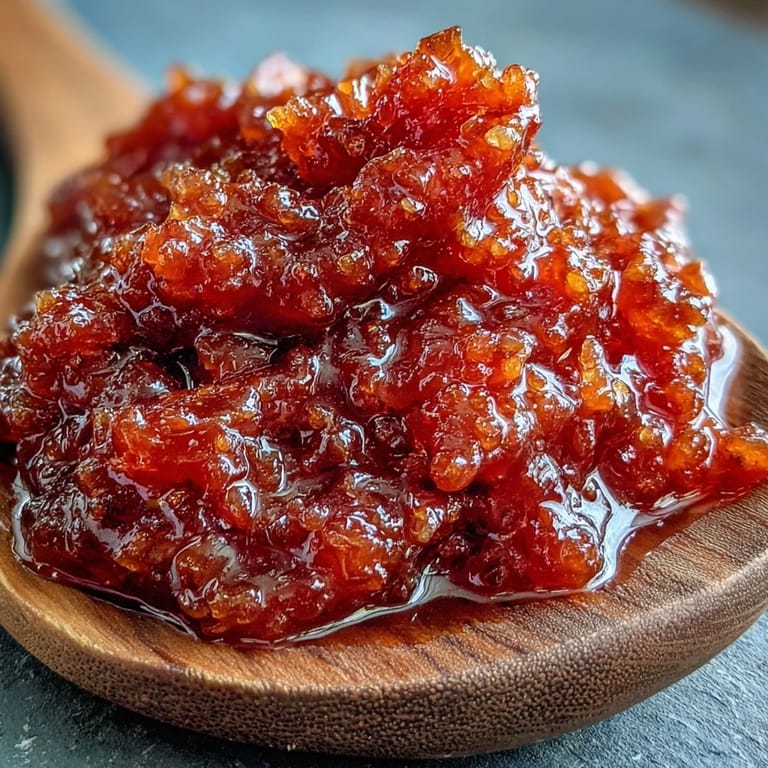
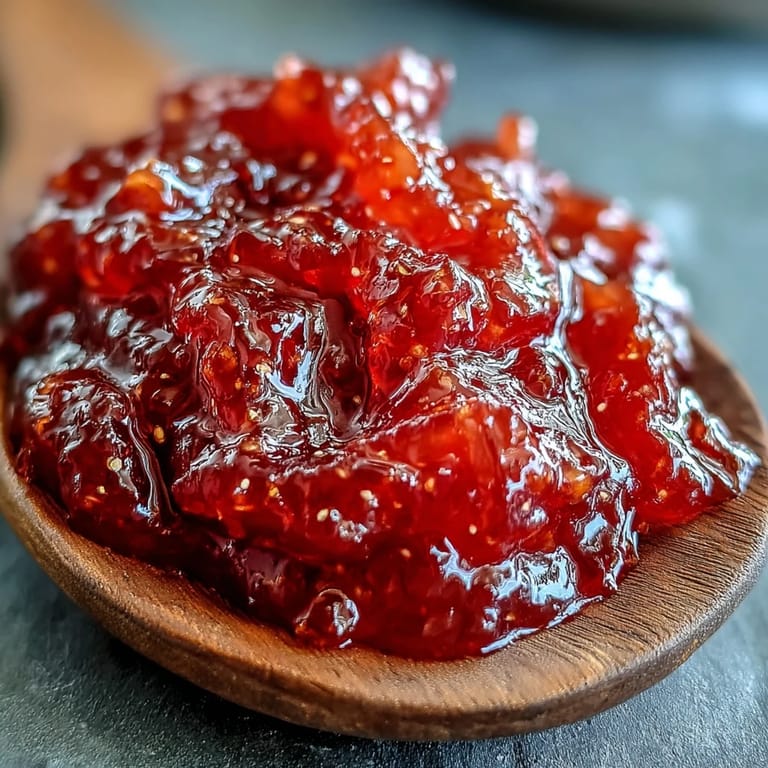
 My neighbor Maria brought over a bag of guavas one humid afternoon, insisting I had to try making preserves the way her abuela taught her. I was skeptical—I'd never worked with guavas before—but something about the way she described that deep pink interior and the way it transforms into something glossy and jewel-like made me curious. That first batch bubbling on my stove filled my kitchen with a tropical perfume so intoxicating that my partner came home early just to ask what smelled like vacation. Now, whenever I spread this onto warm toast or pair it with sharp cheese, I'm transported back to that afternoon and Maria's knowing smile.
I made this for a small dinner party where everyone brought something to share, and I nervously set out my jar alongside store-bought options. By the end of the night, mine was completely gone and three people asked for the recipe—including someone who'd claimed they never ate preserves. Seeing it disappear felt like quiet validation, the kind that makes you want to make it again immediately.
Ingredients
- Ripe guavas (1.5 kg, about 10–12 medium): The quality of your fruit determines everything; look for ones that yield slightly to pressure with a fragrant aroma, since underripe guavas will result in a dull, grainy preserve.
- Granulated sugar (700 g): This isn't just sweetness—it's the backbone that helps the jam set properly and acts as a natural preservative, so don't skimp or substitute randomly.
- Fresh lemon juice (2 tablespoons): The acidity brightens the tropical sweetness and prevents the preserve from tasting one-dimensional, almost like a secret ingredient no one can identify.
- Water (1 cup): This helps soften the guavas evenly without drying them out, creating that silky base before everything concentrates down.
Tired of Takeout? 🥡
Get 10 meals you can make faster than delivery arrives. Seriously.
One email. No spam. Unsubscribe anytime.
Instructions
- Prepare your guavas with patience:
- Wash each guava thoroughly under running water, then slice them into quarters. Use a small spoon to scoop out the seeds, working over a bowl to catch any juice—this is oddly meditative, and you'll notice the flesh is pale and dense when raw, nothing like the silky texture it'll become.
- Soften the fruit gently:
- Combine the guava flesh and water in a large saucepan and bring to a rolling boil, then immediately lower the heat and let it simmer quietly for 15 to 20 minutes. You'll notice the guavas gradually soften and the liquid takes on a pale pink hue—this is when you know they're ready to yield.
- Mash or blend for your preferred texture:
- Using a potato masher, work through the softened fruit with firm, deliberate strokes until mostly broken down, or use an immersion blender for a minute or two if you prefer something smoother. Stop before it becomes completely uniform—some texture is actually desirable here.
- Press through a sieve for silky results:
- Pour the mashed mixture through a fine sieve or food mill, pressing gently with the back of a spoon to extract every bit of precious pulp while leaving the stubborn seeds and tough bits behind. This step takes time, but the resulting smooth texture is absolutely worth the effort.
- Combine pulp with sugar and lemon:
- Return the strained pulp to your cleaned saucepan, add the sugar and lemon juice, and stir thoroughly until the sugar begins to dissolve. The mixture will look wet and grainy at first, but trust the process.
- Bring to a rolling boil:
- Increase the heat to medium-high and stir constantly as the mixture comes to a full boil, making sure nothing sticks to the bottom where it might scorch. You'll notice the surface beginning to foam—this is normal and a sign the preserve is concentrating.
- Simmer and stir until it thickens:
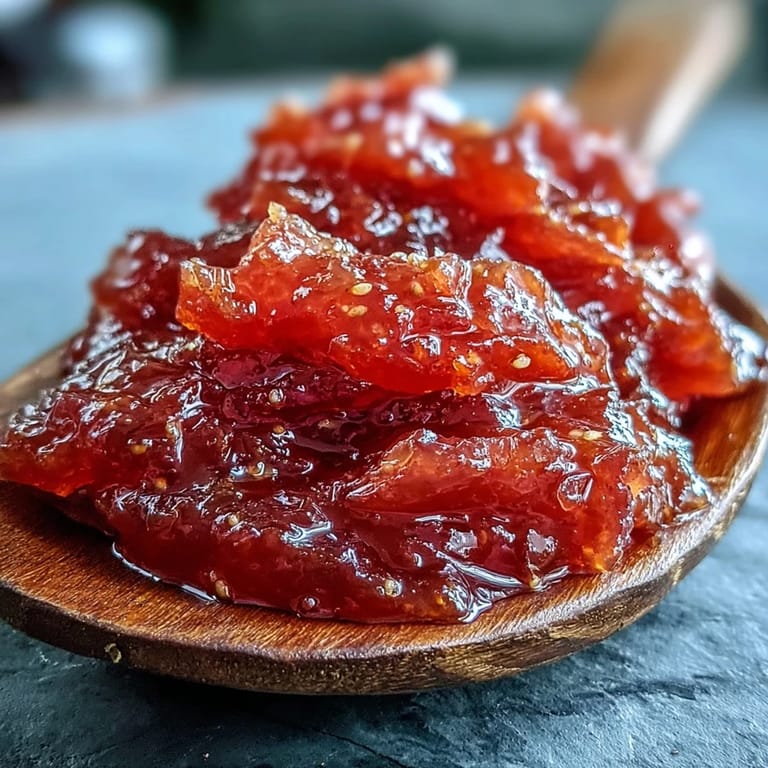
- Reduce heat to medium and let the mixture bubble away for 35 to 45 minutes, stirring frequently to prevent sticking and to help evaporate the excess moisture. Around the 30-minute mark, start testing by placing a small spoonful on a chilled plate—if the preserve wrinkles when you push it, you've reached the magic point.
- Skim foam as it appears:
- As the preserve simmers, foam will gather on the surface; use a clean spoon to skim this off periodically, which helps clarify the final preserve. It's a small detail that makes the finished jar look jewel-like and professional.
- Jar and seal while hot:
- Using a ladle and a funnel if you have one, carefully pour the steaming preserve into sterilized jars, leaving about half a centimeter of headspace at the top. Seal the lids immediately while everything is hot, which creates a vacuum as it cools and helps preserve your work for months.
 Pin It
 One rainy Saturday, I spread this preserve on buttery toast and paired it with a thick slice of aged manchego cheese—a combination I'd never tried before. The sweet-tart guava against the nutty, salty cheese created this perfect tension on my palate, and I understood why people get sentimental about preserves. It wasn't just about the preserve itself; it was about having made something that elevated an ordinary moment into something worth pausing for.
Why Guavas Make the Best Preserves
Guavas are secretly one of the most forgiving fruits for jam-making because their natural pectin content means the preserve thickens reliably without you needing to add commercial pectin or worry endlessly about achieving the right consistency. The flavor is bold enough to taste homemade and special, yet subtle enough that it doesn't overwhelm other ingredients when you want to fold it into a cake or pastry filling. Plus, there's something deeply satisfying about taking a tropical fruit and transforming it into something shelf-stable and precious-feeling.
Serving Suggestions Beyond the Obvious
Sure, this belongs on toast, but I've discovered it's equally brilliant spooned alongside a sharp cheese board where it cuts through richness beautifully, or swirled into plain yogurt for breakfast texture and flavor. It also makes a stunning glaze for roasted duck or pork—the tartness and tropical sweetness are sophisticated enough for dinner-party presentations. My secret move is layering it into the bottom of a tart shell before adding custard or cream, which gives you this hidden pocket of flavor when someone bites through.
Storage and Variations Worth Trying
Once sealed and cooled, your preserve keeps in the refrigerator for up to three months, or you can process the jars in a boiling water bath for 10 minutes for longer pantry storage—check your local canning guidelines for safety. If you want something chunkier, don't sieve all the pulp; instead, fold back in some of the reserved guava pieces after pressing to create a more rustic texture. For a honey-sweetened version, replace half the granulated sugar with honey, though you may need to simmer slightly longer for the preserve to set properly.
- Reserve some un-sieved guava pieces and fold them back in after pressing for a more textured, homestyle preserve.
- Substitute half the sugar with honey for a deeper, more complex sweetness, though monitor the set time carefully.
- Add a small pinch of cardamom or a vanilla bean during cooking if you want to experiment with subtle flavor dimensions.
 Pin It
 There's something quietly powerful about making preserves from scratch—you're essentially bottling sunshine and tropical air to release months later on ordinary mornings. Every jar is proof that you spent an afternoon doing something intentional and delicious, which is worth celebrating.
Recipe Questions & Answers
- → How do I know when the preserves are ready?
Place a small amount on a chilled plate—if it wrinkles when pushed with your finger, the preserves have reached the proper consistency. This typically takes 35-45 minutes of simmering.
- → Can I make this preserve with less sugar?
Yes, you can reduce the sugar, though this may affect the set and preservation time. For optimal results and shelf stability, maintain the suggested sugar ratio or use a pectin specifically designed for low-sugar preserves.
- → What's the best way to store these guava preserves?
Pour hot preserves into sterilized jars and keep refrigerated for up to three months. For longer storage, process jars in a boiling water bath. Always use clean utensils when scooping to prevent contamination.
- → Can I use frozen guavas instead of fresh?
Frozen guavas work well for preserves. Thaw completely before starting, and note that frozen fruit may release more water, potentially requiring slightly longer cooking time to reach the desired thickness.
- → What cheeses pair best with guava preserves?
Sharp cheeses like aged cheddar, manchego, or goat cheese create excellent contrast with the sweet preserves. Creamy varieties such as brie or camembert also complement the tropical flavors beautifully.