 Pin It
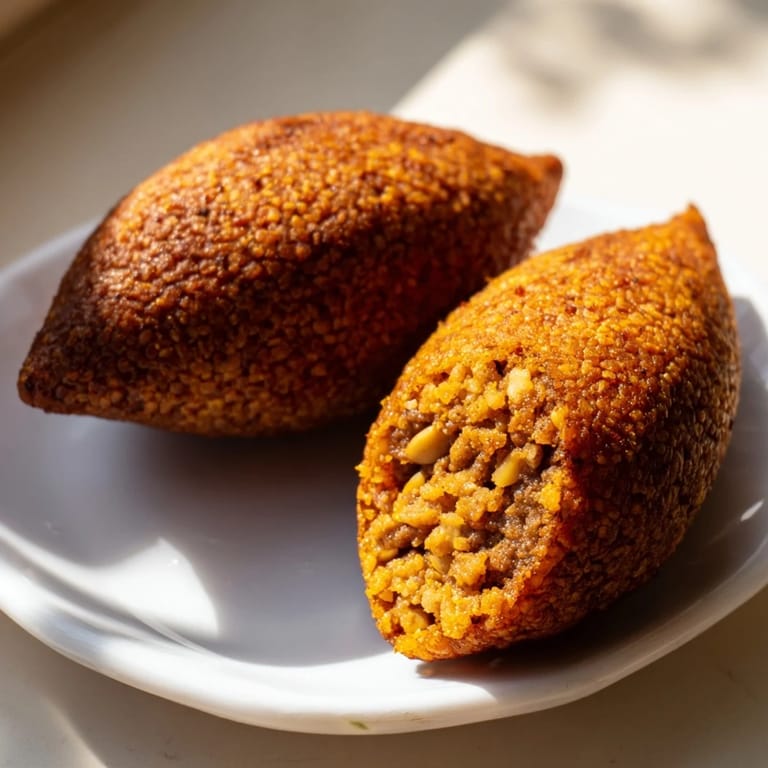
 My first encounter with kibbeh wasn't in a restaurant or cookbook—it was in my neighbor's kitchen on a humid summer afternoon, watching her weathered hands shape the meat and bulgur mixture with the kind of practiced ease that comes from decades of repetition. The aroma of allspice and cinnamon filled the small space, and I remember thinking how something so seemingly simple could smell so complex and inviting. She handed me one of the golden, still-warm croquettes straight from the oil, and I understood immediately why this dish has been passed down through generations across the Levant. It was crispy on the outside, tender within, and tasted like comfort wrapped in spice.
Years later, I brought a platter of these to a dinner party, nervous about whether my interpretation would hold up against my neighbor's standards. The moment someone bit into one and closed their eyes in satisfaction, I felt a small rush of pride—not because I'd invented anything, but because I'd honored something that mattered. Food has this quiet power to connect us across time and tradition, and kibbeh became my way of keeping that afternoon in her kitchen alive.
Ingredients
- Fine bulgur wheat: This is the backbone of your dough, providing structure and a subtle nuttiness that deepens the spice profile.
- Lean ground beef or lamb: Lamb gives a more authentic, richer flavor, but beef works wonderfully if that's what you have on hand.
- Onion: Finely chopped is essential so it dissolves into the mixture rather than creating chunks that break your seal.
- Allspice and cinnamon: These warm spices are what make kibbeh unmistakable—they're not subtle, and they shouldn't be.
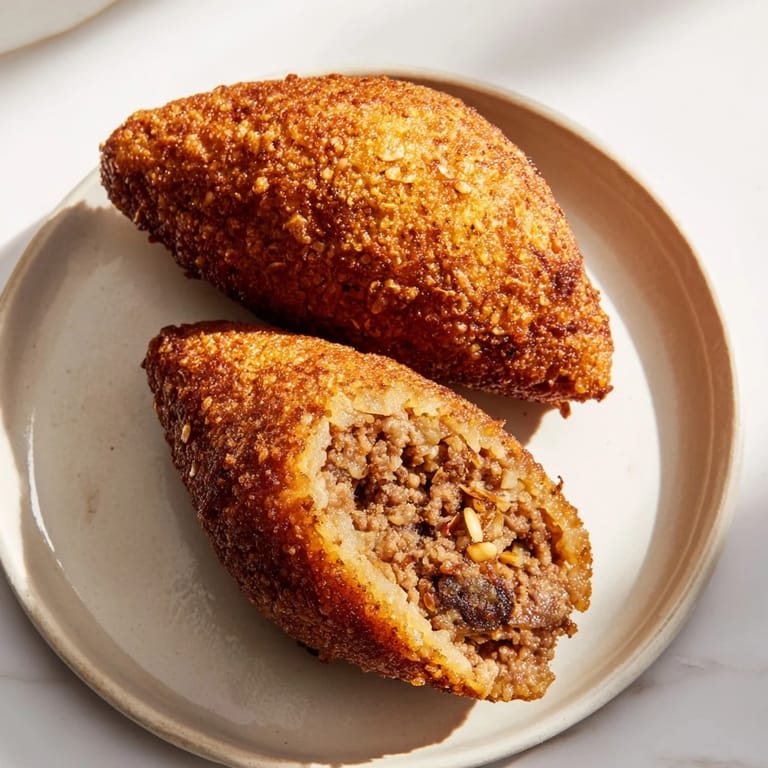
- Pine nuts: They toast beautifully during cooking and add a buttery richness that makes the filling memorable.
- Cold water: Keep it cold so it doesn't warm the dough, which helps you achieve that smooth, cohesive texture.
Tired of Takeout? 🥡
Get 10 meals you can make faster than delivery arrives. Seriously.
One email. No spam. Unsubscribe anytime.
Instructions
- Prepare the Bulgur Base:
- Rinse the bulgur well under cold water until the water runs mostly clear, then let it sit for 10 minutes to fully hydrate. This softening step is what allows it to knead into the meat without becoming grainy or separated.
- Build Your Dough:
- Combine the softened bulgur with ground meat, finely chopped onion, and all the spices in a large bowl. Knead with your hands as if making bread, adding cold water a tablespoon at a time until the mixture becomes smooth and sticky enough to hold together but not wet. This should take about 3–5 minutes of kneading.
- Create the Filling:
- Heat olive oil in a skillet and sauté your onions until they soften and turn translucent, about 3 minutes. Add the ground meat and break it up as it cooks, stirring frequently, until no pink remains.
- Toast and Finish:
- Stir in the pine nuts, allspice, cinnamon, salt, and pepper, cooking for another 3–4 minutes until the nuts turn golden and fragrant. Let it cool slightly before using—warm filling is harder to seal.
- Shape with Intent:
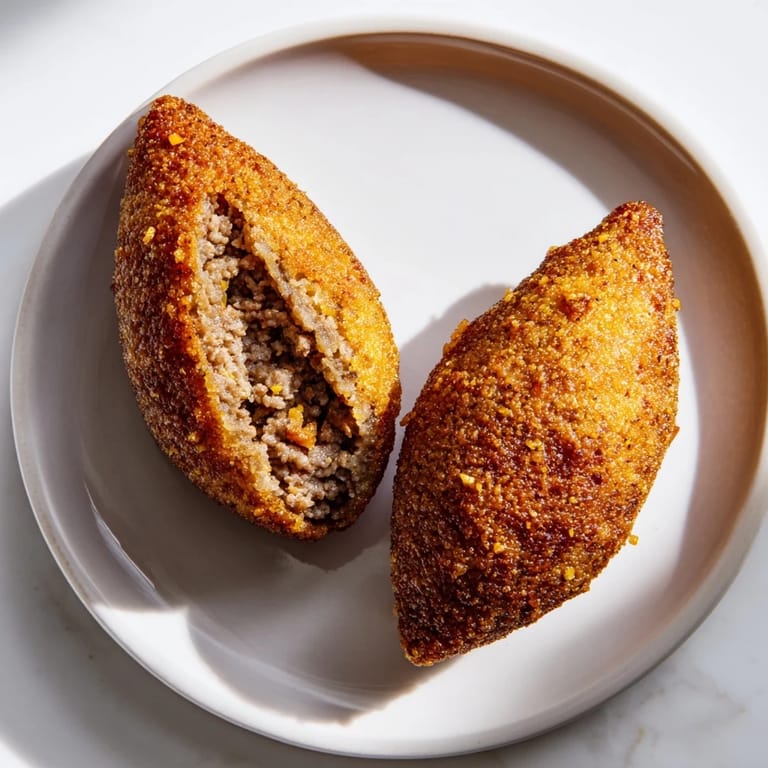
- Wet your hands with cold water to prevent sticking, then take a piece of dough about the size of a golf ball. Flatten it into a thin oval shell in your palm, add 1–2 teaspoons of filling to the center, and pinch the edges together to seal completely. Shape it into a torpedo or football, smoothing any cracks as you go.
- Fry to Golden Perfection:
- Heat vegetable oil to 180°C (350°F) and carefully lower kibbeh in batches, being careful not to overcrowd. Fry for 4–5 minutes, turning occasionally, until deep golden brown all over. Drain on paper towels while still warm so they stay crispy.
- Or Bake for a Lighter Version:
- Preheat your oven to 200°C (390°F), arrange kibbeh on a parchment-lined baking sheet, brush lightly with olive oil, and bake for 25–30 minutes, turning halfway through. They'll be slightly less crispy than fried but still wonderfully textured.
 Pin It
 I learned the hard way that rushing this dish doesn't work. The first batch I made, I tried to shape everything immediately after mixing the dough, impatient and overconfident, and half of them fell apart in the oil. Now I understand that the brief refrigeration of the dough and the cooling of the filling aren't steps you can skip—they're the difference between success and scrambling to salvage dinner.
Frying Versus Baking: What Changes
Frying gives you that shattering, almost audible crispness that feels indulgent, while baking is the quieter, more health-conscious path that still delivers excellent texture. I find myself frying when I'm cooking for a celebration and baking on weeknights when I want the satisfaction without the oil splatter. Both methods work beautifully, and your choice really depends on your mood and what you're serving alongside.
The Perfect Pairing
Kibbeh is almost always better with something cool and tangy on the side. A dollop of thick yogurt mixed with lemon juice, or a smooth tahini sauce, cuts through the richness perfectly and makes each bite feel balanced. Fresh salad with crisp lettuce, ripe tomatoes, and a lemon vinaigrette completes the meal, turning it from appetizer to a full, satisfying feast.
Variations Worth Exploring
Once you've mastered the traditional version, you might find yourself experimenting. A vegetarian version using cooked lentils and sautéed mushrooms is absolutely valid and tastes wonderful in its own right. Some cooks add a touch of pomegranate molasses to the filling for subtle tartness, while others mix in fresh herbs like parsley or mint for brightness.
- Vegetarian filling works best with extra spices and pine nuts to replicate the richness of meat.
- The dough freezes beautifully raw, so shape and freeze for up to 3 months, then cook straight from frozen, adding just a few extra minutes to frying time.
- If you make a double batch, you'll thank yourself later when you can offer these to friends with minimal effort.
 Pin It
 There's something special about making kibbeh with someone, passing the skill along the way my neighbor did for me. Whether you're frying or baking, shaping alone in your kitchen or with friends gathered around, you're part of a long tradition of cooks who've found joy in this simple, spiced croquette.
Recipe Questions & Answers
- → What is kibbeh made of?
Kibbeh combines fine bulgur wheat mixed with spiced ground meat, usually beef or lamb, forming a dough filled with a savory mixture including onions and pine nuts.
- → How should kibbeh be cooked?
Kibbeh can be either deep-fried until golden and crispy or baked brushed with olive oil for a lighter, yet still crisp texture.
- → Can kibbeh be prepared ahead of time?
Yes, kibbeh can be assembled and frozen before cooking for up to three months, making it convenient for future meals.
- → What spices are used in kibbeh?
Typical spices include allspice, cinnamon, black pepper, and salt, which provide the dish’s warm and aromatic flavor profile.
- → Are there vegetarian alternatives for the filling?
Vegetarian versions use cooked lentils and sautéed mushrooms as a flavorful substitute for ground meat in the filling.
- → What side dishes pair well with kibbeh?
Traditional accompaniments include yogurt or tahini sauces and fresh salads, which complement its rich and spiced flavors.